
Fatal Ejection at Six Flags Sparks Nationwide Coaster Safety Reckoning
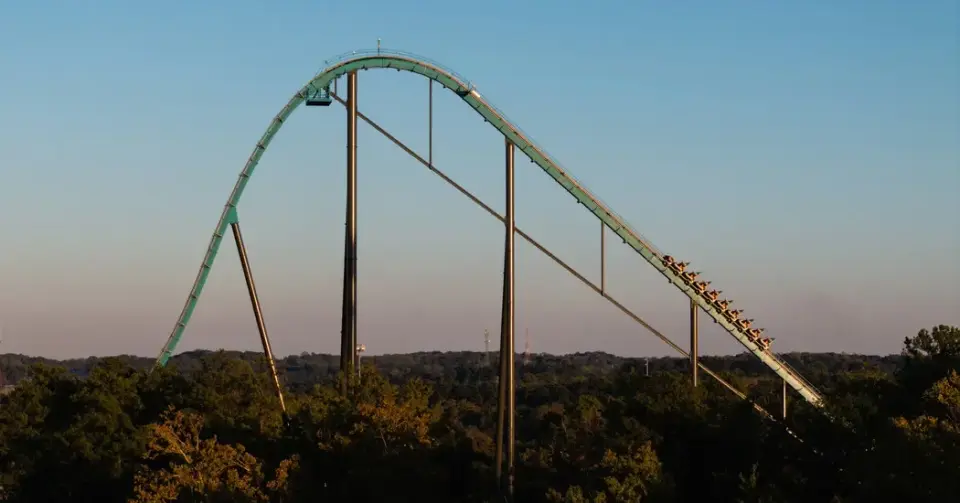
A fatal ejection on the Goliath roller coaster at Six Flags Over Georgia on Oct. 12 has triggered a nationwide safety review. The incident, which killed 42-year-old educator Hassan Kariem and injured four children, led Six Flags to shut down at least nine other coasters across the country. While the ride passed its March state inspection, records revealed worn components, prompting questions about whether modern thrill rides have become too extreme for human physiology.
Key points
- Hassan Kariem, a 42-year-old Atlanta educator, died on Oct. 12 after being thrown from the Goliath roller coaster at Six Flags Over Georgia.
- Four children, including Kariem's 13-year-old niece, were injured when he fell into a wooded area; his niece reported he lost consciousness before the restraint failed.
- Six Flags shut down at least nine other coasters nationwide for inspection following the incident.
- In late September, Six Flags Magic Mountain permanently closed its X2 coaster after years of safety complaints and a wrongful-death lawsuit.
- State inspectors found no violations in the March 2026 inspection of Goliath but noted that certain components, known as bushings, required replacement.
- Experts debate whether coasters have reached the limits of human tolerance, with some arguing that the industry prioritizes extreme thrills over physiological safety.
Background
The Goliath roller coaster at Six Flags Over Georgia had passed its most recent state inspection in March 2026 with no violations, though inspectors noted worn bushings. The park reopened for Fright Fest on Oct. 18 while the Goliath remained closed indefinitely. The incident has reignited debates about the safety of increasingly extreme 'gravity rides,' a category that has evolved since the late 1800s to prioritize speed and steep drops. Historical fatal incidents, such as the 1930 Big Dipper crash in Omaha and the 1972 England chain failure, underscore long-standing safety concerns in the industry.
How outlets are covering it
The New York Times frames the incident as part of a broader question about whether roller coasters have become too extreme, citing expert Brian Avery's concern that the industry has not fully explored the limits of human physiology. WSB-TV focuses on the human impact, detailing the death of Hassan Kariem, a beloved educator at Wesley International Academy, and the injuries to four children, including his niece. The Rome News-Tribune's content is largely obscured by paywall and login prompts, offering no substantive perspective on the story. The NYT and WSB-TV agree on the core facts but differ in emphasis: the NYT highlights industry-wide safety trends, while WSB-TV centers on the victim's personal story and community impact.
Why it matters
The Goliath ejection highlights ongoing tensions between the amusement industry's drive for extreme thrills and the need for robust safety standards. The incident has prompted a nationwide review of coaster maintenance and design, raising questions about whether current regulations adequately protect riders from mechanical failures and physiological limits. As the industry continues to build higher, faster, and more complex rides, the Goliath incident serves as a stark reminder of the potential consequences of pushing technological boundaries without sufficient safety oversight.
What to watch
Six Flags is expected to continue its nationwide inspection of coasters, with the Goliath remaining closed indefinitely. State regulators in Georgia are investigating the incident, focusing on the condition of the ride's bushings and other components. The manufacturer, Bolliger & Mabillard, is also conducting its own investigation. The family of Hassan Kariem is seeking accountability, and the incident may lead to calls for stricter federal oversight of amusement parks. The industry will likely face increased scrutiny as it balances the demand for extreme thrills with the need for safety.
- Higher, Faster, Gnarlier: Have Roller Coasters Become Too Extreme? The New York Times
- Can Six Flags regain the trust of roller-coaster fans? Los Angeles Times
- Six Flags Over Georgia reopens amid tensions and questions in the wake of fatal roller coaster incident CNN
- Man who died at Six Flags Over Georgia will be laid to rest Monday WSB-TV
- COLEEN BROOKS: Be prepared The Rome News-Tribune
Want the full story? Read the original reporting
Read on The New York Times