
Hawaii's 550-Year-Old Hōlei Sea Arch Collapses Into Pacific After Storm
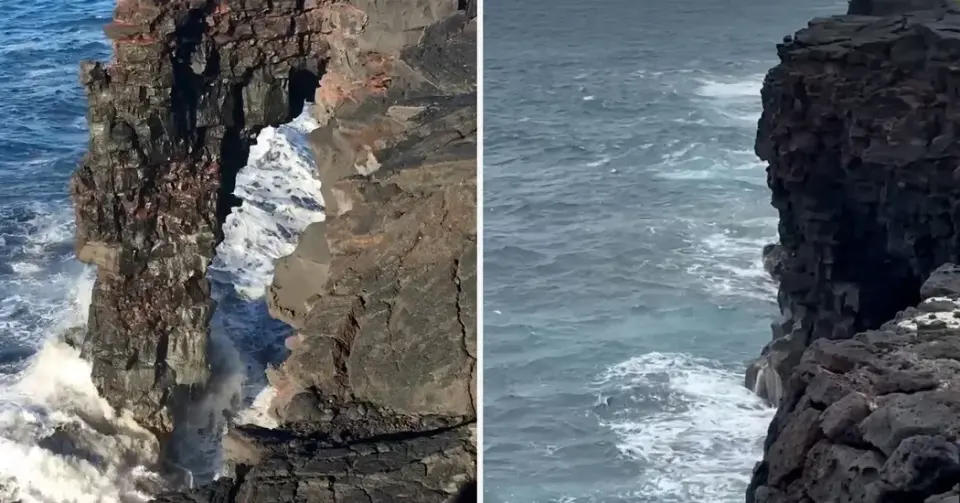
The Hōlei Sea Arch, a 90-foot natural landmark in Hawaiʻi Volcanoes National Park, has collapsed into the Pacific Ocean. The structure, which stood for approximately 550 years, was confirmed standing on September 23 but was gone by September 27, 2026. The collapse occurred during a park closure for Tropical Storm Nolo, following a period of intense storm activity in the Pacific.
Key points
- The Hōlei Sea Arch, a 90-foot natural landmark in Hawaiʻi Volcanoes National Park, has collapsed into the Pacific Ocean.
- The structure, which stood for approximately 550 years, was confirmed standing on September 23 but was gone by September 27, 2026.
- The collapse occurred during a park closure for Tropical Storm Nolo, following a period of intense storm activity in the Pacific.
- Officials attribute the loss to long-term differential erosion and damage from the 2018 Kīlauea eruption.
- The National Park Service has urged visitors to stay away from the unstable cliff edges and closed areas.
Background
The Hōlei Sea Arch was a prominent geological feature on the Big Island of Hawaii, formed roughly 550 years ago by ancient lava flows. It had been a popular destination for hikers and tourists for decades. The collapse follows a series of events that weakened the structure, including the 2018 Kīlauea eruption and subsequent storms. The National Park Service had previously noted that the arch was temporary and would eventually crumble into the sea due to differential erosion.
How outlets are covering it
The New York Times, CNN, and NBC News all reported on the collapse, emphasizing the emotional impact on visitors and the long-term process of erosion. The National Park Service provided the official timeline and safety warnings, noting that the arch was still standing on September 23 but gone by September 27. CNN highlighted the role of differential erosion in the collapse, while NBC News focused on the safety risks for visitors who ventured too close to the cliff edges. All sources agreed that the collapse was a long time coming, with the 2018 Kīlauea eruption and subsequent storms accelerating the process.
Why it matters
The collapse of the Hōlei Sea Arch is a significant event for Hawaii's tourism industry and the National Park Service. It highlights the vulnerability of natural landmarks to erosion and climate change. The incident also underscores the importance of safety measures and visitor education in national parks. The loss of the arch is a reminder of the transient nature of geological features and the need for ongoing monitoring and maintenance.
What to watch
The National Park Service will continue to monitor the coastline and enforce safety measures to prevent visitors from entering closed areas. The agency may also consider additional measures to protect other vulnerable landmarks in the park. The collapse of the Hōlei Sea Arch is likely to draw attention to the broader issue of coastal erosion and the impact of climate change on natural landmarks.
- The Holei Sea Arch, a Centuries-Old Hawaii Wonder, Crumbles Into the Pacific The New York Times
- Hawaii’s famed Hōlei Sea Arch has collapsed CNN
- Hawaii’s picturesque Hōlei Sea Arch collapses into the ocean NBC News
- Hōlei Sea Arch Collapses in Hawaiʻi Volcanoes National Park National Park Service (.gov)
- Hawaii’s centuries-old sea arch collapses into Pacific after series of rough storms The Guardian
Want the full story? Read the original reporting
Read on The New York Times