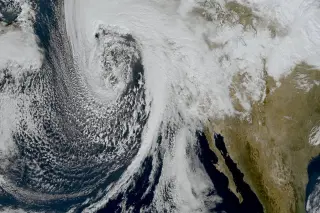
A record-breaking El Niño is driving unprecedented emergency preparations across California, with officials pre-positioning millions of sandbags and clearing flood channels to mitigate severe winter storms, coastal erosion, and flooding expected to peak between December and February.
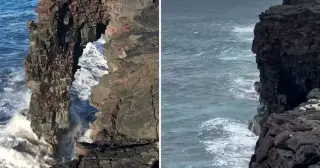
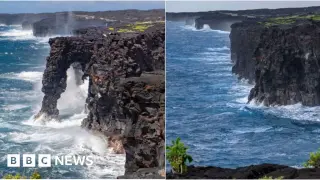
The Hōlei Sea Arch, a 90-foot natural landmark in Hawaiʻi Volcanoes National Park, has collapsed into the Pacific Ocean. The structure, which stood for approximately 550 years, was confirmed standing on September 23 but was gone by September 27, 2026. The collapse occurred during a park closure for Tropical Storm Nolo, following a period of intense storm activity in the Pacific.
Hawaii's iconic 90-foot Hōlei Sea Arch, a natural lava formation roughly 550 years old, has collapsed into the Pacific Ocean. The structure was confirmed standing on September 23 but was gone by September 27, 2026, during a park closure for Tropical Storm Nolo. Officials attribute the loss to long-term differential erosion and damage from the 2018 Kīlauea eruption.
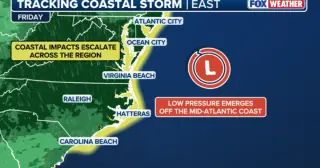
A powerful nor'easter struck the U.S. Atlantic Coast in late September 2026, causing severe flooding and erosion from North Carolina to New York. The event coincided with a strengthening El Niño, raising concerns about increased winter storm activity. Atlantic City recorded its highest water levels since Superstorm Sandy in 2012, while Rockaway Beach in Queens suffered massive sand loss, creating 14-foot cliffs. Experts attribute the extreme surge to a combination of strong onshore winds, high tides near a full moon, and accelerated sea-level rise along the mid-Atlantic. While the storm highlighted immediate vulnerabilities, it also serves as a potential indicator of the wetter, stormier conditions expected during the upcoming El Niño winter.
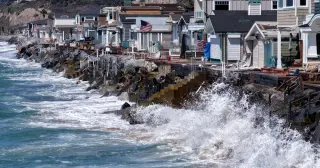
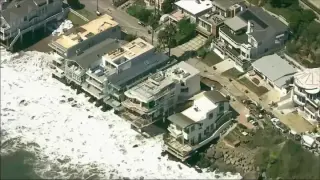
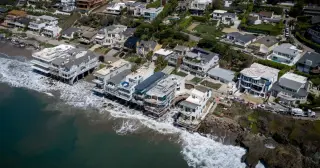
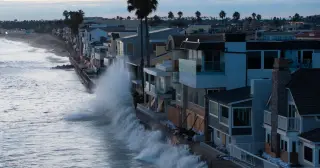
A strengthening El Niño is causing severe coastal erosion in California, forcing officials to install emergency rock barriers and seawalls to protect infrastructure and homes. While these measures offer short-term protection, experts warn they accelerate the loss of public beaches by preventing natural sand retreat, creating a long-term conflict between private property safety and public coastal access.
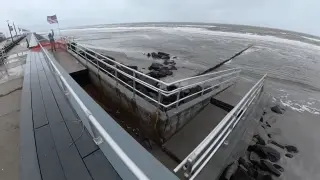
A slow-moving nor'easter battered the Northeast coast through Sunday, causing severe beach erosion in Brigantine, New Jersey, and leaving tens of thousands without power. While utility crews have restored service in many areas, officials warn that high tides and strong winds remain dangerous through Monday. The storm, linked to a developing El Niño pattern, is expected to weaken as it drifts north.
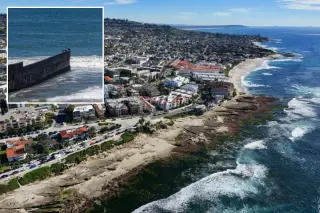
Governor Newsom declared a state of emergency on September 21, 2026, to prepare for a potentially historic Super El Niño. Forecasters predict a 98% chance of a very strong event, with a 75% chance it will be the strongest since 1950. San Diego faces a 'triple threat' of beach erosion, cliff collapses, and coastal flooding, with sea levels potentially rising 6 to 13 inches. While state agencies are staging resources and fast-tracking permits, local resilience projects in San Diego remain stalled due to funding issues, leaving vulnerable communities exposed to severe winter storms.
A developing fall nor'easter will bring multi-day-heavy rain, 40–50 mph coastal winds, and 15–18-foot offshore waves to the Tri-State area, risking dune scarping and significant beach erosion, with potential coastal flooding at high tides; the weekend impact depends on the storm's track relative to NYC and Long Island.
Gov. Newsom declares a statewide emergency as El Niño storms threaten California with high surf, flooding, and coastal erosion; multiple counties and cities have proclaimed emergencies and activated emergency operations centers in anticipation of a very strong El Niño through December, with NOAA warning of significant impacts to infrastructure and communities.
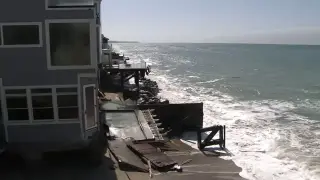
Orange County has declared a local state of emergency due to severe coastal erosion and high surf that damaged homes and infrastructure along the coast, with officials coordinating with Dana Point, Laguna Beach and others to accelerate sand replenishment and seek state and federal aid ahead of a forecasted El Niño winter storm season.
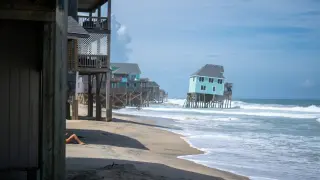
In Dare County, North Carolina, hundreds of feet of beach have disappeared and more than 30 homes have collapsed since 2020 as erosion and rising seas threaten barrier-island communities. FEMA's flood-insurance system pays after a house falls, creating incentives to wait for destruction rather than demolish or move threatened homes. A revived Upton-Jones-style policy would let owners access pre-collapse funds to remove or relocate, but past experiences showed weak incentives for early action and proposed caps (e.g., $250,000) may leave many properties underinsured. Local governments face expensive options like jetty repairs and beach nourishment, while debris cleanup and lost tourism costs fall on taxpayers. Congress has discussed reform, but no major changes have passed.
Laguna Beach declared a local emergency to accelerate shoreline protection, sand placement, debris removal and repairs after days of heavy surf and ongoing erosion tied to former Hurricane Marie, with NOAA predicting a greater than 90% chance of a very strong El Niño this year. The move enables expedited contracting and response as Aliso Beach and nearby areas see significant damage and multiple homes sono property exposed or yellow-tagged; neighboring Dana Point and Malibu report similar threats. Experts warn winter storms driven by El Niño could further reshape beaches, though some sand loss may be replenished later.
Malibu declares a local emergency after a large sinkhole opens in front of Nicolas Cage’s beachfront property, with evacuations and red-tagged homes as high surf and coastal erosion—linked to Hurricane Marie—prompt preparations for El Niño–driven storms this winter; residents worry whether this is a one-off event or a sign of broader coastline trouble, while repairs are planned to take weeks.
A coastally trapped Kelvin wave linked to the developing El Niño is forecast to raise California’s sea level by about 6 inches for months as it travels from the western Pacific toward the Gulf of California and up the U.S. West Coast, with Southern California arrival expected in early October. When combined with El Niño–driven high tides, storms, and a marine heatwave, this could amplify beach erosion and coastal flood risk, compounding damage already seen along the coastline.
A massive sinkhole outside Nicolas Cage’s Malibu beachfront mansion swallowed part of the driveway and extended onto Sea Level Drive, prompting evacuations of several homes as Malibu officials declared an imminent danger and red-tagged 31 properties due to blocked emergency access; a Red Cross shelter was set up at Malibu High School, and authorities attributed the collapse to coastal erosion from Hurricane Marie, with no injuries reported and Cage’s representative not commenting.