
California Privacy Law for Immigrant Workers Ignites Free Speech Clash
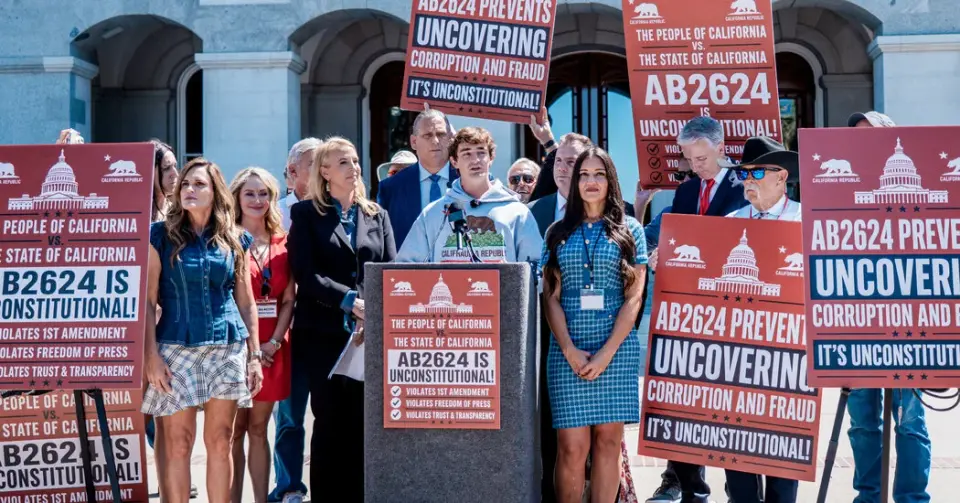
Governor Gavin Newsom signed Assembly Bill 2624, expanding California’s Safe at Home program to protect the addresses of immigration aid workers from public records. The measure, effective October 1, 2027, prohibits publishing personal information with intent to incite violence. Critics, led by influencer Nick Shirley, branded it the 'Stop Nick Shirley Act,' arguing it violates First Amendment rights by shielding organizations from scrutiny. Supporters, including Assemblymember Mia Bonta, state the law targets harassment and doxxing, not journalism. Protests at the Sacramento Capitol drew hundreds, resulting in three arrests for assault.
Key points
- AB 2624 extends the Safe at Home program to immigration service providers, allowing them to keep addresses confidential and vote privately.
- The bill imposes a $4,000 civil penalty for knowingly posting personal information with intent to incite imminent bodily harm.
- Nick Shirley, a conservative influencer, opposed the law, claiming it prevents citizens from exposing fraud in immigrant-serving nonprofits.
- Protests at the California Capitol on August 26 involved verbal and physical clashes, leading to three assault-related arrests.
- The law takes effect on October 1, 2027, and is expected to face legal challenges over First Amendment concerns.
Background
This controversy follows a broader trend of political polarization around immigration and free speech, as seen in earlier disputes like the 'MAGA Barbie' backlash at WNBA games. It also connects to recent tensions over federal immigration enforcement and state-level privacy protections, such as California’s prior expansion of Safe at Home for gender-affirming healthcare workers in 2025.
How outlets are covering it
The New York Times frames the dispute as a misinformation-fueled MAGA uproar, noting that Democrats view the backlash as driven by false narratives. CalMatters emphasizes the legal mechanics of AB 2624 and highlights bipartisan support in committee, while also detailing Republican arguments about free press. The Sacramento Bee focuses on the physical confrontation at the Capitol, contrasting the rhetoric of supporters ('Califraudia Republic') with counterprotesters who labeled the rally 'fascist.' KCRA reports the arrests neutrally, noting that authorities did not disclose which group the arrestees belonged to. Outlets disagree on the bill’s impact: Republicans call it a threat to accountability, while Democrats and the bill’s author argue it only targets violent intent, not journalism.
Why it matters
The conflict tests the boundaries of free speech versus personal safety in the digital age. If challenged in court, the outcome could set precedents for how states protect vulnerable workers from doxxing without infringing on public interest journalism. The involvement of a viral influencer like Nick Shirley also highlights how social media can amplify local policy disputes into national political flashpoints.
What to watch
Legal challenges are expected as the law takes effect in October 2027. Republicans have threatened to sue, while Democrats maintain the bill’s language is narrow. Further protests or legislative amendments may occur if the bill faces immediate judicial review. The California Attorney General’s office may also monitor enforcement to ensure the law is applied as intended.
- A MAGA Uproar Ensued After a Bill Was Given a Nick Shirley Nickname The New York Times
- What to know about the new California privacy law that became a flashpoint over free speech CalMatters
- Nick Shirley draws hundreds of supporters, counterprotesters to California Capitol Sacramento Bee
- Three arrested for assault during Nick Shirley-related political rally at State Capitol KCRA
- Exclusive | Congress Republicans ask DOJ to challenge California’s ‘Stop Nick Shirley Act’ New York Post
Want the full story? Read the original reporting
Read on The New York Times