
Oval Office fraud announcement descends into heated dispute over whistleblower payouts
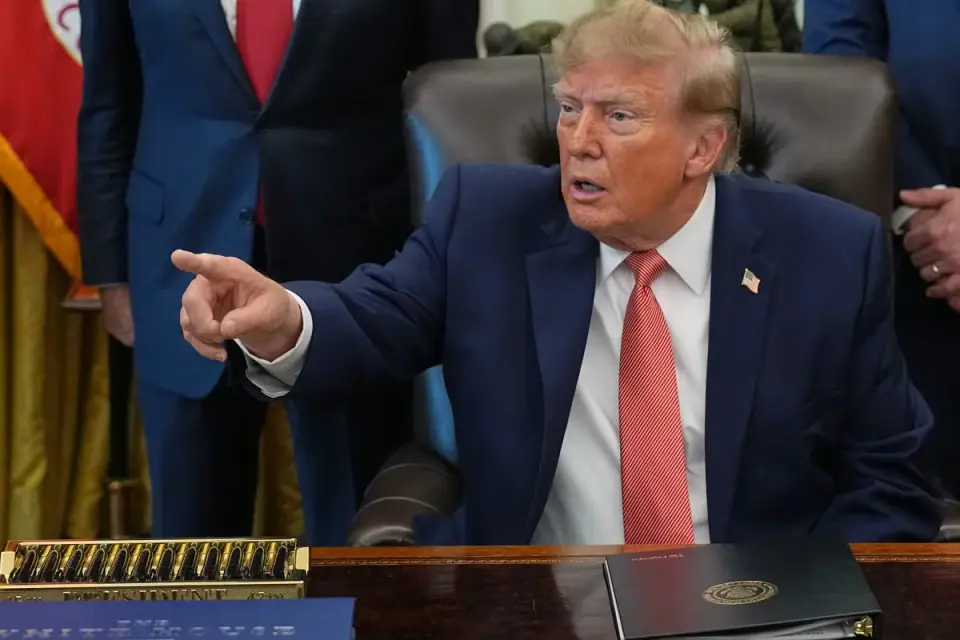
President Donald Trump and Vice President JD Vance announced a new fraud whistleblower program in the Oval Office, but the event was marred by visible tension and angry exchanges among administration officials. While Trump promised generous payouts for citizens reporting fraud, critics and some outlets described the atmosphere as volatile and frightening, with Stephen Miller reportedly becoming agitated during the proceedings. The announcement highlighted a shift in how the administration handles public accountability, with Trump asserting sole authority to determine who receives compensation.
Key points
- Trump and Vance launched the Fraud Whistleblower Incentive Program, offering up to 1% of recovered fraud amounts, though the official website caps payouts at $30,000.
- Trump stated he would personally act as the 'arbitrator' for all payout decisions, claiming he would be 'very generous' but retaining final control over who gets paid.
- The Independent reported that the announcement devolved into a 'rage spiral,' with visible anger and personal attacks among officials, including Stephen Miller.
- CBS News noted that the first beneficiary, YouTuber Nick Shirley, received a $10,000 check for reporting alleged fraud in Minnesota childcare centers.
- Critics, including Whistleblower Aid, expressed skepticism, arguing the administration is more focused on targeting whistleblowers than addressing internal wrongdoing.
Background
This event follows a series of contentious Oval Office interactions in 2026, including a dispute over NIH grant reviews and Trump's rejection of a Secret Service proposal to demolish the room. The administration has also faced scrutiny over its handling of other public programs, such as the Trump Accounts initiative for children, which critics questioned for its legal and financial implications.
How outlets are covering it
The Independent framed the event as a spectacle of 'barely contained rage,' emphasizing the emotional volatility and personal animosity among officials like Stephen Miller. In contrast, CBS News focused on the policy details, highlighting Trump's promise of 'generous' payouts and his role as the final decision-maker, while noting the discrepancy between the 1% claim and the $30,000 cap on the official website. AP News covered the announcement as part of a broader day of political activity, including Supreme Court rulings and international diplomacy, without focusing on the internal tension. The outlets diverged on the tone: The Independent saw a breakdown in decorum, while CBS and AP treated it as a standard policy rollout, though CBS noted skepticism from advocacy groups.
Why it matters
The incident underscores the administration's centralization of power in fraud enforcement, with Trump personally controlling payouts. It also reveals potential instability within the White House, as reported by The Independent, which could affect policy implementation and public trust. The discrepancy between the promised 1% payout and the $30,000 cap raises questions about the program's actual impact and transparency.
What to watch
The Justice Department will administer the program, but it remains unclear who will review reports beyond Trump's final decision. The administration may face legal challenges or public backlash if the payout process is perceived as arbitrary or biased. Further scrutiny may emerge from advocacy groups like Whistleblower Aid, which called for the administration to investigate its own officials' conduct.
- Trump and Vance’s Oval Office announcement turned into a spectacle of barely contained rage The Independent
- Live updates: Supreme Court rebuffs Trump administration restrictions on medical care for trans inmates AP News
- New government program could pay you up to $30,000 multiple times for this one thing AL.com
- Trump says U.S. will compensate fraud whistleblowers, and he'll decide who gets paid: "I will be very generous" CBS News
- Trump awards $10,000 to Nick Shirley for viral video on Minnesota daycares Star Tribune
Want the full story? Read the original reporting
Read on The Independent