
Voters Reject Trump’s Second Term in Historic Midterm Landslide
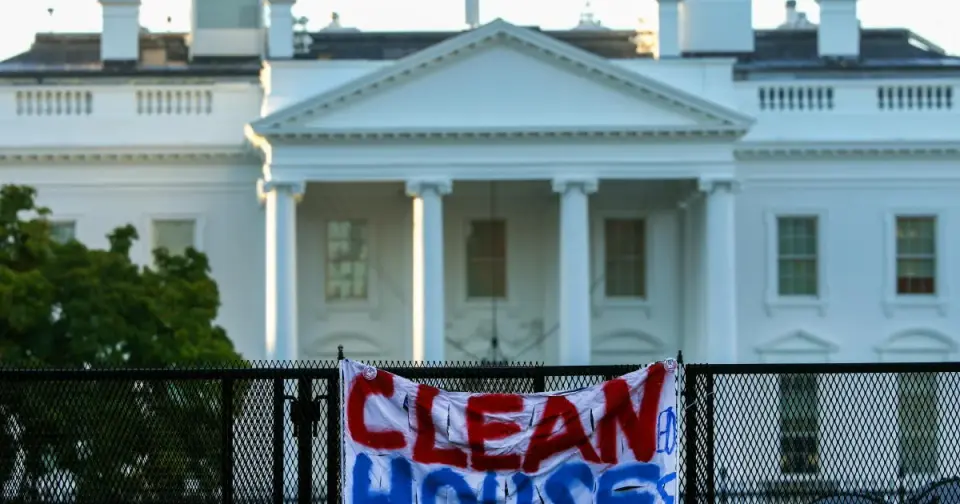
In a decisive November 2026 midterm election, Democrats seized control of both the House and Senate, marking a historic rebuke of President Donald Trump. The victory, which included rare Democratic wins in red states like Texas and Kansas, was driven by voter fatigue over economic costs, perceived corruption, and a shift away from anti-establishment populism toward corporate interests. Trump blamed his candidates for the losses, while analysts noted a broader rejection of his second-term policies.
Key points
- Democrats won the House and Senate, ending Republican control of Congress.
- Texas elected a Democratic senator for the first time since 1988 and a Democratic governor.
- Kansas elected a Democratic senator for the first time since 1932.
- Trump blamed his candidates and Fox News for the losses, avoiding claims of fraud.
- Voter anger focused on high gas prices, crypto profiteering, and perceived crony capitalism.
Background
The 2026 midterms followed a contentious second term for President Trump, characterized by a war in Iran, rising gas prices, and close ties with tech billionaires. Earlier in 2026, Trump had signed an AI accord with major tech leaders, a move that drew criticism for prioritizing corporate interests over public safety. In Michigan, Trump’s Islamophobic rhetoric against candidate Abdul El-Sayed had intensified tensions before the election, though El-Sayed ultimately won the Senate seat. The current results represent a sharp reversal from the 2024 election, where Trump had won the presidency on a populist platform.
How outlets are covering it
The Los Angeles Times frames the result as a temporary national unity against Trump’s divisive behavior, noting that voters rejected his 'lies, insults, and chaos.' The outlet emphasizes that Trump’s failure to deliver on promises like lower grocery prices and his focus on self-dealing alienated even his base. The Guardian, via Robert Reich, argues the shift was not a standard midterm swing but a rejection of 'anti-establishment populism' that had morphed into crony capitalism. Reich highlights that Trump’s alliance with tech billionaires and oil interests contradicted his 2016 and 2024 populist appeal. The Washington Post focuses on the cultural shift, describing the election as a moment where the 'sleeping giant' of the US awakened, with red-state voters flipping blue in unprecedented numbers. While the LA Times focuses on the personal repudiation of Trump, the Guardian emphasizes the structural economic grievances, and the Post highlights the symbolic nature of the victory in traditionally Republican areas.
Why it matters
This election marks a significant realignment in US politics, suggesting that the populist movement that elected Trump in 2016 and 2024 has fractured. The Democratic victory in deep red states indicates that economic anxiety and perceived corruption have outweighed traditional party loyalty. With Democrats controlling Congress, there is potential for legislative battles over healthcare, campaign finance, and tech regulation, setting the stage for a contentious 2028 presidential cycle. The results also signal that the 'anti-establishment' label may now be associated with corporate elites rather than the working class, a shift that could reshape future political strategies for both parties.
What to watch
President Trump will serve as a lame-duck president until January 2027, with limited power to block legislation. Democrats will likely push for Medicare for All, anti-monopoly laws, and limits on campaign contributions, though Trump is expected to veto such initiatives. The 2028 presidential race will likely feature a populist contest, with both parties vying to capture the anti-establishment sentiment that fueled this midterm victory. The new Democratic leadership will face immediate pressure to deliver on economic promises, particularly regarding gas prices and corporate accountability, to maintain the momentum gained in November.
- Commentary: Trump, who so bitterly divided us, was awful enough to unite us. At least temporarily Los Angeles Times
- ‘I Have Seen the Enemy, and It Is Us’: Inside Team Trump’s Historic Collapse The New York Times
- What Trump Forgot Before the Wave Crashed Down Politico
- The great sleeping giant of America has awakened | Robert Reich The Guardian
- Column | Trump’s legendary image machine has finally broken down The Washington Post
Want the full story? Read the original reporting
Read on Los Angeles Times