
St. Johns River breaches 73-year record as Central Florida faces prolonged flooding
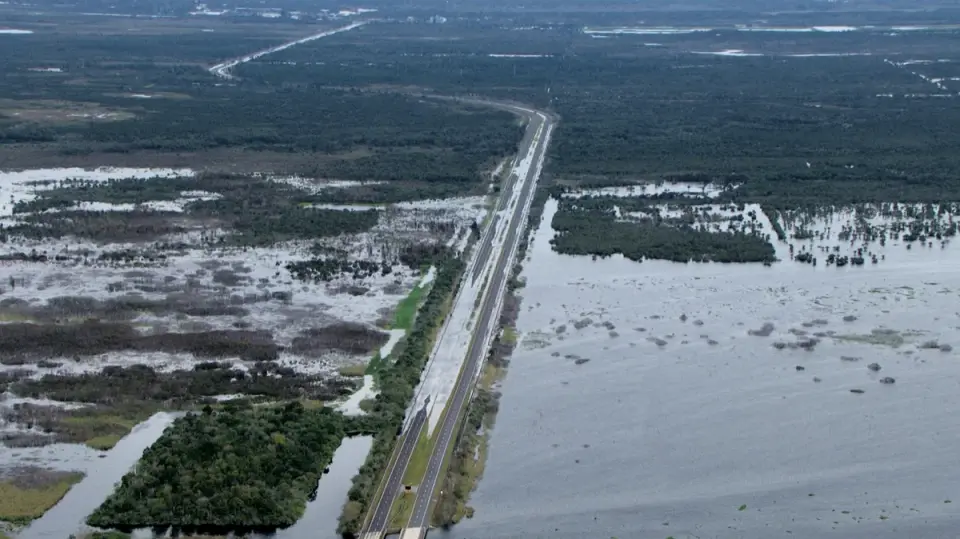
The St. Johns River has breached its 73-year record high in Cocoa, Florida, reaching 18.77 feet. Although heavy rainfall has ceased, slow-moving water continues to rise in downstream areas like DeLand and Astor. Officials warn that major flooding could persist through December or January due to the river's flat terrain, forcing evacuations and road closures across Brevard and Volusia counties.
Key points
- The National Weather Service reports rainfall totals of up to 24.26 inches in north Cocoa Beach and 22.49 inches in South Titusville over three days.
- The St. Johns River near Cocoa surpassed its previous record of 17.6 feet, peaking at 18.77 feet early Saturday.
- Lake Harney in Seminole County exceeded its record high of 12.7 feet, reaching 12.82 feet, with levels projected to crest at 13.1 feet.
- Road closures persist on SR-46, SR-50, SR-520, and US-1, with detours advised for drivers in Brevard and Orange counties.
- Volusia County officials urge residents to secure belongings and avoid driving through flooded roads, as water levels may continue rising for weeks.
Background
This event follows a series of severe weather impacts in November 2026. Earlier this month, El Niño-driven storms caused record rainfall and prompted Governor Ron DeSantis to expand a state of emergency to 21 counties. The current flooding is the second major deluge in the region within three weeks, compounding damage from the November 2-3 event and straining wastewater systems.
How outlets are covering it
WESH highlights specific road closures and detours in Brevard County, emphasizing immediate traffic impacts. The Orlando Sentinel provides detailed rainfall data, noting that 56 locations across five counties measured at least 10 inches, with Brevard County receiving the highest totals. AccuWeather focuses on the human impact, reporting that some families are evacuating for the second time this month and that river flooding could last into January due to the basin's flat topography. WKMG emphasizes the ongoing risk in Volusia County, warning that the river is still rising despite the end of rainfall, and urging residents to prepare for potential record levels in DeLand and Astor.
Why it matters
The prolonged nature of the flooding poses significant risks to infrastructure, property, and public safety. The slow drainage of the St. Johns River basin means that even after rainfall ceases, water levels will continue to rise, potentially causing further damage to homes and businesses. Residents are advised to stay informed through local emergency management apps and to avoid flooded roads to prevent accidents and ensure safety.
What to watch
Forecasters expect the St. Johns River to remain high through December, with minor flooding potentially continuing into January. Additional rain is expected in northeastern Florida and southeastern Georgia, which could worsen conditions along the river. Residents are urged to monitor local news and emergency alerts, prepare essential supplies, and avoid driving through flooded areas. Sandbag distribution sites remain open in Brevard and Volusia counties to help residents protect their properties.
- Flooding continues to impact Central Florida roads; see what's closed WESH
- NWS reports rainfall totals near 25 inches from Central Florida deluge as flooding continues Orlando Sentinel
- Florida families flee homes as river flooding persists into Thanksgiving week AccuWeather
- St. Johns River flooding: Volusia County warns of major to record levels WKMG
- Florida’s flooding déjà vu is a sign of things to come | Column Tampa Bay Times
Want the full story? Read the original reporting
Read on WESH