
Isaias Sets Late-Season Record, Kills Four, and Leaves 396,000 Without Power
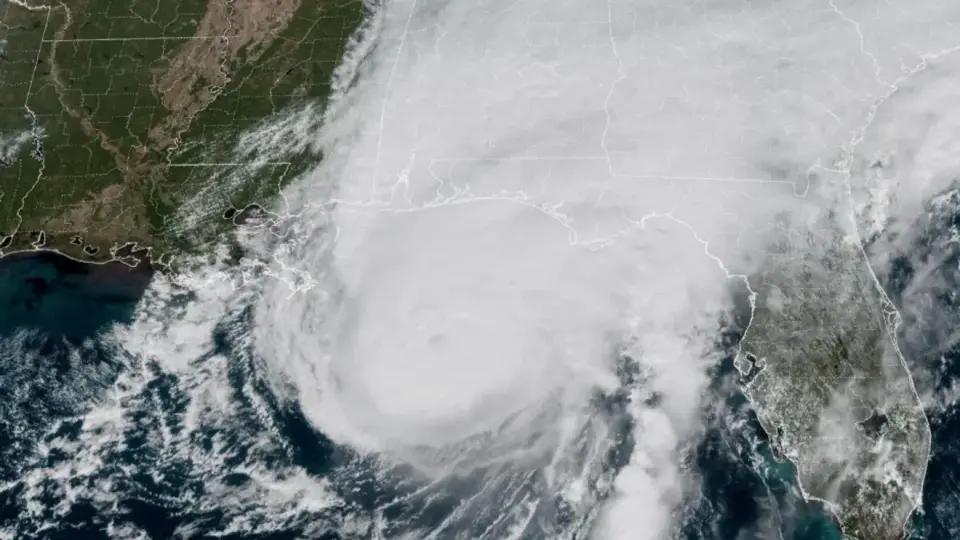
Hurricane Isaias made landfall near Destin, Florida, as a Category 2 storm, becoming the latest first hurricane of the Atlantic season since 1905. The storm has since weakened to a post-tropical cyclone, leaving at least four dead and hundreds of thousands without power as it moves north into the mid-Atlantic.
Key points
- Isaias formed on October 7, 2026, and made landfall on October 9 near Destin, Florida, briefly reaching Category 3 strength with 120 mph winds before weakening to Category 2 upon impact.
- The storm is the first Atlantic hurricane in nearly a year, with the previous being Hurricane Melissa in October 2025, and holds the record for the latest first hurricane of the season since 1905.
- At least four people died: two in Florida and Alabama from fallen trees, one in Birmingham from a tree, and one in Barbour County, Alabama, from a vehicle crash involving a downed tree.
- Nearly 396,000 customers in the Florida Panhandle and southern Alabama remained without power early Sunday, with heavy rainfall and flash flood warnings extending into the central Appalachians and mid-Atlantic.
- The Maryland Transit Authority warned of wet roads and heavy rain, while the US Energy Department authorized emergency crude oil exchanges to address supply disruptions.
Background
Isaias struck the Gulf Coast on October 9, 2026, after forming on October 7. It is the first hurricane of the 2026 Atlantic season and the first to hit the US mainland in two years. The storm has since transitioned into a post-tropical cyclone, moving north and bringing rain and wind to the mid-Atlantic, including Maryland, Virginia, and the Carolinas.
How outlets are covering it
The Baltimore Sun and WBFF emphasize Isaias's historical significance as the latest first hurricane since 1905 and its impact on Maryland, including transit warnings. The New York Times highlights the storm's rapid intensification to Category 3 and its status as the first mainland US hurricane in two years. The Guardian focuses on the immediate aftermath, including 396,000 power outages, specific deaths, and federal emergency declarations for Georgia, Florida, and Alabama, while also noting simultaneous Pacific storms.
Why it matters
Isaias's late-season timing and record-breaking status underscore the unpredictability of Atlantic hurricane activity. The storm's path through the mid-Atlantic and Appalachians poses ongoing risks of flooding and power outages, while federal emergency declarations and energy reserve releases highlight the broader economic and logistical impacts of such late-season events.
What to watch
Forecasters expect heavy rainfall and flash flood risks to continue across the central Appalachians and mid-Atlantic through Sunday, with conditions improving by Monday. Cleanup efforts are underway in Florida and Alabama, and the US Energy Department is managing supply disruptions from the storm.
- SUN: Isaias sets record as latest Atlantic hurricane, drenches Maryland WBFF
- Isaias brought flooding, dangerous winds and tornadoes to the Southeast The Weather Channel
- Hurricane Isaias in Video and Pictures The New York Times
- Thousands without power in Florida and Alabama as Isaias moves north The Guardian
- Mapping Hurricane Isaias' deadly path: How the violent Category 2 storm unfolded across Florida and Gulf Coast FOX Weather
Want the full story? Read the original reporting
Read on WBFF