
Global Capital Retreats as U.S. Debt and Sanctions Erosion Fuel 'Pariah' Status
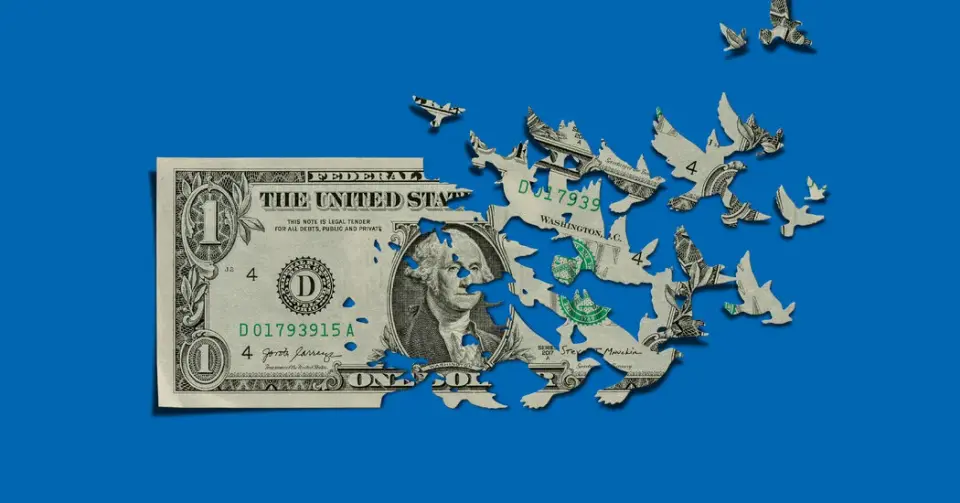
Global investors are increasingly distancing themselves from the United States due to concerns over a $40 trillion debt burden, aggressive sanctions, and legal unpredictability. Major nations like the Netherlands and Norway are moving gold reserves and reducing bond holdings, while European countries seek to reduce reliance on American military and tech infrastructure. This shift reflects a broader decline in confidence in U.S. stability, though the dollar remains dominant.
Key points
- Global investors are avoiding U.S. bonds as concerns grow over the nation's $40 trillion debt and the administration's use of sanctions for foreign policy.
- The Netherlands moved 86 tons of gold out of U.S. and Canadian vaults to hedge against systemic risks, following France's complete withdrawal of its gold from New York.
- Norway's sovereign wealth fund, the world's largest, announced plans to reduce its holdings of U.S. government bonds amid Treasury market turbulence.
- European nations are seeking to source weapons locally and restrict American tech giants like Amazon and Google from sensitive cloud contracts to reduce dependence.
- International travel to the U.S. fell 5.5% in 2025, with Canadian and German visits dropping 25% each, while international college applications declined by 10%.
- A Pew study found that majorities in nine of ten polled countries lack confidence in President Trump to act correctly in world affairs, with only Hungary and Poland viewing the U.S. as a reliable partner.
Background
This trend follows earlier signs of strain, such as the 2026 decline in Canadian tourism due to trade tensions and political rhetoric, and global protests over fuel prices linked to the Iran war. Previous coverage noted that while the U.S. remains a top destination for students and military allies, the perception of reliability is eroding among traditional partners.
How outlets are covering it
The New York Times frames the issue as a financial and legal crisis, emphasizing the $40 trillion debt and the administration's 'penchant for pushing the limits of the rule of law' as drivers of capital flight. Axios broadens the scope to include physical gold movements, travel declines, and tech decoupling, noting that while the dollar remains strong, trust is waning. The National Interest contextualizes this within a longer historical arc, arguing that the 2026 Iran war is accelerating a shift from unipolar dominance to a multipolar order, where regional powers hedge against U.S. security guarantees. AlterNet uses stronger language, describing the U.S. as becoming an 'investment pariah' due to these policies.
Why it matters
The erosion of U.S. financial and geopolitical trust signals a potential structural shift in the global order. If capital and alliances continue to diversify away from American assets and institutions, the U.S. may face higher borrowing costs and reduced influence, forcing a redefinition of its role in a more multipolar world.
What to watch
Watch for Germany, Italy, and Spain to debate moving their own gold reserves out of U.S. custody. Monitor further reductions in U.S. bond holdings by foreign sovereign funds and the implementation of EU cloud rules that restrict American tech companies from sensitive government contracts.
- The World Economy Is Becoming Wary of the U.S. The New York Times
- The world reconsiders America Axios
- How Three Wars Fast-Tracked Pax Americana’s Decline The National Interest
- 'Ominous': Trump threatens to turn US into 'investment pariah' AlterNet
- Major global investors pull back from US markets: $40 trillion debt pile sparks concern, investors buy gold... Bhaskar English
Want the full story? Read the original reporting
Read on The New York Times