Tag

Us Debt

All articles tagged with #us debt

US borrowing costs surge to fresh highs as oil spike fuels inflation fears
business8 hours ago

US borrowing costs surge to fresh highs as oil spike fuels inflation fears

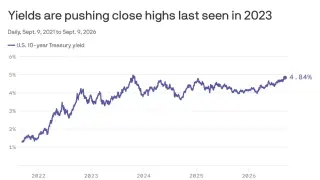
U.S. borrowing costs rose to fresh highs as renewed Middle East strikes pushed oil above $92 a barrel, fueling inflation concerns. The 10-year yield hit about 4.79%, the strongest since January 2025, bolstering bets the Fed could raise rates. Inflation remains above target (3.4% year-on-year in July), while 30-year mortgage rates climbed toward 6.7% and the national debt passed $40 trillion.

world1 day ago

Debt Fears Meet Iran Pressure in Bessent's G20 Push

Treasury Secretary Scott Bessent uses the G20 finance meetings to reassure partners the US can manage its massive debt without destabilizing markets, while pressing for tighter Iran sanctions; most decisive talks will be private on bond-market dynamics, currency moves and faster, more transparent sovereign-debt restructuring amid elevated yields.

business6 days ago

Bessent's Bond-Policy Gamble Tests U.S. Debt Credibility

Treasury Secretary Scott Bessent’s plan to buy back bonds to push down long-term yields sparked a brief market rally but drew skepticism from allies and economists who warn ongoing interventions could undermine the government’s debt credibility, raise borrowing costs, and blur policy signals. With White House support but growing market doubts, the response has included mixed signals in currencies and metals, underscoring concerns about whether Treasury can sustain such actions amid broader fiscal, economic, and geopolitical pressures.

America’s $40 trillion debt mountain threatens retirement amid rising borrowing costs
finance8 days ago

America’s $40 trillion debt mountain threatens retirement amid rising borrowing costs

Public debt swelled to about $40.0 trillion by Aug. 18, driven largely by pandemic borrowing and persistent deficits from both Trump and Biden administrations. The government’s debt is projected to reach roughly 120% of GDP by 2036, with interest costs already among the largest expenses, and long-term Treasuries yielding around 5.3%, signaling higher borrowing costs for households and lenders. The piece notes Trump’s self-described “king of debt” label and emphasizes that the debt burden will affect consumers regardless of party. It also advises retirees to consider inflation-hedging strategies (e.g., gold), high-yield cash options, CDs, and professional financial guidance to stress-test retirement plans against higher rates and inflation.

Gold breaches $4,600 as U.S. debt worries and bond-buyback bets boost safe-haven demand
markets9 days ago

Gold breaches $4,600 as U.S. debt worries and bond-buyback bets boost safe-haven demand

Gold climbed for a third straight week, topping $4,600 as concerns about U.S. debt and the Treasury’s move to double long-dated bond buybacks boosted demand for safe havens, aided by a weaker dollar; analysts say the rally is driven more by bond-market interventions than rate expectations, with July PCE data and Fed Chair Warsh’s Jackson Hole speech in focus next.

Debt Surges to $40T as AI Spending Reshapes U.S. Financing
economy11 days ago

Debt Surges to $40T as AI Spending Reshapes U.S. Financing

The national debt has surpassed $40 trillion with deficits projected to average $2.4 trillion per year through 2036; rising interest costs and refinancing needs threaten household finances and policy choices. At the same time, hyperscale tech firms are funding AI infrastructure with debt, with bond sales expected to rise and hundreds of billions already spent and trillions more planned—signaling a shift in how growth is financed and complicating fiscal decisions amid political divides.

U.S. Debt Hits $40 Trillion Milestone as Borrowing Accelerates
business12 days ago

U.S. Debt Hits $40 Trillion Milestone as Borrowing Accelerates

The U.S. national debt has surpassed $40 trillion, more than doubling since 2016, driven by ongoing deficits under two administrations and rising interest costs. The Congressional Budget Office projects debt could reach about $64 trillion by 2036, with debt-to-GDP around 126%. Bond yields have climbed, boosting borrowing costs, and the Treasury plans larger long-term debt buybacks to provide liquidity. The situation underscores daunting future interest payments and the potential for policy shocks if deficits persist.

From hedge funds to the Treasury: Bessent uses yen moves to backstop U.S. debt
economy28 days ago

From hedge funds to the Treasury: Bessent uses yen moves to backstop U.S. debt

Scott Bessent, a former hedge-fund star who helped Soros and Druckenmiller short currencies, now steered the U.S. Treasury in its first joint currency intervention with Japan since 2011, buying yen to bolster the currency and dampen U.S. Treasury yields as the national debt nears $40 trillion. His currency-market savvy and long-running ties to Japan informed the move, which aimed to support a key ally without triggering a broader sell-off of Treasuries. Critics called the step ill-advised, while supporters say it buys time amid macro pressures, reflecting a shift in policy under a new economic framework and the dollar’s structural role in the global system.

Wicksell’s Theory Revisited: Why Investors Keep Funding America’s Debt
economy28 days ago

Wicksell’s Theory Revisited: Why Investors Keep Funding America’s Debt

Deutsche Bank reinterprets Knut Wicksell’s natural-rate idea to explain why investors still fund the U.S. national debt despite large deficits: the U.S. economy’s strength and productivity, especially in technology and AI, keep high returns on equity, making official rates seem low by comparison. But if growth remains weak relative to deficits and risk perceptions rise, funding costs could rise as investors recalibrate.

politics2 months ago

US braces for $41T debt ceiling as lawmakers race to avert default

Forecasters project the US will hit a $41.1 trillion debt limit next year (likely between late winter and mid-summer); the Treasury’s extraordinary measures could buy about 6–9 more months of spending grace, but Congress will need fresh borrowing authority to avoid a default with potentially global economic consequences, as lawmakers also weigh partisan policy battles such as REAL ID voting requirements and immigration enforcement funding amid a flurry of floor votes and nominations.

Bond Market Signals Put US Debt Front and Center Ahead of the Midterms
politics3 months ago

Bond Market Signals Put US Debt Front and Center Ahead of the Midterms

The bond market is signaling inflation risks and growing concern about the U.S. debt trajectory, which could push borrowing costs higher and shape the political debate ahead of the midterms. Investors are watching deficits and policy choices, pressuring lawmakers to address fiscal sustainability and inflation expectations, thereby influencing voter sentiment and campaign messaging around spending, taxes, and national debt.

US debt tops GDP for the first time since WWII, prompting fiscal reform debate
economy3 months ago

US debt tops GDP for the first time since WWII, prompting fiscal reform debate

America's national debt now exceeds its GDP for the first time since World War II, with debt held by the public around $31.27 trillion and GDP about $31.22 trillion (gross debt near $39 trillion). The rise is driven by higher spending, tax cuts, interest costs, and aging-entitlements. The CBO projects debt held by the public to reach roughly $53 trillion by 2036, lifting the debt-to-GDP ratio to about 120% unless deficits are reduced, and groups urge a 3% of GDP deficit target to stabilize the path. Risks include higher interest costs crowding out programs, potential market confidence hits, and inflationary pressure, though some observers say the economy's growth and strong demand for U.S. debt keep the situation from an immediate crisis.

business6 months ago

Musk warns U.S. could go bankrupt without AI and robotics as debt burden swells

Tesla CEO Elon Musk warned on a podcast that the United States is at risk of going bankrupt due to mounting national debt, arguing that breakthroughs in AI and robotics are essential to avert the crisis. He highlighted a roughly $38.56 trillion debt, a 2026 deficit about $602 billion higher than revenue, and projections that interest payments could exceed $1.5 trillion by 2032 and rise to $1.8 trillion by 2035, potentially surpassing the military budget and affecting the dollar’s value while urging innovation to boost productivity.

Musk: U.S. debt could bankrupt the country without AI and robotics
economy6 months ago

Musk: U.S. debt could bankrupt the country without AI and robotics

Elon Musk warned on the Dwarkesh Podcast that the U.S. could go bankrupt without productivity gains from AI and robotics, citing about $38.6 trillion in debt and rising deficits, with interest payments projected to exceed $1 trillion in coming years; while Ray Dalio warns of a debt death spiral, the piece also discusses hedges like gold and real estate as diversification tools to shield wealth during inflation and fiscal stress.