
Iranian President Concedes US Sanctions Are Suffocating Economy Amid Naval Blockade
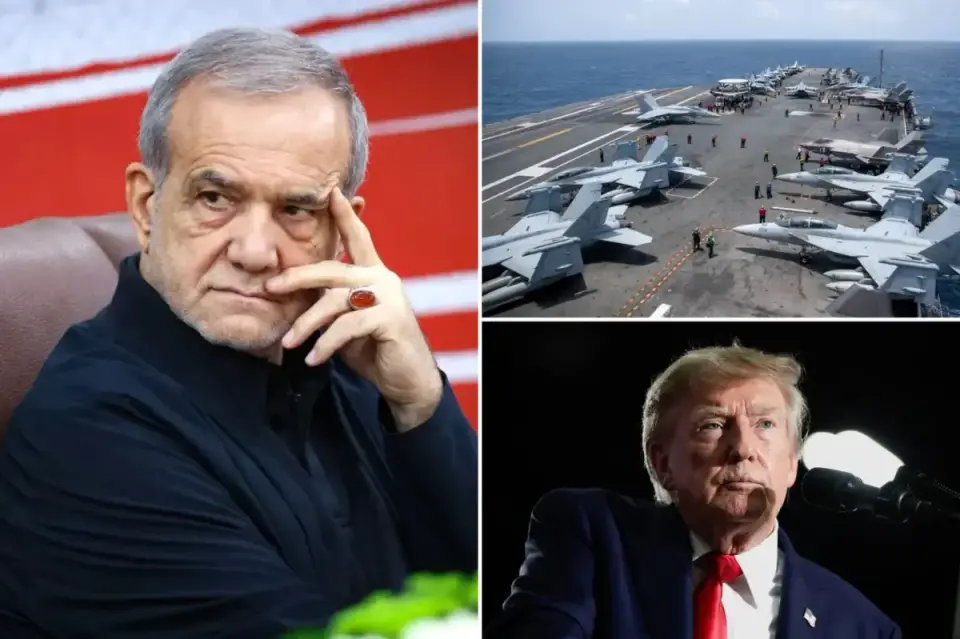
Iranian President Masoud Pezeshkian admitted that US sanctions and a naval blockade are severely damaging the country's economy, describing the situation as a 'war' that requires accepting wartime conditions. This concession follows a sharp decline in oil exports and rising inflation, despite earlier claims that the measures would have no impact.
Key points
- Pezeshkian stated that exports and imports have shrunk by 25-35% since the US naval blockade began six months ago.
- The US Treasury launched 'Operation Economic Outcast' to isolate Iran financially, targeting shadow banking networks and secondary countries.
- Iranian inflation has risen to 66%, prompting Supreme Leader Mojtaba Khamenei to urge the government to address economic and livelihood challenges.
- US Central Command reports that nearly 1,500 commercial vessels have safely transited the Strait of Hormuz with US military protection.
- Iranian officials suggest raising petrol prices to offset massive losses, while the government pledges to focus on curbing inflation and creating jobs.
Background
The current economic crisis follows a broader conflict that began in February 2026 with US-led strikes on Iran. A June memorandum of understanding aimed to end hostilities but stalled over disagreements regarding the Strait of Hormuz and frozen assets. Recent tensions include Trump's claims that Hormuz is US territory and Iran's refusal to fully reopen the waterway until US commitments are met.
How outlets are covering it
The New York Post emphasizes Pezeshkian's admission of economic suffocation and the government's plan to raise petrol prices. Fox News highlights the maritime security aspect, noting that the UK Maritime Trade Organization rates the threat level in the Strait of Hormuz as 'severe' and that 6,000 sailors remain stranded. CNBC focuses on the effectiveness of the blockade, noting that Iranian crude loadings have dropped by over 80% compared to last year, while Middle East Eye reports that Iran still transferred $7.5 billion in oil revenue to the central bank in the first four months of its fiscal year, suggesting some resilience despite the blockade.
Why it matters
The admission by Iran's president marks a significant shift in the narrative, acknowledging the tangible impact of US economic pressure. This development could influence future negotiations and the stability of the Iranian regime, as the government struggles to manage inflation and maintain public support amidst ongoing conflict.
What to watch
The US Treasury is expected to continue expanding sanctions to cut off Iran's access to US dollars, while Iran may further restrict oil exports or adjust domestic prices. The status of the Strait of Hormuz remains a critical point of contention, with both sides maintaining firm positions on navigation and security.
- Embattled Iranian president admits crippling US sanctions suffocating Tehran: ‘We are in a war situation’ New York Post
- Strait of Hormuz traffic remains below normal as US sanctions pressure Iran Fox News
- U.S. Navy blockade slashes Iran oil exports as Trump administration shifts to economic warfare CNBC
- US naval blockade put Iran under ‘exceptional’ conditions during war: Tehran governor Anadolu Ajansı
- Iran reports $7.5bn in oil revenues amid US naval blockade Middle East Eye
Want the full story? Read the original reporting
Read on New York Post