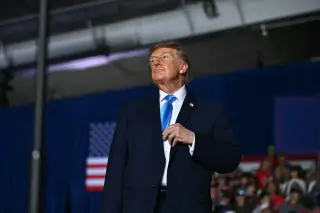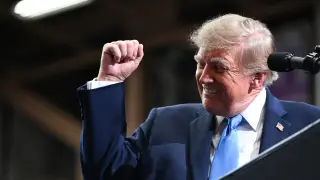
The Secret Service is aware of and monitoring a video from Iranian state media that threatens the life of Barron Trump; authorities have not publicly disclosed the credibility or specifics of the threat.
China denounces the US’s widened sanctions on Iran as illegal unilateral measures and pledges to defend its interests, signaling it will shield its ties with Tehran within international law while warning that any financial partner of Iran risks isolation, as Washington pushes ahead with what it calls an 'economic D-Day' before Xi–Trump talks.
The US unveils Operation Economic Outcast to block Iranian revenue sources and strengthen sanctions enforcement, as Iran’s economy deteriorates with the rial at a record low and high inflation. Iran signals potential retaliation while seeking new export routes and domestic stability amid the pressure. The Houthis strike a Saudi tanker far offshore, suggesting extended reach, while Iranian-backed militias in Iraq contemplate integrating with the PMF. Lebanon’s army faces challenges disarming Hezbollah amid stalled Israel-Lebanon talks. US-led pressure lines up against Tehran even as regional actors adjust tactics to endure the sanctions regime.
The UK government proposes amendments to the Cyber Security and Resilience Bill to let authorities block purchases from high-risk suppliers and require regulated firms (in energy, healthcare, telecoms, etc.) to report significant cyber incidents to the National Cyber Security Centre within 24 hours and deliver incident reports within 72 hours, with penalties for non-compliance. The measures come after Iran-linked hackers shut down a small gas plant and aim to harden supply chains, though they could raise costs for energy companies dependent on Chinese-made tech and materials.
The US is signaling sanctions on countries that buy Iranian oil, with China—the world’s largest energy consumer and Iran’s top buyer—likely to feel the most pressure. Analysts say roughly 90% of Iran’s exported oil goes to China, though Chinese imports have fallen recently as demand and refinery runs slow; India and others have also reduced purchases. Because shipping under sanctions is hard to track and the market is sensitive to price shifts, the actual impact on global oil and US energy costs remains uncertain.
Global equities rose modestly as new U.S. sanctions tightened Iran’s economy, contributing to volatility in energy markets (Brent around the high $80s and U.S. crude near $83). Iran’s rial hit a record low, while the U.S. dollar strengthened against the yen and the euro hovered around $1.167, as investors awaited Fed chair Kevin Warsh’s remarks in Jackson Hole for clues on inflation and policy.
Israeli Prime Minister Benjamin Netanyahu alleged that Iran tried to murder one of his sons, offering no details on timing or which son, as the US-Israel campaign against Iran intensifies after a strike on Tehran that killed the Iranian supreme leader and several relatives; Netanyahu also urged around-the-clock protection for rival candidate Gadi Eisenkot amid election pressure.
The U.S. Secret Service says it is aware of a video aired by Iran’s state broadcaster that appears to threaten Barron Trump, with protective measures adjusted as investigators review the material; CNN notes the video is part of a broader pattern of threats against Trump and his family.
The United States unveils an 'economic D-Day' plan to choke Iran off the global economy by penalizing enablers and key trading partners, spotlighting China’s oil link, the UAE as Iran’s main transshipment hub, and Turkey, Iraq, and India as major but exposed partners. With Tehran’s currency sliding toward 200,000 toman per US dollar, enforcement details remain murky, but the move could spur realignments in Iran’s trade as partners weigh financial exposure against dollar access.
Israeli Prime Minister Benjamin Netanyahu said in a Channel 14 interview that Iran "tried to kill one of my sons," though it isn’t clear which son was targeted. The claim came as he urged around-the-clock security for former army chief Gadi Eisenkot, calling such protection essential to prevent Iranian gains. The remarks occur amid broader US-Israel tensions with Iran, with oil markets watching as Strait of Hormuz disruptions persist.
Under heavy U.S. sanctions and war, Iran’s economy is crumbling: the rial has collapsed, inflation is surging (IMF projects about 69% in 2026; July CPI up 87.9%), oil exports have collapsed due to the blockade, and IMF forecasts a roughly 5% GDP contraction this year as the country leans on non-oil revenue to fund the war. Analysts warn the economic pain could threaten domestic stability and provoke further tensions, while Tehran weighs concessions as China watches to avoid escalation.
Iran-backed hackers reportedly found vulnerabilities in U.S. and U.K. critical infrastructure, including water facilities in 12 states and a UK power plant, signaling Tehran’s intent to maximize disruption; experts warn the attacks expose lax defenses around water and energy networks and could presage further intrusions, following a U.S. advisory about Iran-linked groups targeting water systems.
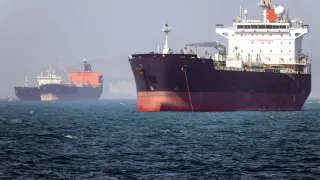
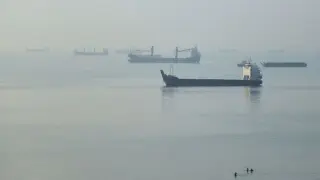
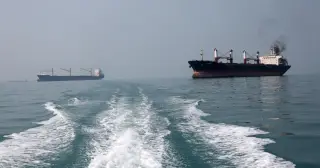
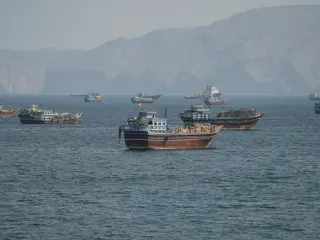
A ship was struck in the Strait of Hormuz hours after the Trump administration unveiled broad sanctions to isolate Iran, part of a campaign dubbed Operation Economic Outcast. UKMTO reported the vessel suffered engine-room damage and that the crew were safe; authorities did not assign blame. The accompanying actions include OFAC sanctions against dozens of Iranian entities and sectors tied to oil revenue, digital assets, technology, gold, aviation, and shipping, with Iran and its allies threatening retaliation. Separately, Houthi forces attacked a Saudi tanker in the Red Sea, underscoring ongoing kinetic pressure on shipping routes from Hormuz to Bab al-Mandeb. Analysts warn such incidents risk disrupting oil flows even as the U.S. argues the sanctions will push Iran back to negotiations, while domestic political considerations in the United States loom over the conduct of the conflict.
Iran-linked hackers are suspected of taking offline a small UK power generator for about four days after Iran-associated cyberattacks targeted Minnesota’s water systems. UK officials say the wider grid was not at risk, but U.S. and allied agencies warn that civilian infrastructure remains vulnerable to internet-connected industrial controls and related campaigns, including IRGC-linked activity; the incident follows DOJ charges related to Iran-based cyber theft and underscores the growing threat to utilities and critical infrastructure.
The United Arab Emirates suspended all trade with Iran, cutting off roughly $6 billion in cash and disrupting Iran’s $21.3 billion bilateral trade network, potentially crippling Tehran by choking dollar access and imports as U.S.-led sanctions intensify.