
Witnesses Detail Brutal Abuse of Freed US Teacher in Russian Prison
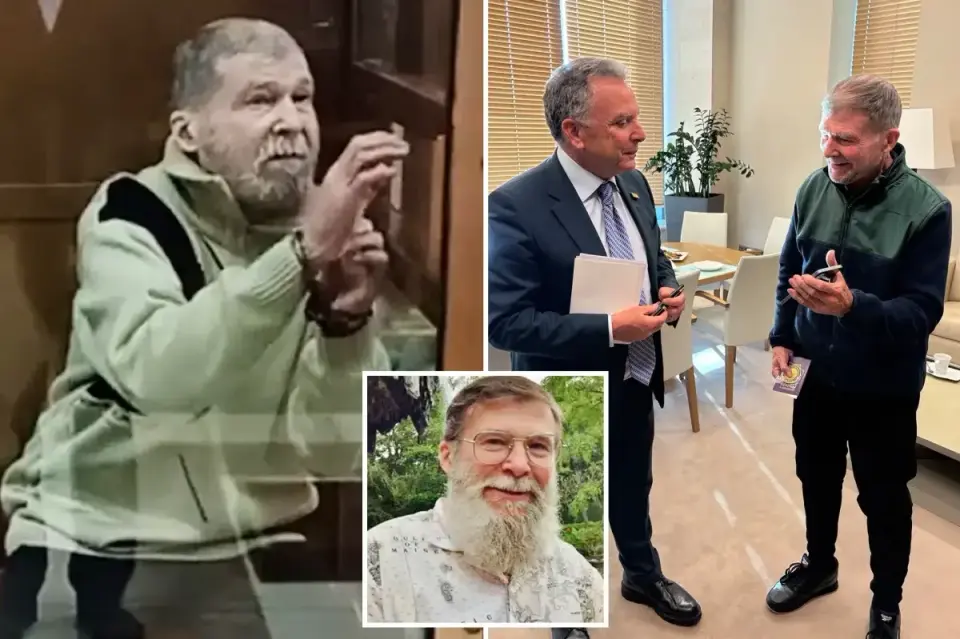
Stephen Hubbard, a 74-year-old retired US teacher, was released from a Russian prison on October 21, 2026, after serving over four years. Former inmate Ihor Shishko detailed severe torture, including forced crawling and sexual assault, claiming guards singled out Hubbard for being American. US envoy Steve Witkoff praised Vladimir Putin as a 'humanitarian' for the release, drawing sharp criticism. Both Washington and Moscow denied the release was an exchange for Russian war blogger Mikhail Zvinchuk.
Key points
- Hubbard was freed on October 21, 2026, during a meeting between US envoy Steve Witkoff and President Vladimir Putin in St. Petersburg.
- Former Ukrainian prisoner Ihor Shishko reported that Hubbard was beaten, electrically shocked, and sexually assaulted, including being forced to crawl on the floor until his skin rubbed away.
- Shishko stated guards specifically targeted Hubbard because he was American, describing the abuse as a daily occurrence to 'show us our place.'
- US envoy Steve Witkoff called Putin a 'humanitarian' after the release, a remark condemned as 'shameful' by Shishko and criticized by US lawmakers.
- Hubbard arrived in San Antonio, Texas, for medical evaluation, having not known he was being released until he saw the US flag on the plane.
- The US State Department and Kremlin both denied that Hubbard's release was linked to the detention of Russian war blogger Mikhail Zvinchuk in Montenegro.
Background
Hubbard, a US Air Force veteran and English teacher, was sentenced to seven years in 2024 on charges of mercenary activity in Ukraine, a claim his family denies. He had been detained since April 2022. Previous coverage noted that his release occurred amid stalled peace talks and recent Russian missile strikes on Ukraine, highlighting the complex diplomatic backdrop of the event.
How outlets are covering it
The New York Post and The Atlantic focused heavily on the graphic abuse described by Shishko and the diplomatic controversy surrounding Witkoff's praise of Putin. The Atlantic used satire to mock the term 'humanitarian' in this context. Reuters, via Yahoo, emphasized the diplomatic denial of a prisoner swap, clarifying that the release was not linked to the case of Russian blogger Mikhail Zvinchuk, whom the US had accused of election interference. CNN's content was largely obscured by technical code, offering no substantive narrative perspective.
Why it matters
The release of Hubbard highlights the severe conditions faced by Western prisoners in Russian custody and the contentious nature of US-Russia diplomatic interactions. The backlash against Witkoff's remarks underscores the sensitivity of engaging with Russian leadership amid ongoing war and allegations of torture, while the denial of a prisoner swap clarifies the transactional limits of recent diplomatic breakthroughs.
What to watch
Hubbard is expected to visit the White House in the coming days. The US and Russia have agreed to resume trilateral peace talks after November 10, though skepticism remains regarding Moscow's commitment to ending the war in Ukraine.
- American teacher Stephen Hubbard was horrifically beaten, sexually assaulted in Russian prison: ex-inmate New York Post
- Russia, US say American Hubbard was not released in exchange for a Russian war blogger Yahoo
- Trump, Putin negotiate release of US Air Force veteran from Russian prison Military Times
- Vladimir Putin, the Humanitarian The Atlantic
- Freed Russian prisoner Stephen Hubbard has returned to American soil CNN
Want the full story? Read the original reporting
Read on New York Post