
France and UN shift to equal-area maps to correct historical distortions
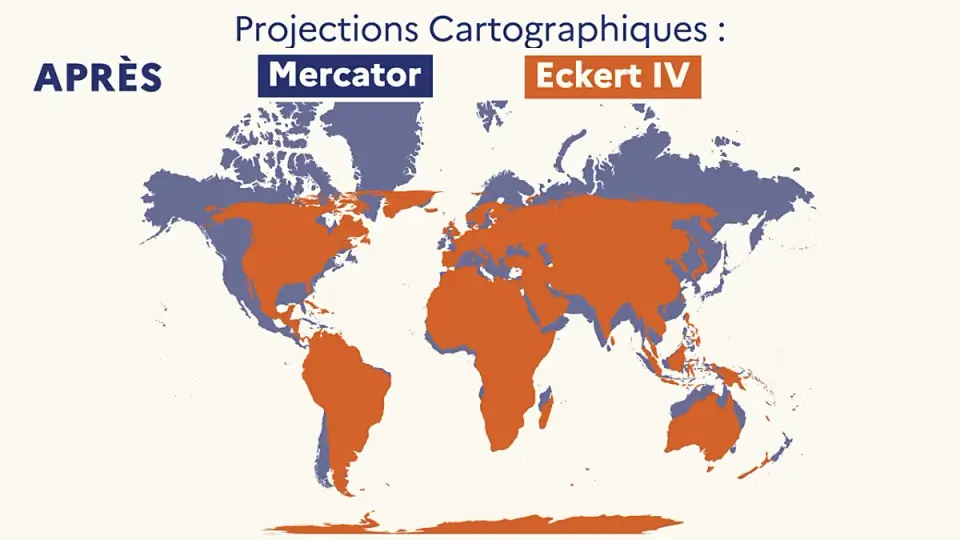
France’s foreign ministry is replacing the Mercator projection with the Eckert IV projection in diplomatic communications, following a UN General Assembly vote to endorse the Equal Earth map. The UN resolution, passed 164-1 with six abstentions, aims to correct historical distortions that minimize equatorial regions like Africa. While the US opposed the measure as ideological, France and other nations are adopting equal-area maps to reflect true continental sizes, though Mercator remains standard for navigation and digital platforms.
Key points
- France’s foreign ministry will use the Eckert IV projection instead of Mercator in diplomatic materials, a shift that began in 2021.
- The UN General Assembly adopted a non-binding resolution endorsing the Equal Earth projection, with 164 votes in favor, one against (US), and six abstentions.
- The Mercator projection, created in 1569 for navigation, distorts area sizes, making polar regions appear larger and equatorial regions like Africa appear smaller.
- The US opposed the UN resolution, calling it a 'radical ideological project' that distracts from genuine international issues.
- The new maps do not ban Mercator, which remains useful for navigation and digital platforms like Google Maps, but aim to correct visual biases in diplomatic and educational contexts.
Background
The Mercator projection, developed by Gerardus Mercator in 1569, became the standard for world maps due to its utility for maritime navigation, preserving compass bearings. However, it distorts area sizes, exaggerating polar regions and minimizing equatorial ones. This distortion has persisted in education and media for centuries, influencing perceptions of global power and geography. Recent efforts to adopt equal-area projections, such as Equal Earth and Eckert IV, aim to correct these biases, reflecting true continental sizes and challenging historical cartographic norms.
How outlets are covering it
Euronews highlights France’s proactive shift to Eckert IV, emphasizing the ministry’s gradual phase-out of Mercator since 2021 and the philosophical stance that maps are not neutral. The Washington Post focuses on the UN vote, noting the US as the sole dissenter and the African-led campaign’s argument that Mercator misrepresents Africa’s size and significance. BBC provides technical context, explaining that while Equal Earth corrects area distortion, it sacrifices shape accuracy and navigational utility, unlike Mercator. Fox News underscores the US opposition, framing the resolution as ideological and distracting from core UN functions, while noting Mercator’s continued dominance in digital mapping due to its practical advantages for online platforms.
Why it matters
The shift to equal-area maps challenges long-standing cartographic norms that have influenced global perceptions of power and geography. By correcting distortions that minimize equatorial regions, these changes aim to promote a more accurate and equitable representation of the world, potentially impacting diplomatic, educational, and economic narratives. The US opposition highlights ongoing tensions over the role of symbolism in international institutions, while the continued use of Mercator for navigation and digital platforms underscores the practical trade-offs in map design.
What to watch
France will continue phasing out Mercator in diplomatic communications, prioritizing equal-area projections for accuracy. The UN resolution encourages governments, schools, and tech companies to adopt Equal Earth or similar maps, though Mercator remains standard for navigation and digital platforms. It remains to be seen if educational institutions will follow the diplomatic shift, as most school maps still use Mercator. The US may continue to oppose such resolutions, viewing them as ideological distractions from core UN functions.
- Paris drops Mercator projection: France now looks smaller on world maps Euronews
- The U.N. backed a map that shows Africa true to size. The U.S. was sole objector. The Washington Post
- What different world maps get right - and what they get wrong BBC
- Explanation of Vote Before the Vote for UNGA 80 Adoption on the Resolution to “Correct the Map” United States Mission to the United Nations (.gov)
- United Nations votes 164-1 for Equal Earth map after US brands it 'radical ideological project' Fox News
Want the full story? Read the original reporting
Read on Euronews