
Hawaii's 550-Year-Old Hōlei Sea Arch Collapses Into Pacific
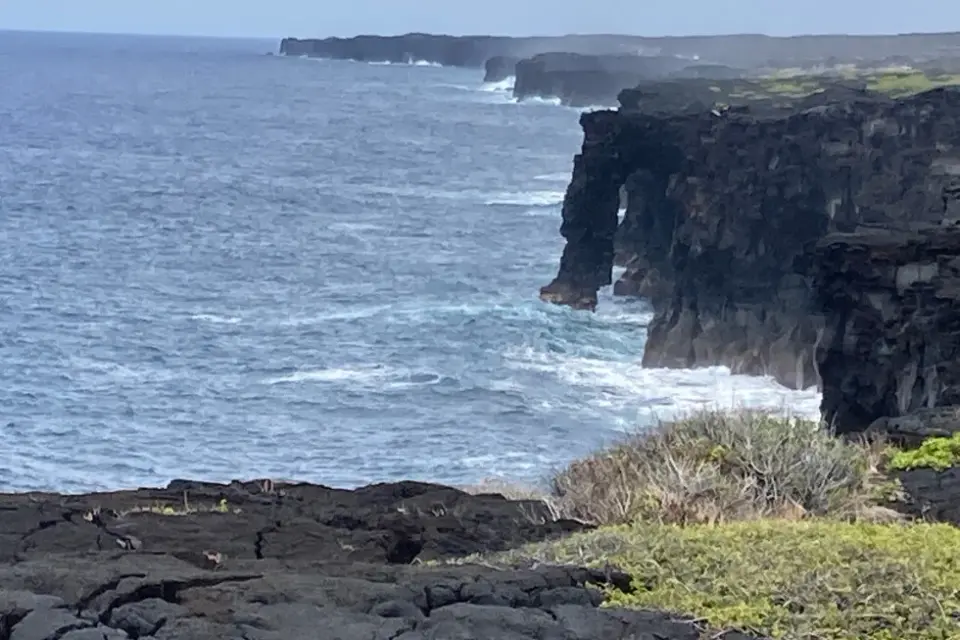
The Hōlei Sea Arch, a 90-foot natural landmark in Hawai'i Volcanoes National Park, collapsed into the Pacific Ocean between September 23 and 27, 2026. The National Park Service confirmed the loss, attributing it to long-term erosion and likely exacerbated by Tropical Storm Nolo. The site is now closed due to safety hazards.
Key points
- The Hōlei Sea Arch, a 90-foot (27-meter) lava rock formation, collapsed into the Pacific Ocean between September 23 and 27, 2026.
- The National Park Service (NPS) confirmed the collapse on October 2, 2026, noting the arch was still standing on September 23 when the park was closed for Tropical Storm Nolo.
- The NPS stated the collapse was an expected result of 'differential erosion,' a process where softer rock wears away faster than harder rock.
- The site is currently closed to the public due to unstable cliffs and serious falling hazards, with NPS warning that visitors entering the area put themselves and first responders at risk.
- The arch, formed approximately 550 years ago by ancient lava flows, was a major tourist attraction in Hawai'i Volcanoes National Park on the Big Island.
Background
Hawaii's Big Island has faced a series of severe weather events in 2026, including Tropical Storm Moke in August and Hurricane Lala, which caused widespread damage and power outages. The recent collapse of the Hōlei Sea Arch follows this pattern of extreme weather impacting the island's infrastructure and natural landmarks. The NPS has long noted that the arch was a temporary formation, subject to eventual collapse due to natural erosion processes.
How outlets are covering it
All four sources (AP, NYT, CBS, CNN) agree on the core facts: the collapse occurred between September 23 and 27, 2026, and was confirmed by the NPS. The NYT and CNN emphasize the arch's age (550 years) and its status as a cherished landmark, while CBS highlights the connection to Tropical Storm Nolo and the subsequent federal emergency declaration. The AP and CNN focus on the NPS's warning about the site's instability and the danger to visitors. There is no significant disagreement among the outlets, but the emphasis varies: some focus on the natural process (erosion), while others highlight the impact of recent storms.
Why it matters
The collapse of the Hōlei Sea Arch is significant because it represents the loss of a major natural landmark and tourist attraction in Hawai'i Volcanoes National Park. It also underscores the vulnerability of Hawaii's coastline to extreme weather events and natural erosion processes. The NPS's warning about the site's instability highlights the ongoing risks to visitors and the need for safety measures in national parks.
What to watch
The NPS is expected to continue monitoring the unstable cliff edges and may implement further safety measures to prevent visitors from entering the area. The site is likely to remain closed for an extended period due to the risk of falling rocks and other hazards. The NPS may also provide updates on the long-term impact of the collapse on the park's coastline and the potential for new formations to replace the Hōlei Sea Arch.
- A famed Hawaii sea arch collapses, prompting NPS warnings of unstable cliffs AP News
- The Holei Sea Arch, a Centuries-Old Hawaii Wonder, Crumbles Into the Pacific The New York Times
- Hawaii sea arch collapses into Pacific Ocean 550 years after its formation CBS News
- Hawaii’s famed Hōlei Sea Arch has collapsed CNN
- Hōlei Sea Arch Collapses in Hawaiʻi Volcanoes National Park National Park Service (.gov)
Want the full story? Read the original reporting
Read on AP News