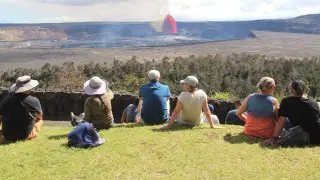
Episode 55 of the ongoing Kīlauea summit eruption began at 3:19 a.m. HST on October 17, 2026, and ended at 9:03 a.m. HST. The event produced lava fountains reaching up to 720 feet, the highest since the eruption began in December 2024. All activity remained confined within Halemaʻumaʻu crater, and the USGS maintained the volcano alert level at WATCH.
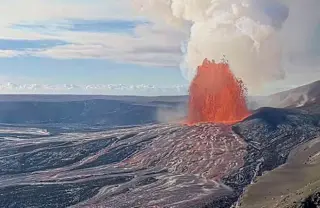
Episode 55 of the ongoing Kīlauea summit eruption began at 3:19 a.m. HST on October 17, 2026, and concluded at 9:03 a.m. HST. The event lasted approximately 5 hours and 44 minutes, with lava fountains reaching a maximum height of over 700 feet (220 meters) by 5:00 a.m. HST. All activity remained confined within Halemaʻumaʻu crater in Hawaiʻi Volcanoes National Park. This episode followed a period of continuous lava overflows that began on October 16 and marked the 55th fountaining event since the eruption began on December 23, 2024.
The south vent at Kīlauea volcano produced multiple lava overflows overnight on October 16, 2026, marking a shift from low-level activity to vigorous flow. The USGS Hawaiian Volcano Observatory reports that the summit remains highly pressurized, with magma likely originating from the same shallow chamber that fueled previous fountaining episodes. While no major fountaining has occurred since August, the current activity suggests the magma system is near the surface and capable of generating new flows or potential future episodes.
The U.S. Geological Survey (USGS) has placed Kīlauea volcano on an orange aviation alert as renewed seismic activity and vent spattering prompt trail closures. While the volcano remains in a high-pressure state, scientists can no longer predict when the next major lava fountaining episode will occur.
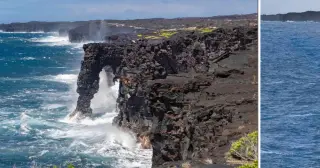
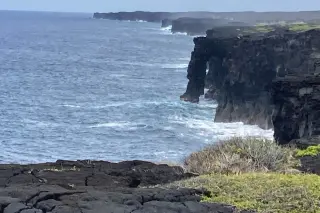
The Hōlei Sea Arch, a 90-foot natural landmark in Hawai'i Volcanoes National Park, collapsed into the Pacific Ocean between September 23 and 27, 2026. The structure, which had stood for approximately 550 years, disappeared during a park closure caused by Tropical Storm Nolo. Officials attribute the loss to long-term differential erosion, noting that such coastal changes are expected but unpredictable.
The Hōlei Sea Arch, a 90-foot natural landmark in Hawai'i Volcanoes National Park, collapsed into the Pacific Ocean between September 23 and 27, 2026. The National Park Service confirmed the loss, attributing it to long-term erosion and likely exacerbated by Tropical Storm Nolo. The site is now closed due to safety hazards.
New fissures opened on the northwest wall of Halemaʻumaʻu crater on September 14, 2026, as Kīlauea’s summit remained highly pressurized. While scientists anticipated a major lava fountaining episode, the volcano instead produced prolonged precursory activity and new low-level vents. The USGS notes that the outcome remains uncertain, with possibilities ranging from continuous lava flows to a return to fountaining or new vent formation.
Precursory lava overflows at Kīlauea’s summit continued on September 9, 2026, as the volcano approached a likely fountaining episode. The USGS Hawaiian Volcano Observatory (HVO) reported 29 intermittent overflows from the north vent, lasting between 15 minutes and two hours, with dome fountains reaching 15 to 30 feet. Two lava lobes formed, extending approximately one kilometer from the vent. Summit inflation remained unstable, recovering only 12.3 of the 12.7 microradians lost during the previous episode. HVO forecast episode 55 to begin between September 8 and 10, with a possible extension to September 13 if inflation stalls. Hurricane Lowell obscured webcam views, forcing scientists to rely on seismic tremor and thermal imagery for monitoring. The Volcano Alert Level remains WATCH, and the Aviation Color Code is ORANGE.
Precursory lava overflows at Kīlauea’s north vent began on September 7, 2026, prompting the USGS to raise the alert level to WATCH. However, the anticipated Episode 55 fountaining has not yet started due to irregular magma recharge. The forecast window for the next eruption has widened to September 7–10, with a secondary window extending to September 13 if deflation continues. All activity remains confined within Halemaʻumaʻu crater.
Kilauea unleashed lava fountains up to 1,000 feet, triggering ashfall warnings and temporary closures of Hawaii Volcanoes National Park and part of Highway 11; the eruption’s 43rd since December 2024 remains confined to the summit crater, with shelters opened for residents and visitors affected by tephra.
A fresh lava-fountaining episode at Kilauea reached about 1,000 feet, prompting temporary closures at Hawaii Volcanoes National Park and a section of Highway 11 due to tephra fallout; the eruption's summit activity remains confined and not posing immediate threats to homes.
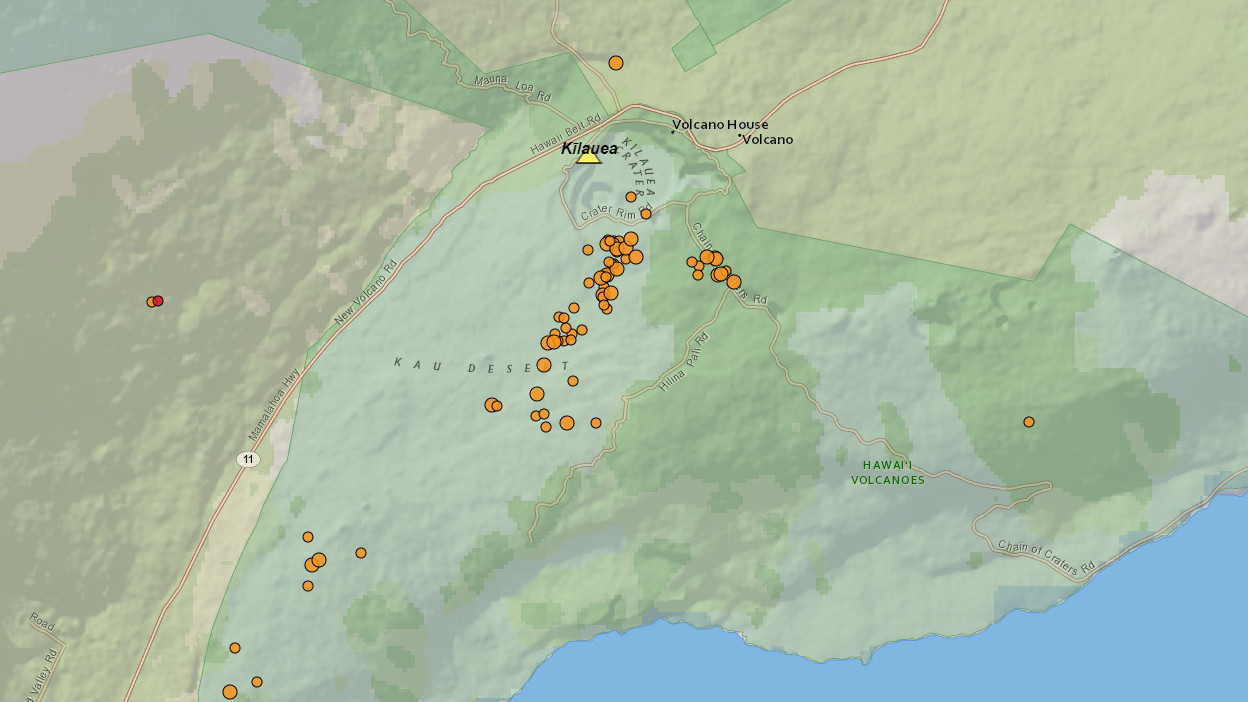
Kīlauea volcano in Hawaii is currently not erupting, but there has been moderate seismic activity in the summit region, upper East Rift Zone, and Southwest Rift Zone. The volcano remains at an advisory level, with no signs of an imminent eruption, but the summit region is unsettled and eruptive activity could occur with little or no warning. The Mauna Iki Trail in Hawaiʻi Volcanoes National Park is closed due to volcanic unrest. Seismicity and inflation in the summit region are being monitored, but there is currently no indication of magma movement towards the surface.