
Iranian President Defies Trump’s ‘Annihilation’ Threat at U.N. Amid Ongoing War
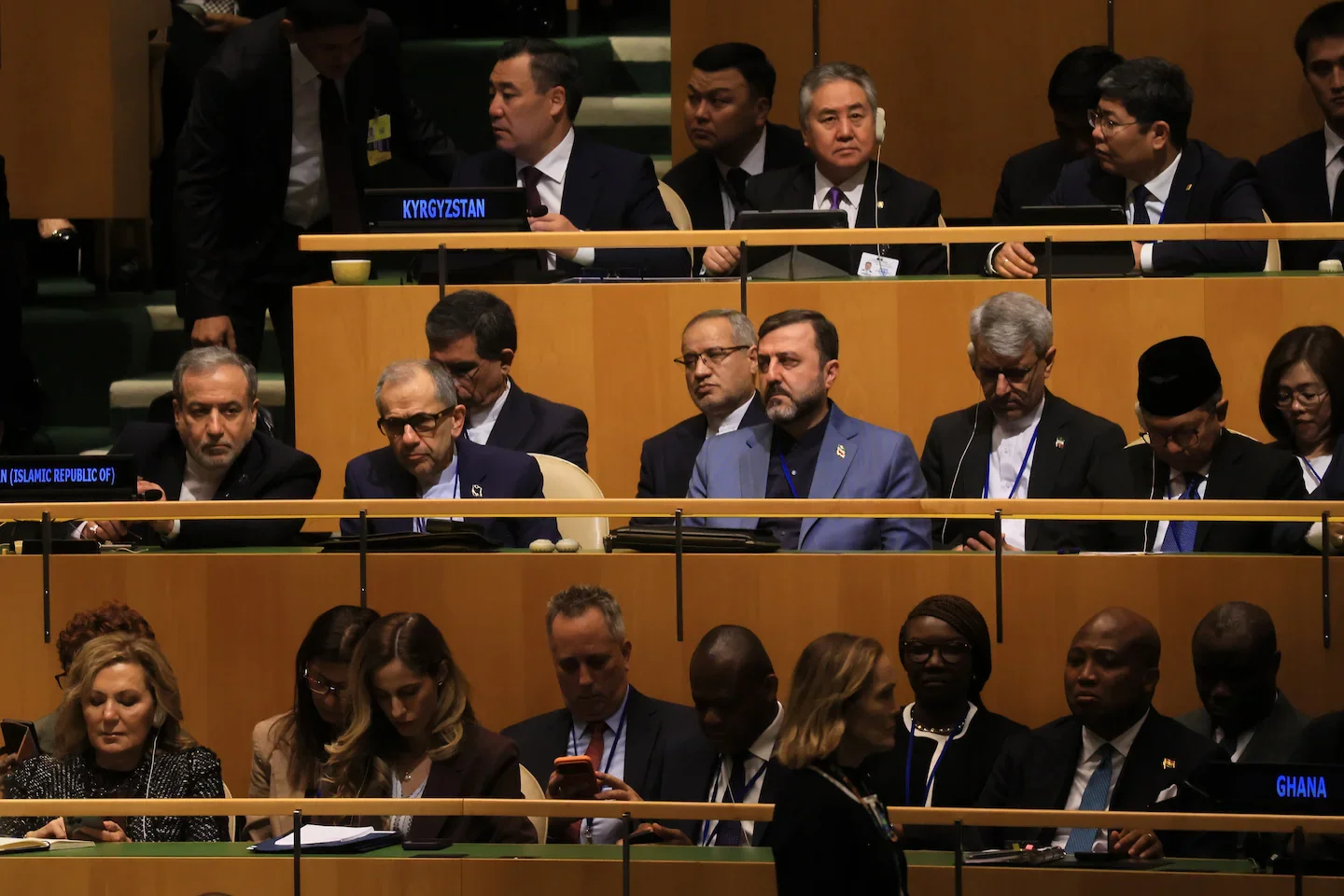
Iranian President Masoud Pezeshkian addressed the U.N. General Assembly on September 23, directly rebutting President Donald Trump’s previous-day threat to 'annihilate' Iran. Pezeshkian framed Iran as a victim of terrorism, vowed to resist U.S. pressure, and asserted that Iran must remain powerful to avoid future threats. The speech occurred while the U.S. and Iran remained at war, with diplomatic talks ongoing but yielding no breakthrough. Iran’s hard-line factions criticized the diplomacy, while the U.S. maintained its naval blockade of the Strait of Hormuz.
Key points
- Pezeshkian’s U.N. speech was historic, as no leader has previously addressed the U.N. in person while their country is at war with the U.S.
- Iran’s Foreign Minister Abbas Araghchi held talks with U.S. envoy Steve Witkoff, but U.S. Secretary of State Marco Rubio stated no major breakthrough was achieved.
- Iran’s Supreme National Security Council chief Mohsen Rezaei announced a new negotiating framework requiring the U.S. to take the first step, including ending the war and releasing frozen funds.
- The U.S. naval blockade of the Strait of Hormuz remains in effect, with Iran’s parliament speaker Mohammad Bagher Ghalibaf stating the strait will not reopen until U.S. commitments are honored.
- A cargo vessel was struck in the Strait of Hormuz, killing one person, highlighting ongoing regional instability.
Background
The U.S.-Iran conflict began seven months ago, escalating after the killing of Iran’s supreme leader, Ayatollah Ali Khamenei. Prior to the U.N. General Assembly, the U.S. and Iran held their first indirect talks in months on September 22, but significant differences remained. The U.S. has maintained a naval blockade of the Strait of Hormuz, a vital shipping route for global oil, while Iran’s economy has faced mounting strain. The conflict has also sparked regional tensions, including Houthi attacks in Saudi Arabia and security alerts for U.S. embassies across the Middle East.
How outlets are covering it
The Washington Post emphasized Pezeshkian’s defiant tone and his framing of Iran as a victim of terrorism, noting his call for Iran to remain powerful to avoid threats. CNN highlighted Iran’s core demands, including its nuclear program, missile defenses, and control of the Strait of Hormuz, and noted the implicit threat to regional neighbors. CBS News focused on Iran’s hard-line stance, with the Revolutionary Guard Corps warning of a long-term war and the Supreme National Security Council chief demanding the U.S. take the first step in negotiations. CNBC stressed Pezeshkian’s accusation that the U.S. and Israel are the sources of global instability, contrasting with Trump’s narrative that Iran seeks a peace deal. All sources agreed on the historic nature of Pezeshkian’s speech and the ongoing diplomatic stalemate, but differed in emphasis on Iran’s internal divisions and the likelihood of a breakthrough.
Why it matters
The U.N. speech underscores the deepening U.S.-Iran conflict and the failure of diplomatic efforts to resolve the war. Iran’s hard-line stance and the U.S. naval blockade of the Strait of Hormuz threaten global oil supplies and regional stability. The ongoing conflict has also sparked broader regional tensions, including Houthi attacks in Saudi Arabia and security alerts for U.S. embassies across the Middle East. The outcome of the U.S.-Iran negotiations will have significant implications for global energy markets and regional security.
What to watch
The U.S. and Iran are expected to continue diplomatic talks, but no breakthrough is anticipated in the near term. The U.S. naval blockade of the Strait of Hormuz will likely remain in effect until Iran’s conditions are met. Iran’s hard-line factions may oppose further diplomatic engagement, while the U.S. may consider military options if no deal is reached. The conflict’s resolution will depend on the outcome of the U.S. midterm elections and the willingness of both sides to compromise.
- Iran’s president tells U.N. his country ‘must be powerful so as to avoid being threatened’ The Washington Post
- Iran’s president laid out Tehran’s demands to the world, from a podium in New York CNN
- Iran Will Not Be Bullied, President Masoud Pezeshkian Says in U.N. Speech The New York Times
- Iranian president arrives in New York as Trump weighs cutting a deal or driving Iran "into hell" CBS News
- Iran's president blames U.S., Israel for global instability in defiant UN speech CNBC
Want the full story? Read the original reporting
Read on The Washington Post