
Manila protests erupt as Trump arrives for ASEAN summit amid Pax Silica backlash
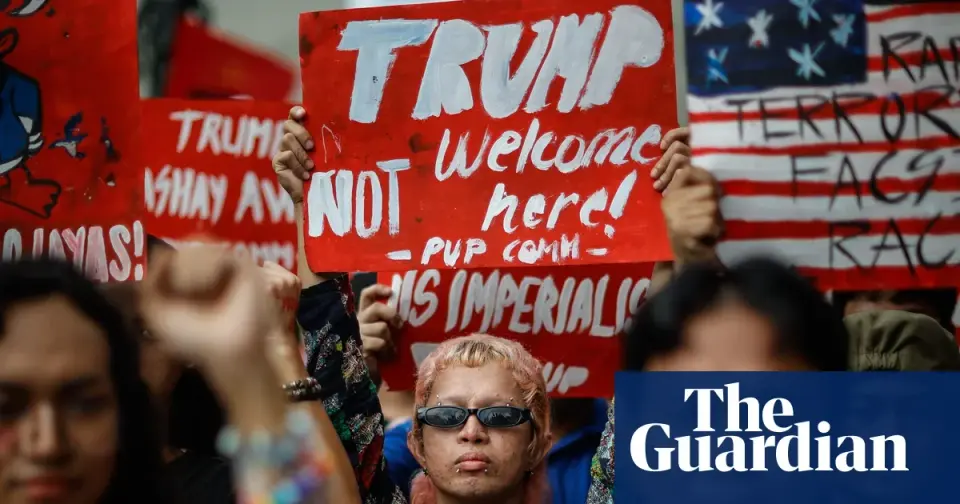
Hundreds were arrested in Manila as Donald Trump arrived for the ASEAN summit, facing massive protests over the Iran war and the US-led Pax Silica AI initiative. Demonstrators clashed with police, burning effigies of the US president, while the Philippine government maintained a heavy security cordon. The unrest stems from anger over rising energy costs and fears that the new tech hub will displace indigenous communities and drain local resources.
Key points
- Nearly 300 people were arrested in Manila in the days leading up to the ASEAN summit, described by protest leaders as the largest single day of arrests since President Ferdinand Marcos Jr took office in 2022.
- Protesters, numbering up to 10,000, clashed with police, burned effigies of Trump, and chanted slogans calling him the world's 'No 1 terrorist' due to the Iran war and its impact on global energy prices.
- The US-led Pax Silica initiative, aimed at securing AI supply chains independent of China, is a primary driver of the unrest, with critics fearing the planned hub in Tarlac will displace indigenous Ayta people and drain water and power supplies.
- Trump arrived in Manila on Tuesday for the ASEAN summit before heading to Shenzhen, China, for the APEC summit, where he is scheduled to hold trilateral talks with Xi Jinping and Vladimir Putin.
- Human rights organizations, including Amnesty International, have called for the immediate release of detainees, stating that peaceful protests should not be forcibly dispersed and demanding scrutiny of the grounds for arrests.
Background
The current protests in the Philippines follow a broader global trend of unrest driven by economic anxiety and the Iran war, which has significantly impacted energy costs and living standards. In the US, these factors contributed to record-low approval ratings for Trump ahead of the November 2026 midterms. Similarly, in Albania, anti-government protests in October led to hundreds of arrests, reflecting widespread dissatisfaction with economic conditions and political leadership. The Philippines' current situation mirrors these global tensions, where domestic economic struggles are exacerbated by international conflicts and geopolitical shifts, leading to public backlash against foreign policies and initiatives perceived as detrimental to local interests.
How outlets are covering it
The Guardian and The New York Times emphasize the scale of the protests and the specific grievances related to Pax Silica, highlighting the displacement of indigenous communities and resource concerns. Time Magazine notes the Philippine government's efforts to accommodate Trump, including schedule revisions and a state banquet, while also pointing out the domestic political motivations of President Marcos. The Telegraph focuses on the symbolic nature of the protests, such as burning effigies, and the broader geopolitical context of Trump's meetings with Xi and Putin. All sources agree on the heavy police response and the significant public opposition to Trump's visit, but they differ in their emphasis on the economic versus political dimensions of the unrest.
Why it matters
The protests in the Philippines highlight the growing global backlash against US foreign policies, particularly those perceived as exacerbating economic instability and environmental harm. The Pax Silica initiative, while aimed at countering Chinese influence, has sparked significant domestic opposition due to concerns over resource depletion and displacement of indigenous communities. This situation underscores the tension between geopolitical strategies and local impacts, potentially affecting US alliances in the region. Additionally, the heavy-handed police response raises human rights concerns and may influence international perceptions of the Philippine government's commitment to democratic values.
What to watch
Trump is expected to continue his Asia tour, attending the APEC summit in Shenzhen and holding trilateral talks with Xi Jinping and Vladimir Putin. The Philippine government will likely maintain a strong security presence during the summit, and the situation regarding the Pax Silica hub may see further developments as local communities and officials continue to voice their concerns. The outcome of these protests and the subsequent diplomatic engagements could influence future US-Philippines relations and the broader geopolitical landscape in Asia.
- Hundreds arrested in anti-Trump protests in Philippines amid anger over Iran war and AI pact The Guardian
- Anti-Trump protests in Manila and a red crab migration: photos of the day – Tuesday The Guardian
- Trump’s Plan for A.I. Supremacy Fuels Resistance in the Philippines The New York Times
- Philippine Protests Grow as Government Welcomes Trump Time Magazine
- Trump effigies burn in Philippines ahead of Asia summits The Telegraph
Want the full story? Read the original reporting
Read on The Guardian