President Trump reframes U.S. alliances around AI leadership, restricting partners’ access to frontier models and signaling a transactional approach to cooperation as Washington seeks to shape AI leadership through export controls, Project Glasswing, and Pax Silica.
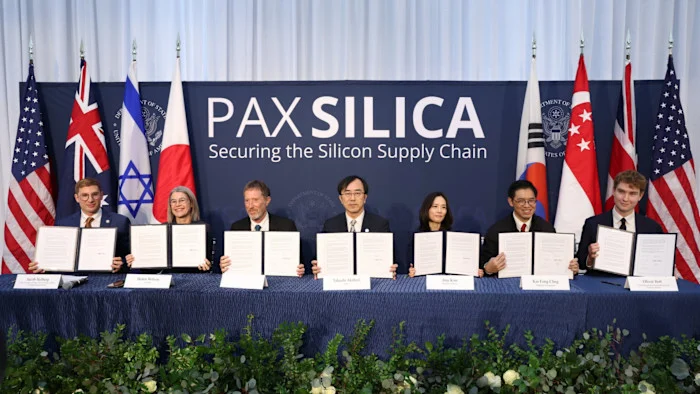
The EU, along with the Netherlands, Germany and Greece, joined Pax Silica, the US-led initiative to secure and diversify AI-related supply chains—from chips to energy—bringing signatories to about 24 countries. The group aims to spur innovation sovereignty and provide a US-led alternative to digital-sovereignty aims, with further signings expected and plans for initiatives such as a Central Asia economic security zone and a Philippines zone, plus a Stanford-backed manufacturing curriculum. The effort underscores a push to reduce reliance on China amid broader tech competition, while emphasizing private-sector collaboration and addressing governance concerns like disinformation and transparency.
The Trump administration is pushing Pax Silica, a U.S.-led effort with six allies (Israel, Singapore, Japan, South Korea, Australia, and the United Kingdom) to secure the global AI and tech supply chain—from minerals and energy to semiconductors and logistics—citing China’s dominance in rare earths and Belt and Road influence. Qatar and the UAE are expected to join, with talks underway with the EU, Canada, and Taiwan. The plan rests on four pillars: rebalancing trade, reindustrializing America, securing supply chains, and stabilizing conflict zones through economic tools, all aimed at reducing China’s leverage in AI and technology.