
Trump Halts Iran Talks, Redirects Vance to Domestic Fraud Probe Amid Stalemate
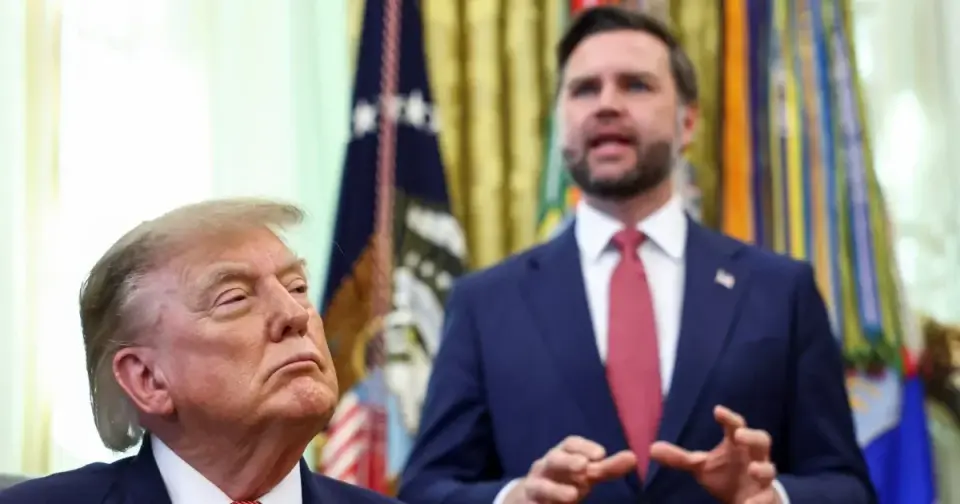
President Donald Trump has suspended diplomatic efforts to end the war with Iran, declaring that a deal is unnecessary and redirecting Vice President JD Vance to investigate corruption in Democratic-run jurisdictions. This move follows Republican losses in the 2026 midterm elections, which Vance publicly blamed on the conflict’s economic fallout. While Trump claims control over the Strait of Hormuz and Iranian assets, the administration remains divided, with Secretary of State Marco Rubio supporting economic pressure and Defense Secretary Pete Hegseth opposing negotiations. The conflict has entered a stalemate, with Iran maintaining a naval blockade and threatening further strikes, while Gulf allies urge restraint to avoid renewed escalation.
Key points
- Trump stated on Truth Social that the US does not need a deal with Iran, claiming Washington has secured 'hundreds of billions of dollars' and control of the Strait of Hormuz.
- Vance, who led negotiations in Islamabad and Switzerland, was ordered to focus on 'massive corruption and crime' in Democratic-controlled areas, effectively sidelining him from foreign policy.
- Vance previously blamed the war for Republican midterm losses, stating, 'The reason we lost is the war,' a stance that contrasts with Trump’s defense of the conflict as necessary to prevent nuclear proliferation.
- Iran’s parliament speaker, Mohammad Bagher Ghalibaf, stated that the Strait of Hormuz will never return to its pre-war status and that Tehran has submitted seven conditions for a ceasefire via Qatari mediators.
- At least 12 tankers have been hit in the Strait of Hormuz in the past 12 days, with Iran claiming these vessels used an 'illegal' southern route, while the US military claims to have assisted 4,000 ships through the waterway.
- Trump acknowledged that rising fuel prices contributed to the midterm defeat but maintained that further large-scale strikes are 'quite unlikely,' citing requests from Gulf allies to maintain the current status quo.
Background
The US-Iran conflict began in February 2026 with joint US-Israeli strikes, leading Iran to close the Strait of Hormuz, which disrupted global energy supplies. A memorandum of understanding signed in June collapsed over disagreements regarding strait control. Recent archive coverage highlights internal administration divisions, with Rubio defending the war’s necessity while Vance and others criticized its political cost. The current stalemate follows a period of intense diplomatic activity involving Qatari and Pakistani mediators, which Trump has now curtailed.
How outlets are covering it
Al Jazeera emphasizes the internal administration rift, noting that while Trump claims victory, Vance’s public criticism of the war’s cost and Rubio’s support for economic pressure suggest a fragmented strategy. The New York Times frames the move as a deepening of uncertainty regarding Trump’s endgame, highlighting the shift from negotiation to domestic focus. The Guardian notes that this decision normalizes a stalemate, leaving the US blockade in place without a clear path to resolution. The Washington Post highlights the confusion among Gulf allies, who had braced for renewed strikes, and cites experts warning that this approach leaves the region and global economy in a precarious 'no war, no peace' state. All sources agree that Vance’s redirection signals a significant shift in US foreign policy priorities following the midterm elections.
Why it matters
The suspension of talks risks prolonging the energy crisis and economic instability caused by the Strait of Hormuz blockade. By prioritizing domestic political attacks over diplomatic resolution, the administration may leave Gulf allies to manage an 'angry, cornered Iran' independently, potentially destabilizing regional security and global oil markets. The move also signals a potential long-term shift in US foreign policy, prioritizing domestic political consolidation over international conflict resolution.
What to watch
Iran is expected to continue its aggressive negotiating posture, leveraging its perceived leverage from the US withdrawal from talks. Gulf nations may be forced to engage Iran directly to secure their own security, as suggested by regional analysts. The US administration will likely maintain economic pressure and the naval blockade, while monitoring the situation for potential triggers to resume military strikes. The next few weeks are critical for determining whether the stalemate evolves into a new normal or escalates into renewed conflict.
- Why is Trump saying ‘no deal necessary’ with Iran as he sidelines JD Vance? Al Jazeera
- Trump Says He’s Pulling Vance Off Iran Talks to Focus on Fraud Campaign The New York Times
- Trump says no deal needed on Iran war and orders Vance to focus on domestic issues The Guardian
- Trump says no deal needed with Iran, closes down Vance negotiations The Washington Post
- Trump redirects Vance from Iran to focus on combatting fraud in Democratic-led states NPR
Want the full story? Read the original reporting
Read on Al Jazeera