
Trump’s Dublin Remarks on Irish Reunification Break Decades of U.S. Neutrality
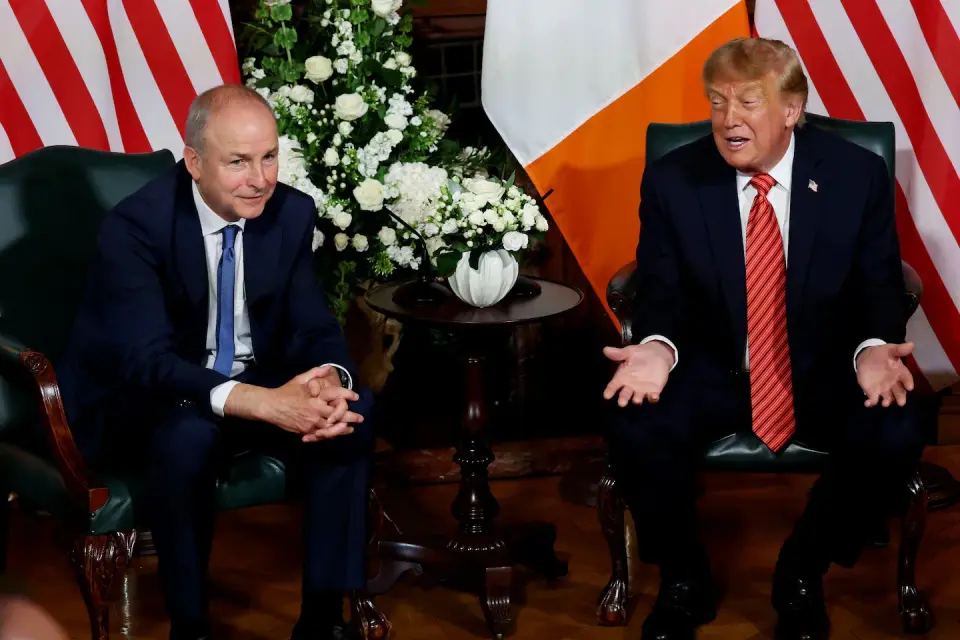
During a two-day visit to Ireland, President Donald Trump stated he would 'love to see' Irish reunification, marking a sharp departure from decades of U.S. neutrality on the issue. While he suggested the move could happen 'eventually' or 'now,' the UK government and unionist leaders swiftly rejected the idea, reaffirming the Good Friday Agreement. The comments sparked immediate diplomatic friction and large-scale protests in Dublin, though Trump maintained a cordial tone with Irish leaders during his golf-focused trip.
Key points
- Trump told reporters in Dublin that reunification would be 'fantastic' and 'a great thing,' breaking with the traditional U.S. stance of neutrality on Northern Ireland’s status.
- UK Prime Minister Andy Burnham and DUP leader Gavin Robinson rejected the comments, stating that a border poll is 'off the table' and that Northern Ireland’s future is decided by its people, not Washington.
- The visit coincided with massive anti-Trump protests in Dublin and Doonbeg, with organizers claiming tens of thousands attended, though Trump claimed he was unaware of the demonstrations.
- Trump attended the Irish Open at his Doonbeg golf course, where play was briefly paused for his arrival, and held bilateral meetings with Taoiseach Micheál Martin and President Catherine Connolly.
- The remarks occurred two weeks after Burnham dismissed the prospect of an imminent unification referendum, angering Irish nationalists and Sinn Féin.
Background
This development follows a period of heightened tension regarding Northern Ireland’s constitutional status. In August 2026, UK Prime Minister Andy Burnham stated that a border poll was 'off the table,' a move that angered Sinn Féin and other nationalist groups. The U.S. had historically maintained strict neutrality on the issue, even under President Joe Biden, who frequently referenced his Irish heritage but avoided taking a stance on reunification. The 1998 Good Friday Agreement, which ended the Troubles, requires a majority of voters in both Northern Ireland and the Republic to support unification for it to proceed.
How outlets are covering it
The Washington Post framed Trump’s comments as a significant break from decades of U.S. policy, emphasizing the diplomatic shock to Washington’s traditional neutrality. CNN highlighted the immediate pushback from the UK government and unionist leaders, noting that Trump’s remarks were 'almost immediately met with pushback' and that he seemed confident the move would happen 'eventually.' The Guardian focused on the 'off-the-cuff' nature of the remarks, suggesting no formal policy change, while noting the 'jolt' to his hosts and the sharp criticism from Conservative leader Kemi Badenoch, who called the comments 'loose talk.' Sky Sports provided a different angle, focusing on the logistical impact of Trump’s arrival on the Irish Open, noting that play was paused for his helicopter landing, and highlighting the contrast between the golf event and the massive protests occurring simultaneously in Dublin.
Why it matters
Trump’s endorsement of Irish reunification disrupts a long-standing pillar of U.S. foreign policy and risks straining relations with the UK and Ireland. It could embolden nationalist movements in Northern Ireland while alienating unionist communities, potentially destabilizing the peace process established by the Good Friday Agreement. The incident also highlights the growing tension between the Trump administration and European allies, as well as the domestic unpopularity of the U.S. president in Ireland, evidenced by the large-scale protests during his visit.
What to watch
The UK government and Irish authorities will likely monitor the political fallout in Northern Ireland, particularly any shift in public opinion regarding a potential border poll. The U.S. State Department may issue clarifications to reaffirm its neutrality, though Trump’s comments suggest a willingness to engage more directly with the issue. The anti-Trump protests in Dublin and Doonbeg may continue to influence the political climate in Ireland, while the Irish Open will proceed with Shane Lowry retaining the lead. Trump is expected to return to Washington on Sunday, with the diplomatic fallout likely to be a key topic in upcoming U.S.-UK and U.S.-Ireland discussions.
- Trump, in Dublin, says he ‘would love to see’ Ireland reunified washingtonpost.com
- Trump says Irish unification would be ‘fantastic,’ wading in to sensitive topic during weekend visit | CNN Politics CNN
- Donald Trump says he would ‘love’ to see united Ireland The Guardian
- Amgen Irish Open: Shane Lowry retains lead of home event as Donald Trump arrives despite protests Sky Sports
- Trump Says Irish Unification Would Be ‘Fantastic,’ Breaking With Precedent The New York Times
Want the full story? Read the original reporting
Read on washingtonpost.com