
Trump’s APEC Summit Praise of Putin Triggers European Alarm and US Bipartisan Criticism
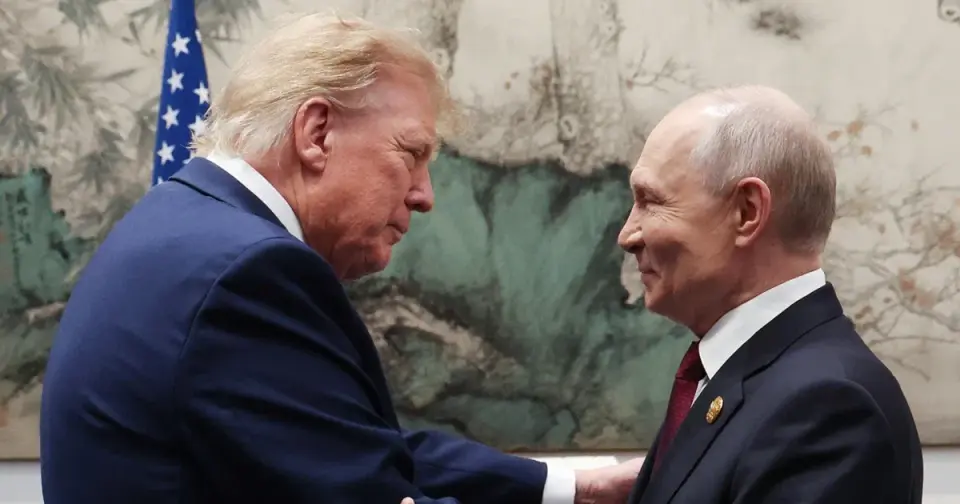
President Donald Trump’s public declaration that Vladimir Putin is his 'friend' at the Asia-Pacific Economic Cooperation summit in Shenzhen, China, provoked immediate alarm among European allies and US lawmakers. While Trump defended the relationship as essential for peace, critics argued the gesture legitimized a leader facing war crime allegations and ignored Ukraine’s security needs. The meeting resulted in a joint declaration with China’s Xi Jinping that omitted references to the war in Ukraine, deepening concerns about a shifting global order.
Key points
- Trump told Putin, 'He’s my friend,' during the APEC summit in Shenzhen, China, a statement that drew sharp criticism from European leaders and US Democrats.
- Polish officials expressed deep concern, with Prime Minister Donald Tusk posting 'God, protect us from such friends,' while Foreign Minister Radosław Sikorski questioned which ally Trump would prioritize in a crisis.
- The trilateral meeting between Trump, Putin, and Xi Jinping produced a joint declaration condemning the International Criminal Court but making no mention of the war in Ukraine.
- Trump defended the friendship by citing the value of having a relationship with a nuclear-armed leader, while acknowledging he could not speak to whether Putin is a friend to the United States.
- European leaders, including German Chancellor Friedrich Merz, warned the meeting risked resembling the 1945 Yalta Conference, while NATO Secretary-General Mark Rutte defended the principle of nuclear powers pursuing diplomacy.
Background
This incident follows a pattern of Trump’s warm rhetoric toward Putin, including previous descriptions of the Russian leader as 'savvy' and 'genius' regarding his actions against Ukraine. The current meeting marks the first in-person encounter between the two leaders in over a year, occurring amid heightened tensions in Europe, including recent airspace violations in Poland and border closures in Estonia. The APEC summit context highlights a broader strategic shift where the US appears to be prioritizing direct engagement with Russia and China over traditional alliances with Ukraine and NATO partners.
How outlets are covering it
NBC News and U.S. News & World Report highlight the diplomatic fallout, noting that while Trump defended the relationship as a tool for peace, European allies viewed it as a dangerous legitimization of aggression. HuffPost and commentary from Geraldo Rivera focused on the moral implications, criticizing the lack of pressure on Putin to stop bombing civilian infrastructure. In contrast, British Prime Minister Andy Burnham and NATO Secretary-General Mark Rutte offered more restrained defenses, arguing that Trump’s engagement was necessary for diplomacy and that the meeting did not necessarily signal a betrayal of allies. The sources agree that the joint declaration’s omission of Ukraine was a significant point of contention, but they differ on whether the meeting was a genuine diplomatic breakthrough or a symbolic embarrassment for Western values.
Why it matters
The incident signals a potential realignment in US foreign policy that could weaken the Western consensus against Russian aggression. By prioritizing personal rapport with Putin over collective security concerns, the US risks emboldening Moscow and undermining the security guarantees provided to NATO allies. The omission of Ukraine from the high-level trilateral declaration suggests that future peace negotiations may proceed without direct input from Kyiv, potentially forcing concessions that ignore Ukrainian sovereignty. This move could also embolden other authoritarian leaders, setting a precedent for diplomatic engagement that overlooks human rights and international law.
What to watch
European leaders are expected to continue pressing for clarity on US commitments to Ukraine and NATO, particularly as Poland and Estonia take defensive measures against Russian threats. The 'Coalition of the Willing' in Berlin will likely seek to reassure allies that any US-Russia deal will be negotiated in consultation with Europe and Ukraine. Trump’s administration may face further pressure from Democrats and some Republicans to clarify the limits of its engagement with Russia, while the international community will watch for any concrete outcomes from the APEC summit that could impact the war in Ukraine or global security dynamics.
- Trump calling Putin ‘my friend’ at APEC summit sparks backlash NBC News
- Trump defends calling Putin a friend but says he ‘can’t speak’ to whether he’s a friend to the US The Seattle Times
- Trump Exposed as Dictator BFFs’ Awkward Third Wheel Yahoo
- Trump Defends Calling Putin a Friend but Says He ‘Can’t Speak’ to Whether He's a Friend to the US U.S. News & World Report
- Geraldo Rivera Crushes 'Pathetic' Trump For China Summit Move HuffPost
Want the full story? Read the original reporting
Read on NBC News