
US Charges Irish Man with Deliberate Sabotage of $60M Military Aircraft in Ireland
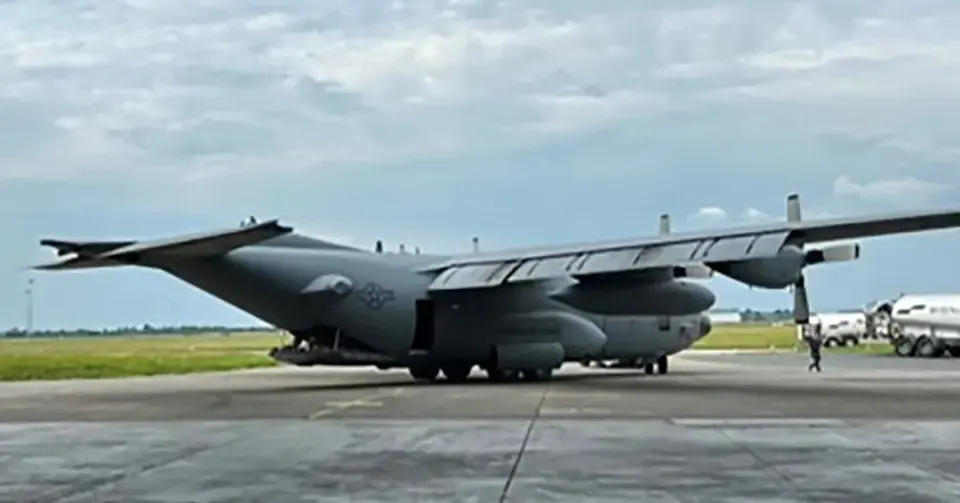
US federal prosecutors have indicted Daithi O’Corrain, a 48-year-old Irish national, for the alleged destruction of a $60 million US Air National Guard C-130 Hercules aircraft at Shannon Airport in Ireland. The indictment, unsealed in New York on November 17, 2026, alleges that O’Corrain spent months planning the April 11, 2026 attack, breaching security perimeters to cut wires, damage gauges, and pour corrosive materials into the plane. The aircraft is deemed unsalvageable. O’Corrain remains in Irish custody, facing up to 10 years in prison if convicted.
Key points
- Daithi O’Corrain, 48, was indicted in the Southern District of New York for destruction of government property, carrying a maximum sentence of 10 years.
- The attack occurred on April 11, 2026, at Shannon Airport in County Clare, Ireland, where the C-130 Hercules was parked en route to a military assignment.
- Prosecutors allege O’Corrain breached the airport’s security perimeter, entered the aircraft by breaking a rear crew door lock, and barricaded himself inside for several hours.
- Inside the plane, he allegedly cut wire bundles and hydraulic lines, crimped a liquid oxygen line, destroyed all cockpit gauges, and punctured air ducts.
- O’Corrain reportedly brought gallium, a corrosive metal that eats through aluminum, and poured ball bearings and unknown substances into the fuel tanks.
- The aircraft was rendered inoperable and will not return to active flight status, with damage estimated at approximately $60 million.
Background
Shannon Airport has been the site of multiple security breaches and anti-war protests in recent years. In May 2025, three individuals drove a van through the perimeter fence, and two weeks later, three others spray-painted a US military aircraft, temporarily rendering it inoperable. In November 2025, three more individuals breached the security perimeter in a van and were detained near a restricted area where a US military aircraft was parked. These incidents highlight ongoing concerns about the security of US military assets at the airport, which serves as a major transatlantic hub for troops and equipment.
How outlets are covering it
The New York Times and the Department of Justice emphasize the deliberate and premeditated nature of the attack, highlighting O’Corrain’s months of planning and the sophisticated methods used to maximize damage. CNN adds detail on the specific tools and materials used, including gallium and ball bearings, and notes the potential for explosion had O’Corrain cut rather than crimped the liquid oxygen line. The BBC focuses on the broader context of anti-war activism and previous protests at Shannon Airport, noting that O’Corrain is described by supporters as an anti-war activist. All sources agree on the severity of the damage and the legal consequences O’Corrain faces, but differ in their emphasis on the motive and the broader security implications for US military assets in Ireland.
Why it matters
The case underscores the vulnerability of US military assets stationed abroad and the potential for targeted sabotage. The extensive planning and sophisticated methods alleged in the indictment suggest a level of threat that goes beyond spontaneous vandalism, raising concerns about national security and the protection of critical military infrastructure. The outcome of the case may influence future security measures at Shannon Airport and other US military hubs overseas.
What to watch
O’Corrain remains in Irish custody, and it is unclear whether he will be extradited to the US to face trial. Irish authorities have charged him with criminal damage, and the US is pursuing federal charges. The case will likely involve international legal proceedings and coordination between Irish and US law enforcement. The outcome may also prompt a review of security protocols at Shannon Airport and other US military installations abroad.
- Irish Man Sabotaged U.S. Military Plane With Ax and Chemicals, Prosecutors Say The New York Times
- Man accessed US military plane at Ireland airport and destroyed it, DOJ says CNN
- Irish National Indicted For Destroying $60 Million U.S. Military C-130H Aircraft At Shannon Airport, Ireland Department of Justice (.gov)
- Irishman charged with destroying US military aircraft with axe BBC
- Man destroyed $60 million U.S. military plane at Irish airport, DOJ says The Washington Post
Want the full story? Read the original reporting
Read on The New York Times