
US strikes three Iranian oil tankers in retaliation for missile attacks on Navy ships
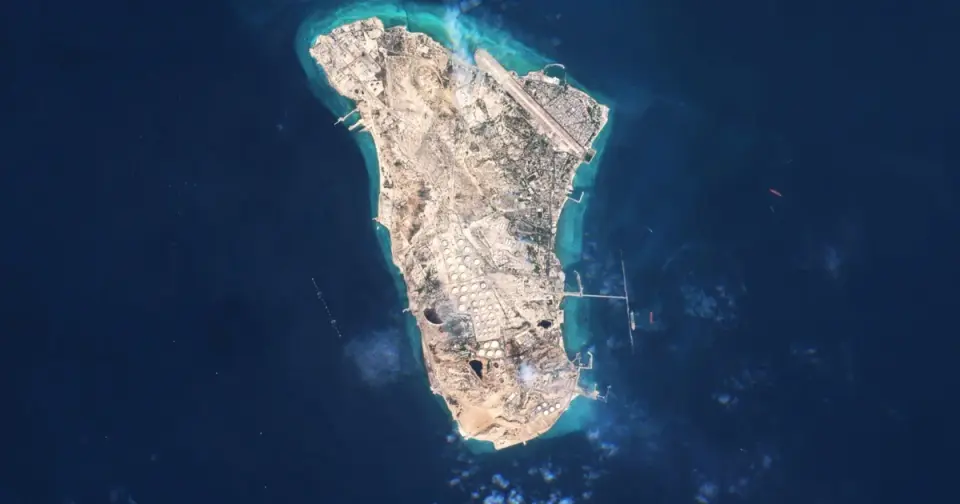
U.S. forces struck three Iranian oil tankers on September 5, 2026, in retaliation for ballistic missile attacks on two U.S. Navy vessels. The strikes, which targeted the M/T Downy, M/T Stark 1, and M/T Kylo, were described by U.S. Central Command as a response to Iranian aggression. While no American personnel were harmed, the incident marks a significant escalation in the six-month conflict, with Iran condemning the actions as illegal and threatening further retaliation against shipping in the Strait of Hormuz.
Key points
- U.S. Central Command (CENTCOM) confirmed the permanent disabling of two crude oil carriers and the destruction of a third vessel, the M/T Kylo, which was empty at the time of the strike.
- The U.S. strikes followed ballistic missile attacks by Iran’s Islamic Revolutionary Guard Corps (IRGC) on a U.S. aircraft carrier and a guided-missile destroyer, both of which successfully evaded the attacks.
- Iran’s Foreign Ministry condemned the U.S. actions as 'illegal and aggressive,' accusing Washington of waging an economic war and violating the UN Charter, while Iranian state media reported no casualties among the tanker crews.
- The conflict has led to the effective closure of the Strait of Hormuz since February, causing global energy price spikes, with U.S. diesel prices reaching $5.85 per gallon, up from $3.71 a year earlier.
- CENTCOM characterized the targeted tankers as part of a 'multi-billion-dollar shadow network' funding the IRGC and its regional proxies, while Iran claimed it was retaliating against 'unauthorized' shipping routes.
Background
This escalation follows a six-month war that began in February 2026 with wide-ranging strikes by the U.S. and Israel on Iran. A 60-day ceasefire expired last month without a diplomatic settlement, leading to renewed hostilities. In early September, U.S. forces struck Iranian military targets along the southern coast, and Iran retaliated against U.S. bases in Jordan, Bahrain, and Kuwait. The current strikes on oil infrastructure represent a shift toward targeting Iran’s economic lifeline, as Kharg Island serves as the primary gateway for 90% of the country’s crude oil exports.
How outlets are covering it
U.S. officials, including CENTCOM Commander Adm. Brad Cooper and Defense Secretary Pete Hegseth, framed the strikes as a necessary and proportional response to direct threats against American forces, emphasizing the goal of imposing an 'economic cost' on Iran. In contrast, Iran’s Foreign Ministry and state media characterized the U.S. actions as a 'war crime' and an 'aggressive' naval blockade that violates international law. While the U.S. focused on the military justification and the targeting of IRGC-funded assets, Iranian outlets emphasized the humanitarian and legal implications, noting that the strikes threatened international peace and commercial shipping. Additionally, while the U.S. reported no casualties, Iranian media highlighted the evacuation of crews and the rapid containment of fires, suggesting a focus on minimizing loss despite the destruction.
Why it matters
The strikes on oil tankers near Kharg Island and the Gulf of Oman directly impact global energy markets, as the Strait of Hormuz carries approximately 20% of the world’s oil and liquefied natural gas. With the strait effectively closed since February, the conflict has driven up energy prices, contributing to inflationary pressures in the U.S. ahead of the November midterm elections. The escalation signals a potential shift from military to economic warfare, threatening to further destabilize the global oil supply and prolong the conflict without a clear path to diplomatic resolution.
What to watch
Iran has warned that it will continue to target vessels using 'unauthorized' routes through the Strait of Hormuz, potentially leading to further disruptions in global shipping. The U.S. has indicated it will not hesitate to destroy Iran’s oil fleet if necessary to defend American forces. With the 60-day ceasefire expired and no diplomatic settlement in sight, the conflict may see continued tit-for-tat strikes, potentially involving more economic targets or military installations in the region.
- U.S. strikes 3 Iranian oil tankers after Iran targets Navy warships, military says NBC News
- U.S. Strikes Three Iranian ‘Shadow Network’ Oil Tankers, Military Says The New York Times
- Iran: US hits 3 IRGC-linked oil tankers DW.com
- U.S. Strikes Three Iranian Ships After Missiles Fired at American Aircraft Carrier WSJ
- US hits three Iranian oil tankers after saying its warships were targeted BBC
Want the full story? Read the original reporting
Read on NBC News