
Declassified 1961 reports reveal how a single switch prevented nuclear detonation after B-52 crash
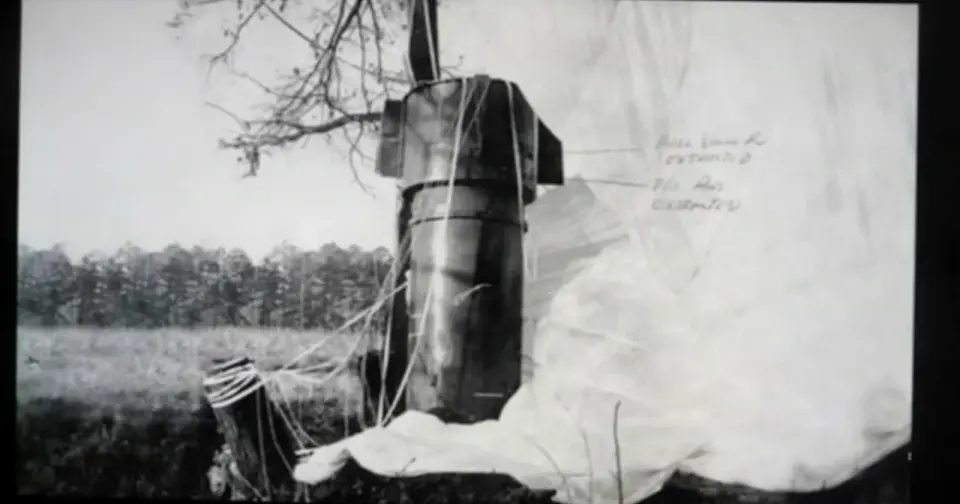
Two Sandia Corporation reports from February 1961, released in 2021, detail the component-level failure sequence of two hydrogen bombs dropped when a B-52 crashed in North Carolina. The documents confirm that while one bomb’s internal systems fully activated, a single arm-safe switch remained in the safe position, preventing detonation. The reports highlight that the safety mechanism functioned as designed, contradicting later narratives of near-miss luck, and recommend immediate hardware modifications to prevent future arming during airborne alerts.
Key points
- A B-52G carrying two Mk 39 thermonuclear weapons crashed near Seymour Johnson Air Force Base on January 24, 1961, after a fuel leak caused a wing rupture.
- Sandia reports released in 2021 show that one bomb’s parachute deployed, and its batteries, timer, and barometric switches all activated, but the MC-772 arm-safe switch remained in the safe position, preventing the firing capacitor from charging.
- The second bomb fell without a parachute, crushing its nose on impact; its arm-safe switch indicator read 'ARM' due to impact shock, but internal contacts had broken, preventing electrical continuity and detonation.
- The reports recommend incorporating modification ALT 197, which replaces the arm-safe switch to prevent power supply activation in safe conditions, allowing alert missions without safing pins.
- The Air Force publicly confirmed the weapons were safe immediately after the crash, but the detailed component analysis remained classified for sixty years.
Background
This incident, often referred to as the Goldsboro incident, occurred during the Cold War when U.S. Strategic Air Command bombers routinely carried live nuclear weapons on airborne alert. Previous public knowledge relied on a 1969 Sandia review and a 2013 Guardian article, which emphasized the narrow margin of safety. The 2021 release of the original 1961 reports provides a contemporaneous engineering perspective, clarifying that the safety systems functioned as intended rather than failing by chance. The crash followed a fuel leak reported during a refueling mission, leading to a loss of control and breakup at approximately 9,000 feet.
Why it matters
The declassified reports provide definitive evidence that nuclear safety mechanisms functioned as designed during a catastrophic accident, countering popular narratives of accidental luck. They highlight the importance of hardware modifications like ALT 197, which were implemented to improve safety for airborne alert missions. Understanding these technical details is crucial for assessing the reliability of nuclear safety systems and the historical accuracy of Cold War incident reporting.
What to watch
No immediate next steps are indicated, as the events occurred in 1961 and the reports were released in 2021. The recommended modification ALT 197 was likely implemented in the Mk 15/39 family of weapons following the incident. The release of these documents serves as a historical record for researchers and policymakers reviewing nuclear safety protocols and Cold War history.
Want the full story? Read the original reporting
Read on Space Daily