
Global Race to Drill for Natural Hydrogen Hinges on Unproven Geological Accumulation
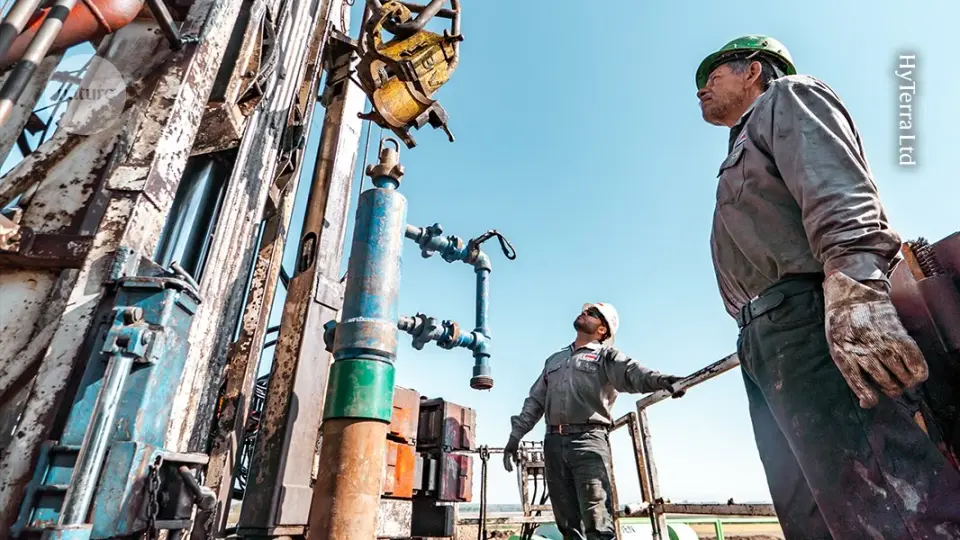
Energy firms are racing to extract natural hydrogen from underground deposits, a potential low-cost green fuel. While venture capital has poured nearly US$500 million into exploration since 2023, the existence of large, commercially viable reserves remains unproven. Recent lab studies in Australia suggest magnetite reactions can generate hydrogen, but experts warn that microbial consumption and leaky rock formations may prevent accumulation. Key drilling results from multiple continents are expected within months to determine if this resource can replace fossil fuels.
Key points
- Venture capitalists have invested nearly US$500 million in geological hydrogen exploration since 2023, driven by estimates that Earth’s subsurface contains tens of trillions of tonnes of the gas.
- A 2026 study by Edith Cowan University researchers found that magnetite reacts with hot water to produce hydrogen, with powdered samples yielding five times more gas than slabs due to greater surface area.
- The concept of natural hydrogen accumulation was largely ignored by geologists until 2018, when a significant deposit was discovered in Mali, challenging the assumption that hydrogen molecules are too small to be trapped underground.
- Major uncertainties remain regarding how much hydrogen is lost to microbial consumption and geochemical reactions, with pilot storage experiments showing round-trip efficiency rates ranging from 25% to 40%.
- Drilling campaigns in Kansas, Canada, Africa, and Australia are currently underway, with results expected in the coming months to clarify whether large-scale commercial extraction is feasible.
Background
Previous coverage highlighted Australia’s potential to export natural hydrogen from magnetite-rich regions and noted China’s discovery of ultra-pure hydrogen in the Sichuan Basin. Earlier reports also discussed technological advancements in corrosion-resistant materials for green hydrogen production and record-breaking hydrogen-powered vehicles, underscoring the broader industry’s push toward hydrogen as a clean energy source.
How outlets are covering it
Nature emphasizes the high stakes and uncertainty, noting that while the potential is massive, nobody knows if deposits are large enough to match the hype. In contrast, ScienceAlert and Energies Media focus on the promising lab results from Western Australia, highlighting the potential for Australia to become a major exporter and the ability to actively boost hydrogen generation through water injection. Eos offers a more cautious scientific perspective, arguing that while commercial viability is uncertain, the underlying science of subsurface hydrogen behavior is indispensable for future energy decisions and should not be dismissed as a pipe dream. The outlets differ in their emphasis: some view the recent Australian findings as a breakthrough, while others stress the fundamental physical and biological barriers to accumulation.
Why it matters
If geological hydrogen proves abundant and extractable at low cost, it could revolutionize the global energy transition by providing a clean, carbon-free fuel that is cheaper than fossil fuels. This could accelerate the shift away from fossil fuels and meet clean energy needs for decades. However, if the resource is scarce or too difficult to extract, the billions of dollars invested in exploration could be wasted, delaying the energy transition and leaving society reliant on more expensive green hydrogen production methods.
What to watch
Key drilling results from wells in Kansas, northern Canada, eastern Africa, and South Australia are expected within the next few months. These findings will provide critical data on the size and accessibility of natural hydrogen deposits. Additionally, researchers will continue to study the specific geological conditions required for hydrogen accumulation, including the role of caprock integrity and microbial consumption, to refine exploration strategies and economic models.
- Underground hydrogen could spur a green-energy revolution — if companies can find it Nature
- Researchers Discover an Untapped Green Hydrogen 'Goldmine' ScienceAlert
- Underground Hydrogen: Two High-Reward Bets, One Indispensable Science eos.org
- Beneath Western Australia's red, iron-rich soil, a natural hydrogen engine may have been running for millions of years and scientists just learned how to turn up the power by injecting water into ancient rock energiesmedia.com
- Geologic Hydrogen Exploration: Michigan Invests $7.5 Million in Clean Energy Research Hydrogen Fuel News
Want the full story? Read the original reporting
Read on Nature