
New Evidence: Franklin Recognized DNA Helix Before Watson
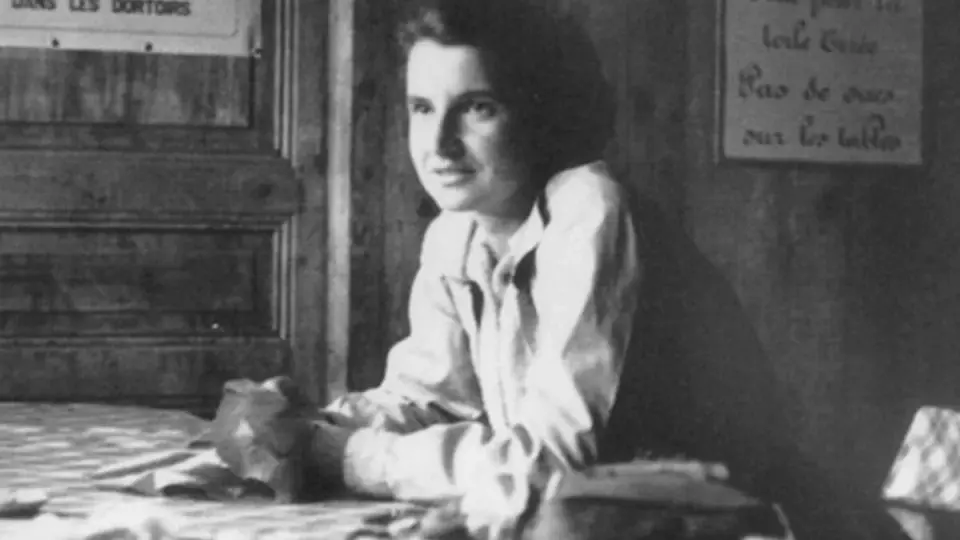
A new study in the Journal of the History of Biology argues that Rosalind Franklin understood the helical structure of DNA before James Watson and Francis Crick. By analyzing her lab notes, researchers found that Franklin identified the helix in an earlier, lower-quality image (Photograph 49) and subsequently captured the famous Photograph 51 to document that specific finding. This challenges Watson’s memoir, which implied Franklin failed to grasp the significance of her own data.
Key points
- A paper by Alistair Sponsel and Brian Sutton asserts Franklin recognized DNA’s helical shape in Photograph 49, taken in May 1952.
- Franklin’s notes on Photograph 49 contained detailed structural calculations, including a 3.4 nanometer turn distance and 10 base layers per turn.
- Photograph 51 was a refined version of Photograph 49, taken to achieve publishable quality rather than as a new discovery.
- James Watson’s 1968 memoir, The Double Helix, described Franklin as unable to interpret her own images, a narrative now challenged by archival evidence.
- Experts note Franklin was a 'perfectionist' who prioritized data-rich images, explaining her focus on the clearer Photograph 51.
Background
Rosalind Franklin died in 1958, four years before Watson, Crick, and Wilkins received the Nobel Prize in 1962. Her contributions were long minimized by Watson’s autobiography, which portrayed her as scientifically 'incompetent' in interpreting X-ray images. Recent archival work, including a 2023 argument by Sutton, has increasingly highlighted Franklin’s role in identifying the double helix.
How outlets are covering it
Gizmodo and Live Science emphasize that Franklin’s notes prove she understood the helix, countering Watson’s claim of her 'willful deafness.' El País adds nuance, noting that while Franklin identified the helix, Watson and Crick still achieved the full model by determining how strands paired and replicated. UA.News highlights that Franklin prioritized studying Structure A (dehydrated DNA) first, which delayed her publication of Structure B findings. All sources agree that Franklin’s technical skill was superior to Watson’s characterization, but they differ on whether she fully grasped the 'double' nature of the helix before 1953.
Why it matters
This research corrects a decades-old historical narrative that marginalized a key figure in molecular biology. It demonstrates how primary source documents can overturn popular scientific myths, ensuring proper credit for Franklin’s contributions to the discovery of DNA’s structure.
What to watch
Historians and scientists may continue to re-evaluate other 'lost' contributions in science history using similar archival methods. The study may influence how textbooks and museums present the discovery of DNA, shifting focus from Watson’s 'epiphany' to Franklin’s systematic analysis.
- James Watson Suggested Rosalind Franklin Missed the DNA Double Helix. Her Notes Say Otherwise Gizmodo
- 'She knew she had something really important on her hands': Rosalind Franklin figured out DNA's helical structure before Watson and Crick, study suggests Live Science
- Rosalind Franklin had seen the helix: A forgotten photograph rewrites the history of DNA’s structure EL PAÍS English
- Study: Franklin knew about DNA’s helical structure before Watson and Crick — Live Science UA.NEWS
Want the full story? Read the original reporting
Read on Gizmodo