
PhotoTat: New Ink Allows Tattoos to Be Hidden or Changed with Light
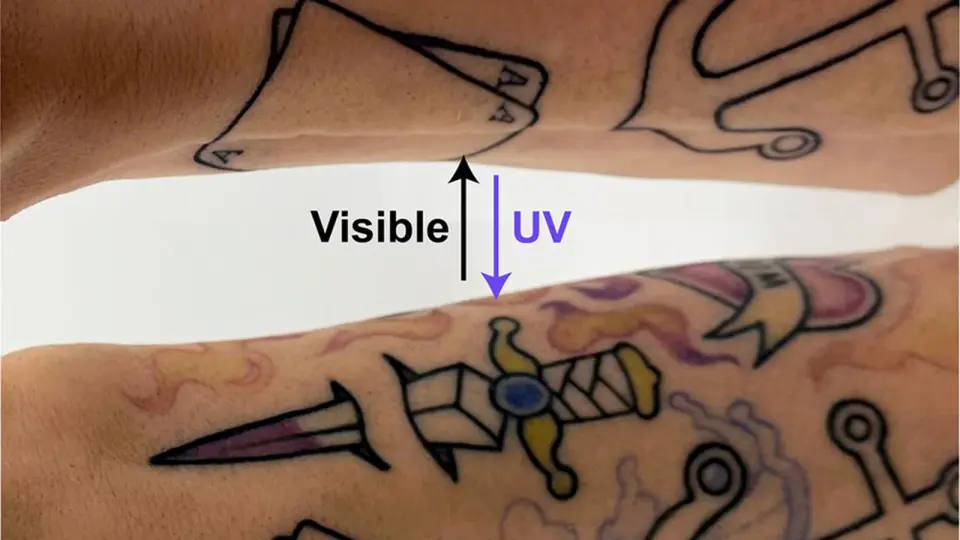
Researchers at the University of Colorado Boulder have developed PhotoTat, a tattoo ink that can be switched on or off using light. The system uses photochromic dyes in medical-grade plastic nanoparticles, allowing colors to appear under UV light and disappear under bright sunlight. Published in the journal Matter & Light, the technology could enable temporary medical markings or customizable body art without permanent removal.
Key points
- PhotoTat uses three primary colors (blue, magenta, yellow) made from photochromic dyes encapsulated in polymethyl methacrylate (PMMA) nanoparticles.
- A 365-nanometer UV LED activates the pigments in 2-3 seconds; colors persist for hours to days indoors but vanish quickly in bright sunlight.
- The pigment remains permanently in the skin, but its visibility is controlled by light exposure, allowing users to 'turn off' tattoos without laser removal.
- Tests on silicone, pig skin, and one human participant showed the ink retained switching ability for 1.4 to 2.2 years.
- Potential medical applications include radiation therapy guides and biopsy markers that are visible only to doctors during treatment.
Background
This development builds on earlier research into temporary and smart tattoos, such as graphene-based sensors for monitoring blood pressure. While traditional tattoos are permanent, PhotoTat introduces a reversible visibility layer, addressing concerns about permanent body art and medical markings.
How outlets are covering it
Live Science and New Atlas emphasize the consumer potential, highlighting how users can hide tattoos for professional settings or change designs. New Scientist focuses on safety concerns, noting that while the PMMA carrier is biocompatible, the long-term toxicity of the photochromic dyes is unknown. Signe Bedsted Clemmensen from the University of Southern Denmark warns that invisible inks may still pose cancer risks similar to traditional tattoos. New Atlas also notes practical issues, such as the need for sunscreen to keep tattoos hidden outdoors and the inability to create true cyan or white colors.
Why it matters
PhotoTat could transform body art from a permanent commitment to a dynamic, user-controlled experience. It also offers a solution for medical patients who wish to avoid permanent reminders of treatments like radiation therapy. However, widespread adoption requires further safety testing and resolution of issues like sunlight interference and color limitations.
What to watch
Researchers must conduct extensive safety studies on the photochromic dyes before public release. Future developments may include expanding the color palette and improving resistance to environmental UV exposure. Clinical trials will determine if PhotoTat can be reliably used for medical markings in diverse skin tones.
- Cool chemistry trick allows new tattoos to 'turn on and off' Live Science
- Tattoos could be turned on and off with light New Scientist
- 'Invisible ink' keeps tattoos hidden until they're under certain light New Atlas
- US researchers create tattoo ink that can be hidden in sunlight — Live Science UA.NEWS
- Finally, tattoos you can hide from your grandparents Chemical & Engineering News
Want the full story? Read the original reporting
Read on Live Science