
AI Robot Chemist Automates Drug Design and Chemical Research
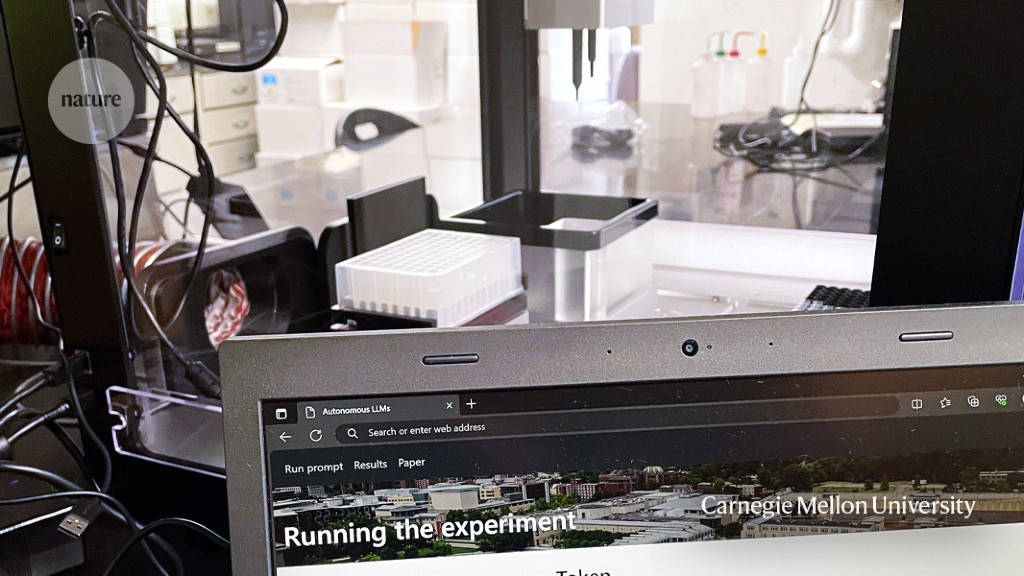
Chemists at Carnegie Mellon University have developed an autonomous chemical system called Coscientist, which uses the latest large language models (LLMs) to design and conduct complex chemical reactions using a robotic laboratory set-up. The system can autonomously plan, design, and execute reactions, making compounds such as paracetamol and aspirin. By leveraging AI tools like GPT-4, Coscientist scours chemical literature, reads instruction manuals, and selects the best kit and reagents to synthesize molecules. This development showcases the potential of LLM-driven chemistry robots and paves the way for self-driving labs in the future. However, while routine tasks can be automated, more complex research questions, especially in drug discovery, still require human expertise.
- This GPT-powered robot chemist designs reactions and makes drugs — on its own Nature.com
- Autonomous chemical research with large language models Nature.com
- Multiple Chat GPT instances combine to figure out chemistry Ars Technica
- Meet 'Coscientist,' your AI lab partner: System succeeds in planning and carrying out real-world chemistry experiments Phys.org
- CMU-Designed Artificially Intelligent Coscientist Automates Scientific Discovery Carnegie Mellon University
Reading Insights
0
9
3 min
vs 4 min read
82%
620 → 110 words
Want the full story? Read the original article
Read on Nature.com