Tag

Chemistry

All articles tagged with #chemistry

Scientists Forge a Half-Möbius Molecule with a New Electronic Topology
chemistry18 days ago

Scientists Forge a Half-Möbius Molecule with a New Electronic Topology

Researchers built a 13‑carbon ring that hosts two isolated conjugated subsystems; by placing chlorine atoms to separate them, the ring spontaneously twists by 90 degrees and becomes a single, fully delocalized 24‑electron system with a unique electronic/magnetic profile distinct from classic Möbius structures. The molecule exists as two enantiomers, which can be interconverted using a small external voltage, a breakthrough reported in Science by Manchester and IBM Zurich teams and signaling a new topological approach to designing matter.

170-Year-Old Shipwreck Beers Reveal 19th-Century Brewing Secrets
science1 month ago

170-Year-Old Shipwreck Beers Reveal 19th-Century Brewing Secrets

Two beers recovered from a 170-year-old shipwreck off the Åland Islands were chemically analyzed. One resembled a light lager, the other a hoppier ale; both had low alcohol content (~2.8–3.2%), high sodium from seawater, and acidic pH. Despite long underwater exposure and oxidation of sulfur compounds, enough original ingredients remained to infer how 19th-century brewers produced beer, suggesting a simpler, less refined brewing process. One bottle cracked during recovery, but divers reportedly tasted beer inside.

Water-Based Peptide Synthesis Could Cut Waste From Popular GLP-1 Weight-Loss Drugs
science2 months ago

Water-Based Peptide Synthesis Could Cut Waste From Popular GLP-1 Weight-Loss Drugs

The article reports that GLP-1 weight‑loss drugs like Ozempic are produced via solid‑phase peptide synthesis using solvents such as dimethylformamide, generating massive toxic‑chemical waste (estimates exceed 123 million pounds annually for semaglutide alone) and affecting over 80 peptide drugs. A Nature Sustainability study from the University of Melbourne proposes a water‑based synthesis approach—using salts and a biodegradable activating method—to enable high‑concentration peptide production in water, potentially reducing environmental impact if scalable, though industrial rollout remains to be seen.

Water and Oil Could Mix on Saturn's Largest Moon, Unlocking Exotic Chemistry
science5 months ago

Water and Oil Could Mix on Saturn's Largest Moon, Unlocking Exotic Chemistry

Researchers have discovered that on Saturn's moon Titan, polar and nonpolar molecules like water and oil can mix through a process called intercalation, challenging the traditional 'like dissolves like' rule in chemistry. This finding suggests the potential for exotic chemical structures and reactions in Titan's environment, which could have implications for understanding prebiotic chemistry and the moon's geology.

Australian Chemist Wins Nobel Prize for World-Changing Work
science6 months ago

Australian Chemist Wins Nobel Prize for World-Changing Work

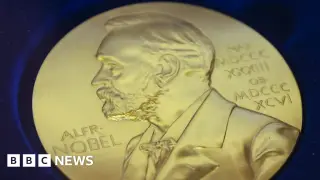
Australian chemist Richard Robson, along with Susumu Kitagawa and Omar Yaghi, won the 2025 Nobel Prize in Chemistry for developing metal–organic frameworks (MOFs), porous materials that have significant applications in gas capture, environmental cleanup, and medical fields, highlighting the importance of fundamental scientific research and its long-term impact.