
Japan Launches Shunkai, Its First Full-Stack Room-Temperature Quantum Computer
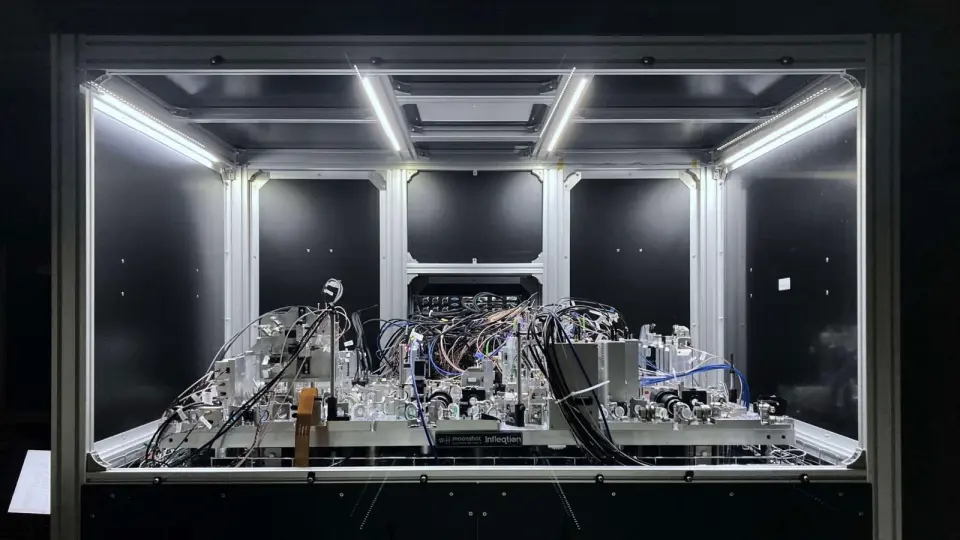
Japan has activated Shunkai, its first full-stack quantum computer that operates at room temperature. The system uses neutral atoms trapped by optical tweezers and currently features 50 qubits. Researchers plan to scale the machine to 10,000 qubits by March 2031 to enable practical quantum error correction and open access for external users.
Key points
- Shunkai is the first full-stack quantum computer in Japan, integrating hardware, control, and software layers to process user inputs and return results.
- The system operates at room temperature using neutral atoms manipulated by optical tweezers, avoiding the extreme cooling required by other quantum modalities.
- The current 50-qubit system is intended to perform useful computations by 2031, with a long-term goal of reaching 10,000 qubits.
- The machine will be integrated into a shared supercomputing facility to create a quantum-GPU hybrid computing center.
- Project lead Kenji Ohmori stated that the system will facilitate research into quantum error correction, a critical step for stabilizing fragile quantum information.
Background
Recent advancements in quantum computing have focused on achieving practical utility and stability. In August 2026, IBM demonstrated quantum advantage using 70 logical qubits, while other researchers explored room-temperature quantum effects in heat waves and batteries. Shunkai’s room-temperature operation aligns with these trends, aiming to reduce the infrastructure complexity associated with traditional cryogenic quantum systems.
Why it matters
Shunkai’s full-stack architecture and room-temperature operation lower the barrier for researchers to access quantum computing. By focusing on error correction and scaling to 10,000 qubits, Japan aims to bridge the gap between experimental quantum systems and practical, large-scale applications in industry and academia.
What to watch
The team plans to open Shunkai to external users over the coming years and integrate it into a quantum-GPU hybrid center. The primary milestone is scaling the system to 10,000 qubits by March 2031 to achieve reliable, useful computations.
Want the full story? Read the original reporting
Read on Live Science