
Airlink defends 41-foot rugby flyover as regulator reviews clearance data
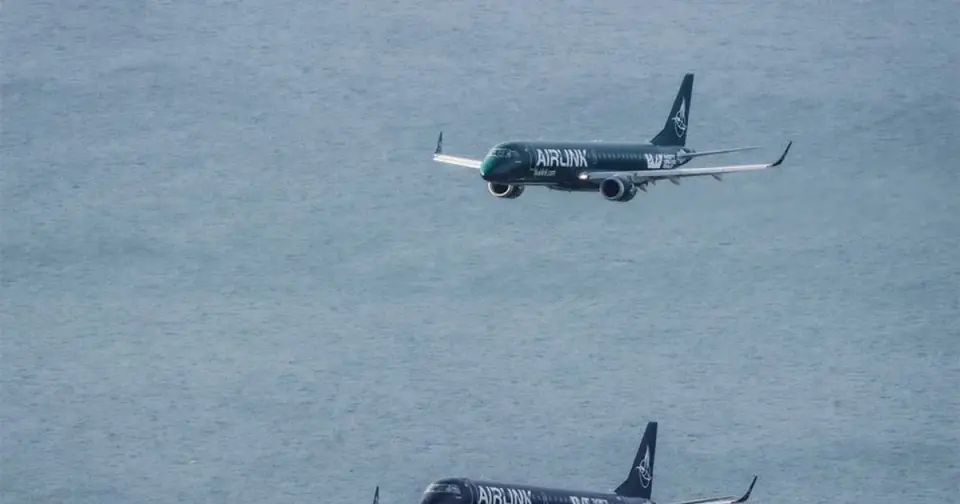
Airlink confirmed that its low-altitude flyover over Cape Town’s DHL Stadium was authorized and within approved limits, despite viral footage showing the aircraft appearing dangerously close to the roof. Flight data indicates a clearance of 41 to 46 feet, while the South African Civil Aviation Authority has initiated a compliance review.
Key points
- On August 29, 2026, two Airlink Embraer aircraft performed a formation flyover over DHL Stadium in Cape Town before a Springboks vs. New Zealand rugby match.
- The lead aircraft, an Embraer E195, cleared the stadium roof by approximately 41 to 46 feet, according to Flightradar24 calculations.
- Airlink stated the flight was approved by the South African Civil Aviation Authority (SACAA) and Air Traffic and Navigation Services, with crews consisting of six senior captains.
- The SACAA confirmed it is reviewing the event, obtaining flight data recordings, and noted that Airlink withdrew its application for a similar flyover at the next match on September 5.
- The flyover occurred in front of 56,589 spectators, continuing a tradition of low-altitude displays at major South African sporting events.
Background
Low-altitude flyovers have a historical precedent in South African rugby, notably a 1995 Rugby World Cup final display by a South African Airways Boeing 747. Recent archive coverage highlighted the viral nature of the August 29 event and initial public concerns regarding safety, though Airlink had not immediately commented at that time.
How outlets are covering it
Outlets diverged significantly in their framing. Business Insider Africa and Flightradar24 emphasized the technical data, confirming the 41-46 foot clearance and Airlink’s assertion that the flight stayed within approved parameters. In contrast, the New York Post and Fox News focused on the visual spectacle, describing the maneuver as 'dangerously low' and 'wild,' with the Post citing social media fears of a catastrophic collision. While Airlink and the SACAA framed the event as a planned, authorized operation, public commentary on Flightradar24 expressed strong criticism, arguing that 50 feet of clearance over a crowd was an unacceptable safety risk regardless of regulatory approval.
Why it matters
The incident highlights tensions between traditional sporting spectacles and modern aviation safety standards. The SACAA’s active review and Airlink’s withdrawal of future flyover applications suggest that regulatory scrutiny may tighten for low-altitude events, potentially altering how airlines and sports organizations plan promotional activities in the future.
What to watch
The SACAA is expected to finalize its compliance verification based on the flight data recordings. Airlink has already withdrawn its application for a flyover at the third test match on September 5, indicating a potential shift in operational strategy for the remainder of the tour.
- Airlink says dramatic stadium flyover stayed within approved limits as new data reveals 41-foot clearance Business Insider Africa
- Footage of two planes stunning a rugby stadium with one of the wildest flyovers ever goes viral Fox News
- Jets leave onlookers horrified as they nearly hit roof of South African stadium during pre-game flyover: ‘Could’ve been catastrophic’ New York Post
- Airlink’s low flypast over Rugby match in Cape Town Flightradar24
- Watch: 'Could've ended so badly' — fans shocked at aircraft flyover before All Blacks test NZ Herald
Want the full story? Read the original reporting
Read on Business Insider Africa