
Louisiana Governor Defends LSU’s Defiance of SEC’s New Pro-Athlete Ban
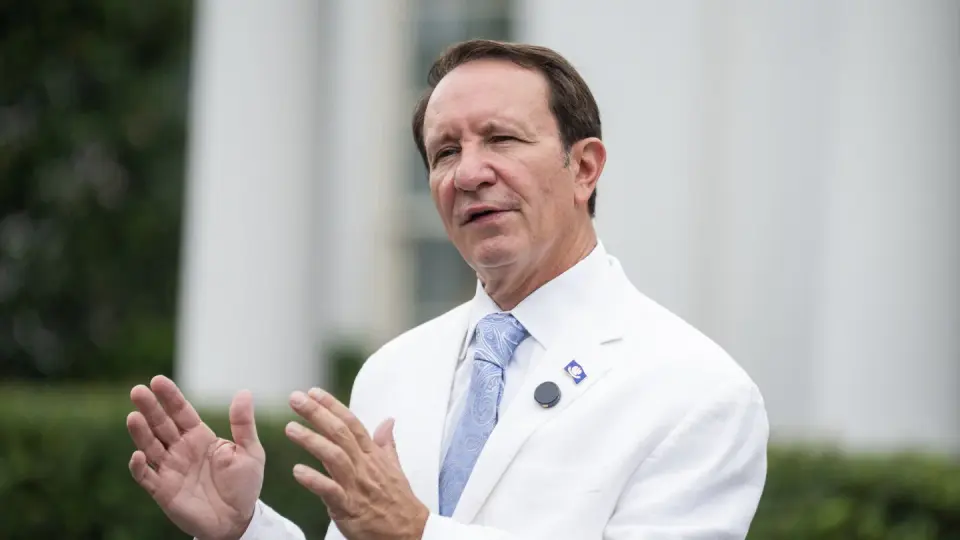
Louisiana Governor Jeff Landry publicly criticized the SEC’s new rule banning former professional athletes from returning to college, arguing the move creates a legal mess. While 27 SEC presidents approved severe penalties for violations, LSU abstained from the vote to protect its ability to recruit players like those targeted by coach Lane Kiffin. The dispute centers on conflicting court rulings and the NCAA’s new eligibility model, with the SEC imposing fines up to 50% of a program’s budget for non-compliance.
Key points
- Louisiana Governor Jeff Landry criticized the SEC’s ban on former pro athletes, calling it a 'legal mess' and arguing the NCAA and Congress failed to fix college sports.
- LSU abstained from the SEC vote on penalties, allowing the school to potentially recruit players made eligible by state court injunctions, such as those pursued by coach Lane Kiffin.
- The SEC approved penalties for violations, including a half-season coach suspension, loss of voting rights, and a fine equal to 50% of the sport’s annual operating budget.
- The SEC clarified that players who did not formally declare for the NBA draft or sign a pro contract, such as Kentucky commitment Mark Mitchell, remain eligible under the new policy.
- The conflict arises from the NCAA’s June eligibility change, which did not grandfather in the 2022 high school class, leading to lawsuits and conflicting court rulings across states.
Background
This dispute follows a series of power conference moves in August 2026 to restrict former professional athletes from returning to college for a fifth year of eligibility. The Big Ten was the first to implement such a ban, followed by the SEC and the Big 12. These actions were prompted by the NCAA’s new age-based eligibility model, which created a gap for the 2022 high school class, leading to numerous lawsuits and court injunctions that granted some players temporary eligibility. The current situation represents a direct clash between conference governance and state-level court rulings, with the SEC attempting to enforce uniformity despite legal challenges from players and their representatives.
How outlets are covering it
NBC Sports highlights the political motivation behind the SEC’s rule, suggesting it is a performative move to build momentum for the Protect College Sports Act, while noting that Governor Landry’s stance is driven by LSU’s specific recruiting needs. The New York Times emphasizes the procedural details, noting that LSU abstained from the vote on penalties while other schools approved them, and details the specific financial and administrative consequences for violations. The Lexington Herald-Leader provides a nuanced perspective on the rule’s application, clarifying that the SEC’s ban does not apply to players who did not sign professional contracts, such as Mark Mitchell, thereby distinguishing between different types of 'pro' experience. CBS Sports did not provide relevant commentary on this specific story, focusing instead on soccer coverage.
Why it matters
The conflict between the SEC and state courts over player eligibility threatens the stability of college athletics governance. If the SEC’s penalties are enforced, it could lead to a fragmented landscape where different states and conferences operate under different rules, complicating recruiting and compliance. The outcome of this dispute may influence the passage of the Protect College Sports Act, which aims to standardize eligibility and antitrust exemptions, potentially stripping players of their current mobility and earning potential. The situation also highlights the growing tension between traditional amateurism and the evolving reality of professional sports in the college landscape.
What to watch
The SEC is expected to enforce its penalties if any member school, including LSU, signs a player who violates the new rule. Players and their lawyers may file lawsuits against the SEC, arguing that the conference’s actions put the NCAA in contempt of court orders. The NCAA will continue to fight to keep the 2022 high school class out of college sports, while Congress may move to pass the Protect College Sports Act to resolve the legal chaos. The SEC may also face further challenges as other conferences and schools test the boundaries of the new policy, potentially leading to more court injunctions and legal disputes.
- Louisiana governor balks at SEC’s ban on former NFL players NBC Sports
- ACC joins Power 4 conferences in banning pros from returning ESPN
- SEC schools — except LSU — approve penalties for signing returning pro athletes The New York Times
- SEC provides clarification on new policy. It’s good news for Mark Mitchell Lexington Herald Leader
- Must-Watch Champions League Match: Real Madrid vs. Inter Milan Stream of Soccer CBS Sports
Want the full story? Read the original reporting
Read on NBC Sports