
SEC Concedes to Court Orders, Allowing Former Pros to Play Despite Conference Bans
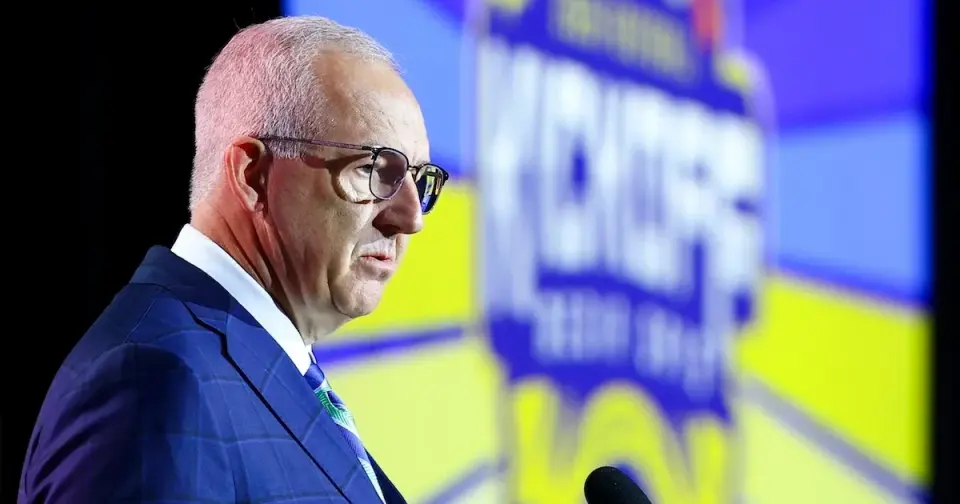
The Southeastern Conference has agreed to comply with recent court rulings that grant eligibility to players who signed professional contracts, effectively nullifying its own ban on former pros. While the SEC and Big Ten initially imposed strict penalties for rostering such athletes, federal judges in Louisiana and Dallas have blocked these punishments. Commissioner Greg Sankey confirmed the conference will follow the court orders, though the rules remain technically in place for non-plaintiff players. This legal victory for athletes stems from the NCAA's new five-year eligibility rule, which sparked widespread litigation over retroactive eligibility for the 2022 high school class.
Key points
- SEC Commissioner Greg Sankey confirmed the conference will comply with all applicable court orders, including those in Louisiana and Dallas, allowing named plaintiffs to play despite the conference's professional sports ban.
- The SEC's original rule prohibited athletes who declared for pro drafts, signed pro contracts, or appeared on pro rosters from competing, with violations resulting in a 50% coach suspension and fines equal to 50% of the sport's operating budget.
- A Dallas judge issued a temporary restraining order blocking the SEC from penalizing schools for welcoming back players with NFL experience, while a Louisiana judge previously granted eligibility to R.J. Luis Jr. for LSU.
- The legal conflict arises from the NCAA's new five-year eligibility model, which did not grandfather in players whose eligibility ended after the 2025-26 season, leading to multiple lawsuits seeking retroactive eligibility.
- While the SEC is complying with court orders for specific plaintiffs, the conference maintains that its rules remain in effect for players not named in the litigation, creating a fragmented eligibility landscape.
Background
This development follows a series of earlier actions where the Big Ten and SEC attempted to bar former professional players from returning to college football. The NFL also issued memos clarifying that players returning to college after being cut cannot sign new NFL contracts in the same year. These moves were part of a broader effort to maintain amateurism and competitive equity, but they clashed with ongoing legal challenges regarding the NCAA's new five-year eligibility rule. The Protect College Sports Act has been proposed as a legislative solution to resolve these regulatory conflicts.
How outlets are covering it
On3 and NBC Sports highlight the SEC's concession to court orders, emphasizing that the conference is now bound by judicial rulings despite its initial stance. NBC Sports notes that the SEC's repeated legal losses have undermined its authority, with attorney Tony Clayton criticizing the NCAA for creating the eligibility mess. The Raleigh News & Observer provides a broader view, noting that the ACC, Big Ten, and Big 12 have all adopted similar bans, but coaches like Bill Belichick and Manny Diaz have expressed mixed views on the practical implications. Diaz supports the bans in principle but acknowledges the chaos caused by individual judges, while Belichick remains open to case-by-case exceptions. The outlets agree that the situation is a result of the NCAA's new eligibility rules and the lack of clear legislative guidance.
Why it matters
The SEC's decision to comply with court orders sets a precedent for how conferences will handle eligibility disputes in the future. It highlights the tension between conference autonomy and judicial oversight, and the potential for further legal challenges. The outcome could influence the passage of the Protect College Sports Act and shape the future of college athlete eligibility. Additionally, the fragmented nature of the rulings may lead to inconsistencies in how different conferences and schools interpret and enforce their rules, potentially affecting competitive balance and player recruitment.
What to watch
The SEC and other conferences will likely continue to monitor court orders and adjust their enforcement strategies accordingly. The NCAA may face further legal challenges as players seek retroactive eligibility under the new five-year rule. Legislative efforts, such as the Protect College Sports Act, may gain momentum as a way to resolve the regulatory confusion. Schools may also need to navigate the complex landscape of court orders and conference rules when making roster decisions, potentially leading to more individualized approaches to eligibility.
- SEC says it will comply with court orders granting players eligibility despite being listed as defendant On3
- Ruling: SEC can't sanction teams using players with NFL ties ESPN
- ACC officials, coaches join pro athlete eligibility conversation. What they said Raleigh News & Observer
- SEC loses again in court, on effort to bar schools from signing former NFL players NBC Sports
- Dallas judge issues TRO for several athletes, with NCAA, SEC and Greg Sankey named defendants On3
Want the full story? Read the original reporting
Read on On3