
McNulty’s Solo Break Ends 33-Year US Drought in Montreal
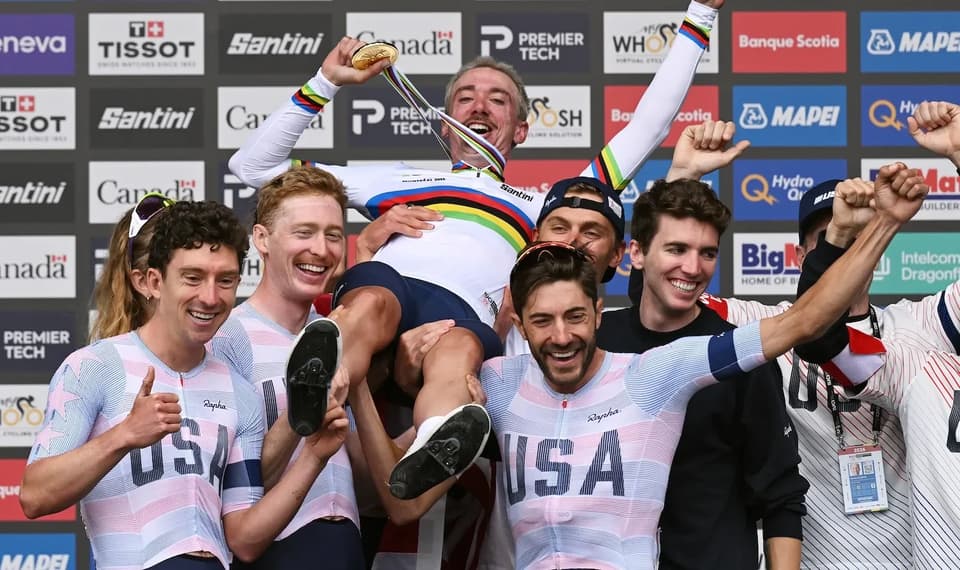
Brandon McNulty won the 2026 UCI Road World Championships men’s road race in Montreal with a solo effort, ending a 33-year drought for the United States. The 28-year-old, typically a domestique for Tadej Pogačar, capitalized on a tactical masterclass by Team USA to secure the rainbow jersey. His victory, described as a 'miracle' by the rider, highlighted the value of super domestiques in international competition, while rivals like Remco Evenepoel and Mathieu van der Poel struggled with chaotic race dynamics.
Key points
- McNulty won the 273.3km race in Montreal, finishing 13 seconds ahead of Michael Matthews, who took silver, and Mathieu van der Poel, who finished third.
- The victory marked the first US world title in the men’s road race since Lance Armstrong’s win in 1993, a 33-year gap.
- Team USA’s strategy relied on patience and selflessness, with teammates Matteo Jorgenson and Quinn Simmons sacrificing their own chances to support McNulty’s solo break.
- McNulty’s success was attributed to his role as a 'super domestique,' a rider with elite capabilities who typically supports team leaders but can compete for individual glory at national events.
- The race was chaotic, with Tadej Pogačar absent due to a Vuelta crash, allowing other contenders to emerge but ultimately failing to coordinate effectively against the US team’s tactical precision.
Background
The 2026 UCI Road World Championships in Montreal featured a revamped course and expanded format, including time trials, as part of a city-scale event designed to showcase cycling in Canada. Prior to this race, the US had not won the men’s road world title since 1993, and the event was seen as a potential opportunity for a breakthrough given the absence of dominant riders like Pogačar. The women’s race, won by Demi Vollering, had also featured chaotic tactics and post-race controversies, setting a precedent for the men’s race.
How outlets are covering it
Defector emphasized the tactical brilliance of Team USA, highlighting how their patience and selflessness allowed McNulty to capitalize on the exhaustion of rivals like van der Poel and Isaac del Toro. Olympics.com focused on the broader significance of McNulty’s win for the 'super domestique' role, noting that such riders are often undervalued but crucial to team success. The Guardian highlighted the chaotic nature of the race, particularly the Belgian team’s tactical confusion and Evenepoel’s failure to secure a fourth title, while also noting the dramatic finish with Pidcock’s late chase. All sources agreed on the historic nature of the win but differed in emphasis: Defector on tactics, Olympics.com on rider roles, and The Guardian on race chaos and rival failures.
Why it matters
McNulty’s win marks a historic breakthrough for US cycling, ending a 33-year drought and showcasing the potential of riders who typically support others. It also highlights the strategic importance of 'super domestiques' in international competition, where national teams can leverage collective strength over individual dominance. The race’s chaos and the absence of top contenders like Pogačar underscore the unpredictability of cycling and the value of tactical precision in high-stakes events.
What to watch
The 2026 UCI Road World Championships concluded with McNulty’s win, but the event’s legacy will likely focus on the rise of super domestiques and the strategic shifts in national team tactics. The US team’s success may influence future approaches to international races, while the chaotic nature of the event could prompt discussions on race organization and anti-doping measures, as seen in the case of Spanish junior Benjamín Noval.
- Team USA Won Brandon McNulty A World Championship With A Tactical Masterclass Defector
- ‘I guess miracles happen’: How Brandon McNulty became the United States’ first world champion in 33 years The New York Times
- Road cycling: What is a super domestique? And what does Brandon McNulty’s World Championship win say about their value? olympics.com
- USA’s McNulty transcends chaos of Montreal road race to claim ‘miracle’ world title The Guardian
- The Soft-Spoken, Mustached American Cyclist Who Just Shocked the World WSJ
Want the full story? Read the original reporting
Read on Defector