
Las Vegas GP: Wet conditions limit data as Russell leads damp FP2
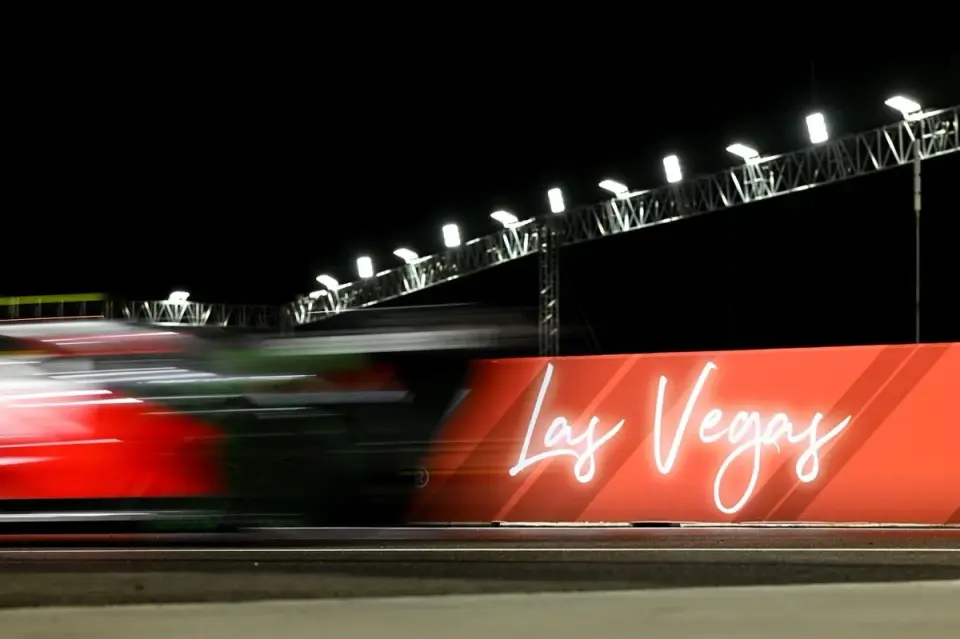
Heavy rain and cold temperatures severely limited meaningful testing during the 2026 Las Vegas Grand Prix opening sessions. George Russell recorded the fastest time in FP2, but the session was largely unrepresentative due to wet track conditions. Drivers reported that the new 2026-spec Pirelli wet tyres struggled to reach optimal operating temperatures, with many teams unable to test aerodynamic updates or establish reliable race pace.
Key points
- FP1 was effectively cancelled due to heavy rain, with only Haas rookie Rafael Camara completing multiple laps.
- FP2 saw George Russell finish fastest, followed by Pierre Gasly, but both drivers set their times late in the session as the track dried slightly.
- McLaren and Red Bull held back aerodynamic updates to avoid damage in wet conditions, delaying development work.
- Drivers, including Alex Albon, criticized the 2026-spec wet tyres for being too stiff and difficult to warm up despite increased blanket temperatures.
- Teams face uncertainty regarding tyre graining and race strategy, with little data available to plan for the final three races of the season.
Background
The Las Vegas circuit is known for its cold ambient temperatures and low grip, which exacerbates tyre performance issues. Previous seasons have shown significant variation in tyre degradation, making data from wet sessions particularly unreliable. The 2026 Pirelli tyres, designed with narrower dimensions, have already drawn feedback regarding their stiffness in wet conditions during earlier races like the Brazilian GP.
How outlets are covering it
Autosport emphasizes the lack of meaningful data and the challenges teams face in testing updates, highlighting the risk of delaying development for future races. BBC focuses on the final classification, noting Russell's lead and the impact of track conditions on lap times, particularly how late-session times were more representative. F1 Academy provides a parallel account of the F1 Academy session, where Alisha Palmowski set the pace despite similar wet conditions and multiple red flags, underscoring the widespread impact of the weather on all categories. While Autosport and BBC agree on Russell's top time, Autosport contextualizes it as a result of track evolution rather than pure pace, whereas BBC presents it as a straightforward result. F1 Academy highlights the severity of the conditions through multiple incidents, a detail not emphasized in the F1 coverage.
Why it matters
The limited data from Thursday's sessions creates significant uncertainty for teams ahead of qualifying and the race. With the championship still in play, teams must balance the risk of testing new parts in wet conditions against the need to gather reliable data for race strategy. The feedback on the 2026-spec wet tyres may also influence Pirelli's design for future seasons, highlighting the importance of driver input in tyre development.
What to watch
Teams will attempt to gather more data in FP3, with a focus on long runs and tyre graining. Qualifying will be critical, as snap warm-up on soft tyres is expected to be decisive. The race strategy will likely hinge on heat retention and energy management, with teams hoping for drier conditions to provide more representative data.
- What we learned from Thursday practice at the 2026 Las Vegas GP Autosport
- Las Vegas Grand Prix: George Russell fastest in second practice after rain BBC
- George Russell impressed by "exceptionally fast" McLaren as rain delays Lando Norris' floor test Yahoo Sports
- Wet conditions limit running in FP1 at Las Vegas Grand Prix Formula 1
- PRACTICE: Alisha Palmowski sets the pace in rain-soaked opening session in Las Vegas F1 Academy
Want the full story? Read the original reporting
Read on Autosport