
Freedom 250 Grand Prix disrupts DC businesses and transit ahead of weekend race
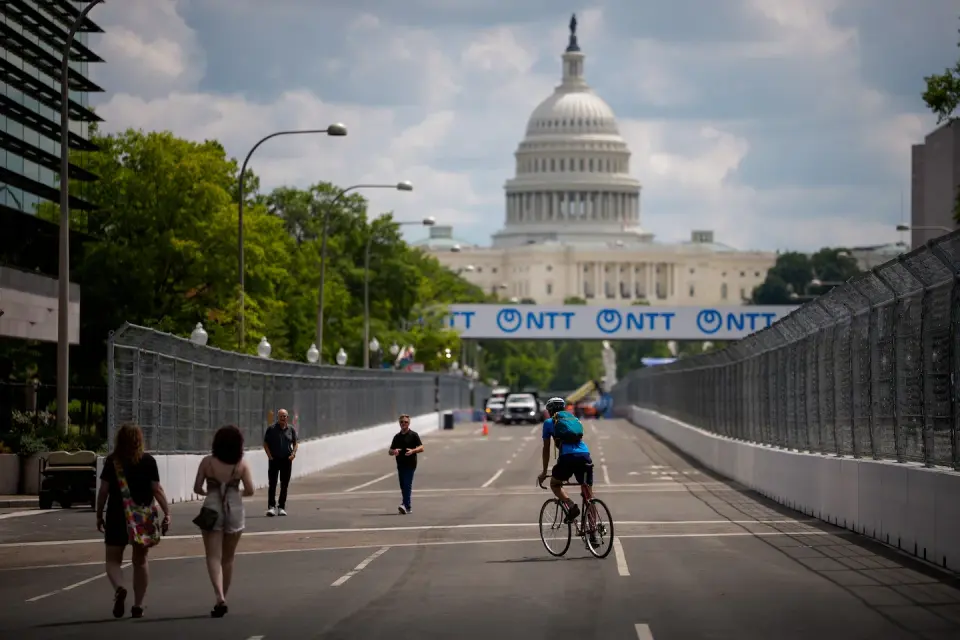
The Freedom 250 Grand Prix is set to take place in Washington, D.C., this weekend, causing significant disruptions to local businesses, schools, and transportation. The 1.7-mile street circuit, which passes the U.S. Capitol and National Mall, has led to extensive road closures and security measures. While organizers expect over 200,000 attendees, local residents and business owners report decreased activity and logistical challenges. The event, funded by IndyCar and backed by President Trump, is part of the nation's 250th-anniversary celebrations, with the president expected to wave the green flag and drive the presidential limousine around the track.
Key points
- The Freedom 250 Grand Prix will run on a 1.7-mile course in Washington, D.C., on August 22 and 23, passing the U.S. Capitol and National Mall.
- Extensive road closures and security perimeters have been implemented, with some businesses reporting reduced foot traffic and staff learning remotely.
- The event is expected to draw over 200,000 attendees, with free general admission tickets sold out via a May lottery.
- President Trump is expected to attend the Sunday race, wave the green flag, and drive the presidential limousine around the track.
- The race is funded by IndyCar, with a price tag exceeding $35 million, and any revenue exceeding costs will be donated to D.C. charities.
Background
The Freedom 250 Grand Prix is part of a series of events celebrating the nation's 250th anniversary, organized by the Trump-backed nonprofit Freedom 250. Previous events included a 16-day 'Great American State Fair' and a youth athletic contest called the 'Patriot Games.' The race was fast-tracked in January via an executive order signed by President Trump, bypassing congressional approval. The event is the first of its kind in Washington, D.C., and is part of a broader effort to transform the city's landscape and celebrate its bicentennial.
How outlets are covering it
The Washington Post highlights the impact on local businesses, such as Fogo de Chão, which reported a noticeable absence of the expected festival atmosphere. NBC4 Washington focuses on the logistical challenges, including road closures, parking restrictions, and the need for residents to use public transit. CNN provides a broader overview, emphasizing the event's significance as part of the nation's 250th-anniversary celebrations and the security measures in place. While all sources agree on the event's scale and impact, they differ in their emphasis: The Post focuses on local business struggles, NBC4 on transportation disruptions, and CNN on the event's broader significance and security.
Why it matters
The Freedom 250 Grand Prix is a significant event that highlights the intersection of politics, sports, and urban planning in Washington, D.C. The extensive disruptions to local businesses and transportation underscore the challenges of hosting large-scale events in a densely populated city. The event's funding and security measures also raise questions about the role of federal support in local celebrations and the potential long-term impact on the city's infrastructure and economy.
What to watch
The race is scheduled to take place on August 22 and 23, with the main event on Sunday. Organizers expect the city to return to normal by the second week of September, as the temporary structures and road modifications are removed. The event's success may influence future plans for similar races in Washington, D.C., as Mayor Muriel Bowser has expressed interest in solidifying the city's sports presence.
- Restaurants inside Freedom 250 race zone say they’re seeing less business The Washington Post
- What to know about this weekend's IndyCar race on the National Mall NPR
- See Where Indy Cars Will Race Around Washington, D.C. The New York Times
- Freedom 250 Grand Prix: Road closures and what to do if you have to go downtown NBC4 Washington
- What we know about the Trump-backed IndyCar race taking over the heart of DC CNN
Want the full story? Read the original reporting
Read on The Washington Post