
Ten Years After the Kneel: How Kaepernick's Sacrifice Shaped a Decade of American Conflict
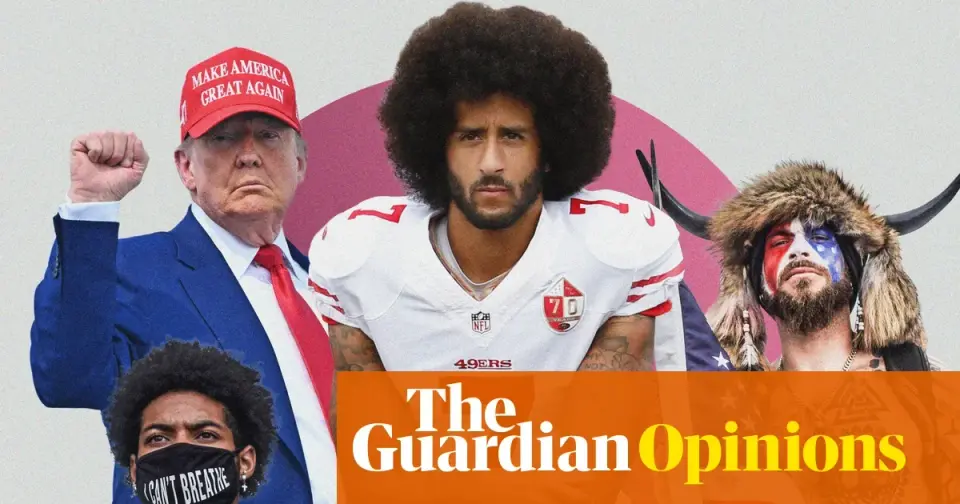
Ten years after Colin Kaepernick began kneeling during the national anthem to protest police violence, his actions remain a defining moment in American history. While he lost his NFL career, his sacrifice is now viewed through a lens of enduring injustice and cultural division. Recent events, including his receipt of the Muhammad Ali Center’s Humanitarian of the Year award and his funding of an independent autopsy for Nolan Wells, highlight his continued activism. The decade has seen a shift from initial outrage to a broader 'culture war,' with critics arguing that the NFL and media have co-opted or silenced genuine dissent, while supporters maintain that his stand exposed deep systemic failures.
Key points
- Kaepernick first knelt in September 2016, leading to his permanent exclusion from the NFL.
- He will receive the Muhammad Ali Center’s Humanitarian of the Year award in November 2026.
- NFL Commissioner Roger Goodell admitted the league was 'wrong for not listening' after George Floyd's death in 2020.
- Kaepernick funded an independent autopsy for Nolan Wells, whose death in Mississippi sparked civil rights scrutiny.
- Critics argue the NFL and media have co-opted protest into corporate-friendly gestures, silencing bold dissent.
Background
Kaepernick's 2016 protest occurred shortly after the election of Barack Obama, a figure who, according to The Guardian, represented the 'ultimate symbol of American possibility' but also triggered deep-seated fears among some white Americans. His action was part of a broader pattern of athlete activism that includes the 1968 Olympic protests by Tommie Smith and John Carlos. In 2026, Kaepernick remains a central figure in civil rights discourse, having recently received the ACLU’s Defenders of Civil Rights award alongside Bruce Springsteen, and continuing to support victims of police brutality through his Know Your Rights camps and financial backing of independent investigations.
How outlets are covering it
The Guardian presents a stark, critical view, arguing that Kaepernick’s protest was a 'clear warning' to Black people, leading to a decade of 'American darkness' where the NFL, media, and political elites co-opted or suppressed dissent. It emphasizes the 'proprietorship' of white Americans over the nation and the failure of the 'moral arc of the universe' to bend toward justice. In contrast, USA Today focuses on the personal sacrifice and integrity of Kaepernick, framing his exclusion as a 'shame' for the NFL and highlighting his ongoing humanitarian work, such as funding the Nolan Wells autopsy. AP News offers a more neutral, factual overview, noting the enduring significance of his activism and the NFL's eventual, albeit limited, acknowledgment of its errors. The outlets disagree on the primary legacy: The Guardian sees a 'devastating' lesson in the revocation of Black privilege, while USA Today sees an 'inspiring' testament to moral courage.
Why it matters
Kaepernick’s protest is no longer just a sports story; it is a foundational event in the modern 'culture war.' It exposed the limits of American integration and the fragility of Black equality, influencing everything from NFL policies to White House rhetoric. His continued activism, including funding independent autopsies and receiving major humanitarian awards, shows that the struggle for justice he initiated remains active. The decade has demonstrated that while the NFL eventually conceded it was 'wrong,' the broader societal hostility and media complicity it identified have not been resolved, making his legacy a critical lens for understanding current racial and political divisions in the US.
What to watch
Kaepernick is set to receive the Muhammad Ali Center’s Humanitarian of the Year award in November 2026. His memoir, 'The Perilous Fight,' is scheduled for release on September 15, 2026, accompanied by a national speaking tour. The NFL and broader sports leagues will likely continue to navigate the tension between corporate image and genuine social justice, with Kaepernick’s legacy serving as a benchmark for athlete activism. The ongoing scrutiny of police killings, such as the Nolan Wells case, will keep the issues Kaepernick highlighted at the forefront of public discourse.
- Colin Kaepernick knelt 10 years ago. America responded with a clear warning to Black people | Howard Bryant The Guardian
- Colin Kaepernick, 10 years after protest, won’t watch NFL: ‘I watch college football’ The New York Times
- Colin Kaepernick’s era of sports activism ‘vanished with him’ — but another is coming San Francisco Chronicle
- 10 years after the kneel, why Colin Kaepernick's sacrifice endures | Opinion USA Today
- A decade after Colin Kaepernick took a knee that led to his exile, the ripple effects continue AP News
Want the full story? Read the original reporting
Read on The Guardian