
Bazunu Withdraws from Ireland Squad as Team Votes to Play Israel
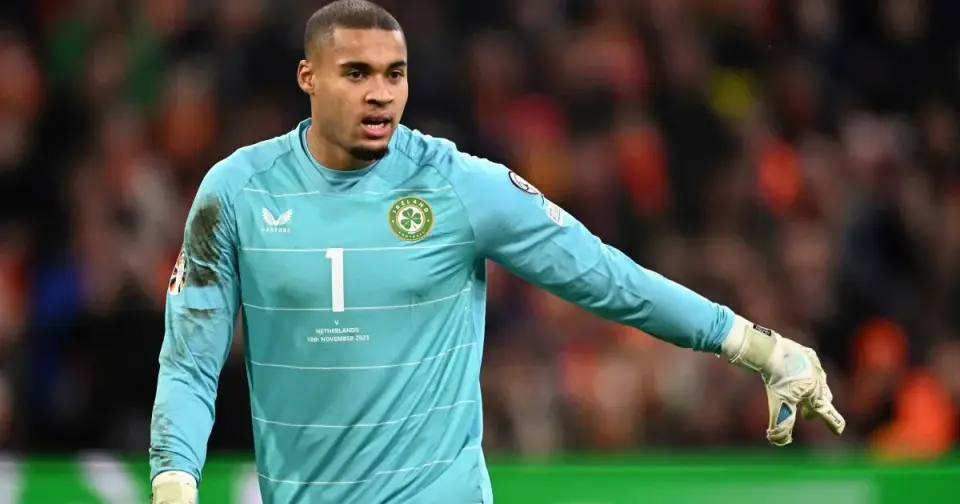
Republic of Ireland goalkeeper Gavin Bazunu has withdrawn from the UEFA Nations League squad to protest against playing Israel, citing moral objections to the ongoing war in Gaza. While Bazunu publicly stated it would be 'wrong to participate,' the remaining players voted by a significant majority to proceed with the fixtures. The team will play the first match in Debrecen, Hungary, on Sunday, and a second in Backa Topola, Serbia, on October 4. The Football Association of Ireland (FAI) confirmed the games will go ahead despite months of public pressure to boycott, with players agreeing to wear black armbands and skip pre-match handshakes as a compromise.
Key points
- Gavin Bazunu, Ireland’s first-choice goalkeeper, withdrew from both Nations League legs against Israel, stating his decision was based on the belief that 'killing innocent people is wrong.'
- The remaining Irish squad voted to play the matches after a five-hour delay in training and press conferences in Debrecen, Hungary, with FAI CEO David Courell confirming a 'significant majority' supported participation.
- Bazunu was excluded from the squad vote and subsequent discussions, a move criticized by former manager Brian Kerr as 'disgraceful' and 'shunning' the player.
- The team agreed to wear black armbands, skip pre-match handshakes and pennant exchanges, and donate a significant portion of match fees to charity to show solidarity with Palestine.
- Ireland’s national broadcaster RTÉ will provide stripped-back coverage of the matches, excluding studio commentary and advertising, while the FAI cited potential UEFA sanctions as the reason for proceeding despite public boycott calls.
Background
This dispute began in February 2026 when the UEFA Nations League fixtures were confirmed. Ireland has a long-standing diplomatic stance supporting Palestinian statehood, having been the first EU country to call for a Palestinian state in 1980 and the last to close an Israeli embassy in 2024. The controversy intensified after a UN inquiry in June 2025 confirmed Israel was committing genocide in Gaza. Previous archive coverage noted that over 160 Irish sportspeople signed an open letter urging a boycott, and the FAI had previously requested UEFA to ban Israel from competitions, a request that was rejected. The matches are being held in neutral venues due to security concerns and the inability to host fans in Ireland.
How outlets are covering it
Al Jazeera and The Guardian emphasize Bazunu’s moral stance and the FAI’s exclusion of him from the decision-making process, highlighting the tension between individual conscience and institutional pressure. CNN focuses on the procedural aspect of the player vote and the logistical delays caused by the disagreement. The Israeli Football Association, via its communications chief Shlomi Barzel, welcomed the decision to play, stating that 'football has won' and that the separation of sport and politics must be maintained. Former Irish manager Brian Kerr criticized the FAI for 'losing the respect of the Irish people' by proceeding despite public opposition, while Irish Prime Minister Micheál Martin defended the government’s pro-Palestinian stance against accusations of antisemitism. The FAI maintained that proceeding was necessary to avoid punitive UEFA sanctions, particularly given Ireland’s co-hosting role in the 2028 European Championship.
Why it matters
The incident highlights the increasing intersection of international politics and professional sports, particularly regarding the war in Gaza. It demonstrates the limits of institutional authority when faced with individual moral objections and public pressure. The decision to play, despite widespread domestic opposition and a split squad, sets a precedent for how football governing bodies handle geopolitical conflicts, potentially influencing future stances on similar issues in other sports. The compromise of symbolic gestures, such as black armbands, may not satisfy those calling for a full boycott, but it represents a middle ground in a polarized debate.
What to watch
The first match between Ireland and Israel is scheduled for Sunday in Debrecen, Hungary, followed by a second fixture on October 4 in Backa Topola, Serbia. Ireland will play Austria on October 1 in Dublin, with Bazunu expected to return to the squad for that match, according to Brian Kerr. The FAI will continue to face public scrutiny, and the outcome of the matches may influence future UEFA decisions regarding Israel’s participation in international competitions. RTÉ will broadcast the games with minimal coverage, and the charity donations from match fees will be announced following the fixtures.
- Who is Gavin Bazunu, and why is he boycotting the Ireland vs Israel match? Al Jazeera
- Republic of Ireland players vote to fulfill Nations League matches against Israel ESPN
- Ireland players wear black armbands and refrain from handshakes in soccer game against Israel AP News
- Irish player leaves team as remaining players vote to play Israel games amid pressure to boycott CNN
- Republic of Ireland’s Gavin Bazunu boycotts Israel match ‘as a person of principle’ The Guardian
Want the full story? Read the original reporting
Read on Al Jazeera