The Pentagon elevated Israel's counterintelligence threat level to 'critical' amid concerns the country is spying on U.S. officials and deliberations over the Iran war, though officials say routine intelligence-sharing remains unaffected and Israel denies the accusations.
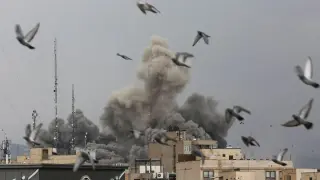
Israel widened airstrikes across south Lebanon after ordering nine villages to evacuate, driving thousands from Anqoun and killing six; Hezbollah rejected a US-brokered ceasefire, and Netanyahu pressed a deeper invasion toward Beaufort Castle and Nabatieh as clashes continued, with Lebanese troops and UN peacekeepers redeploying in Dibbin amid stalled Washington talks. More than 3,500 Lebanese have been killed, and Hezbollah has killed at least 29 Israeli soldiers and three civilians.
Ireland reportedly banned National Security Minister Itamar Ben-Gvir and Finance Minister Bezalel Smotrich from entering the country, citing a Justice Ministry directive; Prime Minister Micheal Martin said their conduct prompted the ban and Ireland signaled EU sanctions could be pursued, while Israel condemned the actions.
Israel will establish its first-ever embassy in Ljubljana, Slovenia, after approval by Slovenian Prime Minister Janez Jansa and parliament. Foreign Minister Gideon Saar said the Foreign Ministry will start the process to set up the embassy and select an ambassador, signaling a new chapter in Israel–Slovenia relations and a move to deepen ties after years of hostility under previous government.
Lebanon’s leaders condemned Iran and warned that Beirut should not be used as a bargaining chip as heavy fighting between Israel and Hezbollah rages in the south; evacuation orders force residents to flee villages such as Anqoun and Dibbine, while U.N. peacekeepers and Lebanese troops clear rubble and monitor security. Lebanese Parliament Speaker Nabih Berri urged a complete, comprehensive ceasefire in line with Hezbollah’s withdrawal. Separately, U.S. forces boarded an Iran-linked tanker in the Indian Ocean as part of pressure on Tehran amid the broader conflict. The war has killed thousands in Lebanon and Israeli casualties and civilians since it began.
Pew Research Center’s Spring 2026 Global Attitudes Survey across 36 countries shows a median 67% of adults view Israel unfavorably and 25% favorably, with little confidence in Prime Minister Benjamin Netanyahu in most places; Kenya and the Philippines are notable exceptions where a majority express confidence. Views are especially negative in Muslim‑majority countries and Europe, while younger people and those on the political left tend to be more negative, widening the left–right gap in the U.S. Unfavorable opinions have risen since 2025 in 13 of 24 trend countries, and Netanyahu’s overall confidence has declined in many nations, led by a sharp drop in South Korea.
A fragile, escalating cycle across Gaza, Lebanon and Iran defies peace prospects: while Trump talks of a deal with Iran, Israel’s deep incursion into Lebanon, Hezbollah’s rejection of a ceasefire, and a worsening Gaza humanitarian crisis leave the region on a knife-edge, with mass displacement and aid shortages, as Western powers wrestle with domestic politics and oil-price pressures while broader diplomatic breakthroughs remain elusive.
CNN reports that Israel secretly deployed elite special forces and Mossad personnel to Azerbaijan during its war with Iran, forming a network of covert bases across the Middle East (also in Iraq, the UAE, and Somaliland) to gather intelligence and conduct drone operations near Iran, extending Israel’s reach hundreds of miles into Iranian territory and supporting strikes against Iranian targets; Azerbaijan and Somaliland were cited as hosting sites, while Iran denied involvement and comments were sought from the Israeli and Azerbaijani governments.
Live updates depict a tense Middle East where stalled US-Iran diplomacy coincides with a fragile Lebanon-Israel ceasefire being tested by Hezbollah-Israel clashes, rising casualties and humanitarian strain, while international players push diplomacy and aid amid new incidents (Kuwait airport attack, Hormuz security talks) and ongoing domestic political dynamics in the United States and elsewhere.
Foreign Minister Penny Wong told Senate estimates that she believes Australian women who allege they were sexually assaulted and beaten by Israeli soldiers after the Gaza flotilla, calling the treatment unacceptable and saying such allegations should be handled seriously. Australia has raised concerns with Israel and sought diplomatic access for detained Australians; the claims, detailed by Greens senator Mehreen Faruqi and involving figures like Juliet Lamont, Neve O’Connor, and Violet CoCo, have intensified scrutiny of the Australia-Israel relationship as Israel denies the accusations. The discussion also touches on broader tensions, including aid workers’ deaths and Australia’s stance toward Netanyahu’s government, with calls for accountability and potential meetings between officials and flotilla participants.
Haredi extremists rioted outside Justice Noam Sohlberg’s home, deputy president of Israel’s Supreme Court, breaking windows and damaging the judge’s vehicle in protest of a draft evasion arrest and a High Court ruling. Police were not present initially, but local rapid-response teams intervened and some rioters were stopped after a bus pursuit. The Courts Administration condemned the violence and vowed to bolster security, while Prime Minister Netanyahu and lawmakers demanded accountability and justice for the rioters.
A June Agam Labs poll exclusive to Reuters shows Netanyahu's Likud sinking in Israel’s north, where residents want a harder line against Hezbollah and blame the prime minister for not pursuing the war forcefully. Just 23% of northern voters would back Likud in the next election, a sharp drop from 2022, with many supporters tilting toward the anti‑Netanyahu bloc. The north, a key electoral battleground, faces pressure from U.S. diplomacy and regional tensions, as rivals campaign hawkishly and residents call for continued military action until Hezbollah is dismantled, complicating Netanyahu’s bid to balance domestic politics with diplomacy.
Trump acknowledged telling Israeli Prime Minister Benjamin Netanyahu he was 'crazy' in a phone call and said Israel’s fighting with Hezbollah in Lebanon was slowing efforts to broker peace talks with Iran; both leaders emphasized a solid relationship, with Netanyahu noting they have tactical disagreements but shared goals, and Trump describing them as 'wartime' partners while mediation seeks to extend a fragile ceasefire amid broader regional tensions.
A tense briefing on escalating Middle East turmoil: Hezbollah launches a cross-border attack as Israeli strikes kill nine in Lebanon, while Iran-related diplomacy and talks with the United States move forward with no clear path to de-escalation; domestically, the U.S. House advances a measure against further Iran-related military action without congressional authorization, and regional negotiations involving Hamas, Iran, and Israel continue amid market jitters from rising oil prices and inflation concerns.
Israel and Lebanon announced a ceasefire framework after talks in Washington, conditioned on Hezbollah ending all fire and withdrawing fighters from south of the Litani River, with Lebanese forces to run pilot zones. Hezbollah said it would not accept a partial ceasefire, and no withdrawal timeline was set. The move comes as cross-border strikes continue and the United States seeks to separate Lebanon talks from Iran negotiations, with Trump pressing for progress on a broader agreement even as tensions over Hezbollah and Iran remain unresolved.