
Ten Concept Cars That Redefined Automotive Engineering and Design
Jalopnik identifies ten concept cars that transcended mere marketing to fundamentally alter the automotive industry. From the 1938 Buick Y-Job, the first concept car, to the 2002 GM AUTOnomy, these vehicles introduced technologies now standard in production models. Key innovations include the skateboard chassis for electric vehicles, multi-link rear suspension, and the unibody platform for crossovers. While many modern concepts serve as algorithmic PR stunts, these historical examples established new design languages and engineering standards that remain prevalent today.
Key points
- The 1938 Buick Y-Job, designed by Harley Earl, is recognized as the world's first concept car, featuring a retractable roof and early automatic transmission technology.
- Alfa Romeo's B.A.T. series (1953-1955) pioneered aerodynamic efficiency, achieving a drag coefficient of 0.19 and influencing modern high-performance vehicle design.
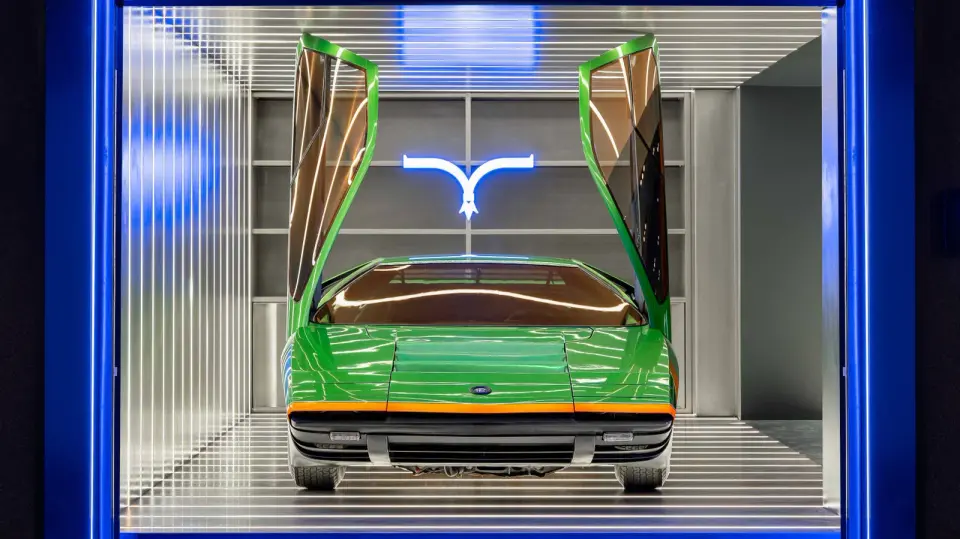
- The 1968 Alfa Romeo Carabo, designed by Marcello Gandini, introduced the wedge shape and scissor doors that later defined the Lamborghini Countach.
- Mercedes-Benz's C111 (1969-1979) validated multi-link rear suspension, which became a standard feature in production vehicles starting with the 1982 190.
- The 1978 Lancia Megagamma concept established the monovolume architecture, leading to the global minivan and MPV segments.
- Ford's Probe III (1981) demonstrated that aerodynamics could be applied to mass-market passenger cars, influencing the Ford Sierra and subsequent models.
Background
Recent automotive events, such as the 2026 Paris Motor Show, have seen Stellantis and other manufacturers unveil numerous concept cars, including the electric 2CV and Fiat's Multiplay. These modern concepts often focus on heritage or niche utility, contrasting with the foundational engineering breakthroughs highlighted in Jalopnik's list. The archive notes that while some concepts like the Fiat Multiplay are laboratories for future ideas, the historical concepts discussed by Jalopnik directly resulted in widespread industry adoption of specific technologies.
Why it matters
Understanding the lineage of modern automotive technology requires recognizing that many current standards, such as electric vehicle platforms and aerodynamic efficiency, originated from specific concept cars decades ago. These vehicles were not just design exercises but functional prototypes that validated new engineering approaches, leading to widespread industry adoption and shaping the current landscape of automotive design and technology.
What to watch
The automotive industry continues to use concept cars to preview future technologies, but the influence of historical concepts like the GM AUTOnomy's skateboard chassis and the Toyota RAV-FOUR's unibody design remains evident in current production vehicles. As manufacturers focus on electric and autonomous technologies, the legacy of these foundational concepts will continue to inform new developments in vehicle architecture and design.
Want the full story? Read the original reporting
Read on Jalopnik