Tag

Aerodynamics

All articles tagged with #aerodynamics

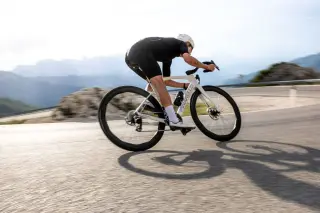
Continental widens Aero 111 to 32mm for front‑wheel aerodynamics
cycling7 days ago

Continental widens Aero 111 to 32mm for front‑wheel aerodynamics

Continental has expanded its Aero 111 line with a 32mm width front tyre, preserving the front‑specific aero design with 48 vortex generators for better aerodynamics and crosswind stability. The 32mm model weighs about 310g, is tubeless‑ready and black sidewall, and is priced around £113.95 / $140.94 / €128.95. It was developed with Swiss Side and DT Swiss and remains compatible with certain wheelsets, continuing to pair with the Grand Prix 5000 S TR rear tyre as part of Continental’s aero tyre lineup.

Koenigsegg CCGT1: A 1,600-HP Road-Going Racer
technology10 days ago

Koenigsegg CCGT1: A 1,600-HP Road-Going Racer

Koenigsegg unveils the CCGT1, a road-legal megacar honoring its GT1 race lineage. It makes 1,280 hp on regular fuel and up to 1,600 hp on E85, with as much as 1,764 pounds of downforce at 155 mph thanks to extensive aero, including a large active rear wing. Limited to 70 units, all of which sold out within hours of the debut, the car also features a Ghost Fibre composite and a new track package with race-ready equipment for near‑race performance.

Pogačar-Made Pace: Tech, Tactics and Training Propel Tour de France Speeds
sports28 days ago

Pogačar-Made Pace: Tech, Tactics and Training Propel Tour de France Speeds

The 2026 Tour de France saw record speeds driven by aero bikes and equipment, optimized nutrition, and relentless tactics, with Tadej Pogačar setting multiple climbing and stage records and reshaping how the yellow jersey is raced; shorter routes, smarter training and recovery, and stricter testing all underpin the faster era, reinforcing that improved science and strategy are the main accelerants—doping concerns aside, the pace is here to stay.

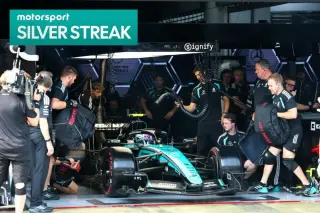
Spa floor teardown hints at Mercedes' 2026 aero playbook
formula-11 month ago

Spa floor teardown hints at Mercedes' 2026 aero playbook

Mercedes' Spa floor teardown reveals how the 2026 F1 aero package relies on diffuser and underbody flow to generate rear downforce and stability. The analysis highlights features like the diffuser kick line, inner 'hole', and floor edges that energize underbody airflow and control flow separation and tyre squirt, with Mercedes tweaking the Canadian GP setup to improve rear grip and driver confidence.

McLaren 788HS: 777-HP Limited Sendoff for the 720S Family
automotive1 month ago

McLaren 788HS: 777-HP Limited Sendoff for the 720S Family

McLaren introduces the 788HS as a 777-hp High Sport limited to 100 Coupes and 100 Spiders, capping the era of the 720S/765LT/750S lineup. It features aero upgrades that deliver about 10% more downforce, a stiffer front end, and an optional full carbon-fiber body. Weighing 1,265 kg in coupe form for an exceptional power-to-weight ratio, it accelerates from 0-62 mph in 2.8 seconds, hits 0-124 mph in 7 seconds, and tops at 205 mph, with carbon-ceramic brakes on forged wheels and MSO customization for all 200 units. McLaren hints at future developments—potential successors or even an SUV—while keeping details under wraps until summer.

Pinarello Dogma X aims for elite endurance with eye-watering pricing
technology1 month ago

Pinarello Dogma X aims for elite endurance with eye-watering pricing

Pinarello has unveiled the Dogma X, its premium all-road/endurance bike built from Torayca M40X carbon with refined X-stays, aero-tuned down tube, internal routing inspired by the Dogma F, 35mm tyre clearance, and UDH compatibility. It’s offered in 11 sizes with frame-only pricing around £5,500 and complete builds from roughly £12,000, marking it as a high-end, performance-first model likely out of reach for most riders.

McLaren’s 788HS: Aero-forward finale to the 720S lineage
automotive1 month ago

McLaren’s 788HS: Aero-forward finale to the 720S lineage

McLaren unveils the 788HS, the brand’s first new model in nearly two years, a limited-run (100 coupes and 100 Spider) finale to the 720S lineage that adds significant aero and a light weight for a 1,265 kg dry mass; with 788 hp (777 bhp), 0–62 mph in 2.7 seconds and 205 mph, it features bespoke MSO options and a price around £450k as McLaren gears up for a broader corporate revamp.

Sailfish-Inspired Speed: How Ocean Design Shaped the McLaren P1
technology1 month ago

Sailfish-Inspired Speed: How Ocean Design Shaped the McLaren P1

McLaren’s hybrid halo car, debuted to mark the F1’s 20th anniversary at the Paris Motor Show, uses nature‑inspired design by Frank Stephenson. Drawing from sailfish hydrodynamics—such as a fish-scale texture on the engine inlets to boost air intake and foil‑shaped bumps that smooth flow—along with mirror‑arm enhancements to cut buffeting and a cheetah‑like organic silhouette, the P1 emphasizes speed and efficiency. Powered by a 727‑hp twin‑turbo V8 paired with hybrid systems for about 903 hp and a high‑9‑second quarter‑mile, it rides in a carbon monocoque with active aero shaped for maximum performance.

Ford’s $30K EV Truck Stacks Up Against an Expedition in Spy Shots
technology1 month ago

Ford’s $30K EV Truck Stacks Up Against an Expedition in Spy Shots

Ford is testing a new sub-$30,000 electric pickup on its in-house Universal EV platform, using a cost-efficient LFP battery to meet the target price. Spotted in Dearborn beside an Expedition, the compact truck appears very small with a notably low roof aimed at maximizing range, aided by aerodynamic bits like a sloped windshield, aero tires, a roof spoiler, and wheel covers that Ford says boost efficiency by about 15% versus rival pickups. The architecture emphasizes weight and parts reduction, including a lighter 48V system and a large infotainment display inside. Ford has not revealed motor or battery specifics yet, and while a 2027 debut is expected, a Ranchero revival has been speculated but not confirmed.

June’s hidden science hits: from ballistics to boron buckyballs
science1 month ago

June’s hidden science hits: from ballistics to boron buckyballs

June’s roundup highlights six science stories: how the soccer scissors feint works and how ball design triggers a drag crisis in flight; the Vesuvius Challenge’s breakthrough in digitally unwrapping and reading PHerc.1667 Herculaneum scrolls; the first experimental evidence for an 80-atom boron buckyball; the discovery of ‘ballista’ spiders that catapult prey into their main web; and a physics-based explanation for the distinctive coiled shapes of lugworm poo tied to elastic coiling in gravity.

Specialized's Tarmac SL9 touts time-to-finish speed as fastest road bike
technology1 month ago

Specialized's Tarmac SL9 touts time-to-finish speed as fastest road bike

Specialized has unveiled the S-Works Tarmac SL9, calling it the fastest road bike ever thanks to a new aero package, a deeper fork, a narrower head tube, the Win Fin rear, and the S-Works Rapide seatpost, with about a 4-watt gain at 45 kph and a weight near 6.8 kg in flagship form. Its race simulations claim the SL9 finishes ahead of rivals like Colnago Y1Rs and Cervélo S5 on a representative Grand Tour 100 km course under its time-to-finish metric, though Cervélo is slightly more aero on CdA. The range runs six builds from roughly £3,999/$4,500/€4,499 to £11,999/$14,000/€13,999.

McLaren W1: a track-first hypercar redefining the modern supercar
automotive1 month ago

McLaren W1: a track-first hypercar redefining the modern supercar

McLaren’s W1, the third '1' hypercar after the F1 and P1, packs a 1,258bhp V8-hybrid with a 217 mph top speed and a 0–62 mph time of 2.7 seconds, prioritising aero downforce and track performance. Its Race mode is track‑only, the cabin is fighter-jet focused, and only 399 units will be built at a base price around £2 million (with options pushing the total well higher). On the road it’s civil; on the racetrack it’s brutally fast, redefining what a modern supercar can be in 2026.

ISS Origami: The Curious Descent of a Four-Gram Paper Plane
science2 months ago

ISS Origami: The Curious Descent of a Four-Gram Paper Plane

Researchers simulated releasing a four-gram origami paper plane from the ISS (~400 km up) to study its descent, using wind-tunnel tests to supplement the model. In the vacuum-like upper atmosphere it stays nose-first and orientation-stable for days as it spirals downward. After about four days at around 120 km altitude the descent becomes chaotic and the craft tumbles, even with a small aluminum tail. The study is not a real spaceflight but a simulation-plus-wind-tunnel investigation of how a simple paper aircraft behaves during reentry, revealing surprising stability only up to a point.