
Engineering Compromises and Cost-Cutting Explain the Persistent Dislike of V6 Engines
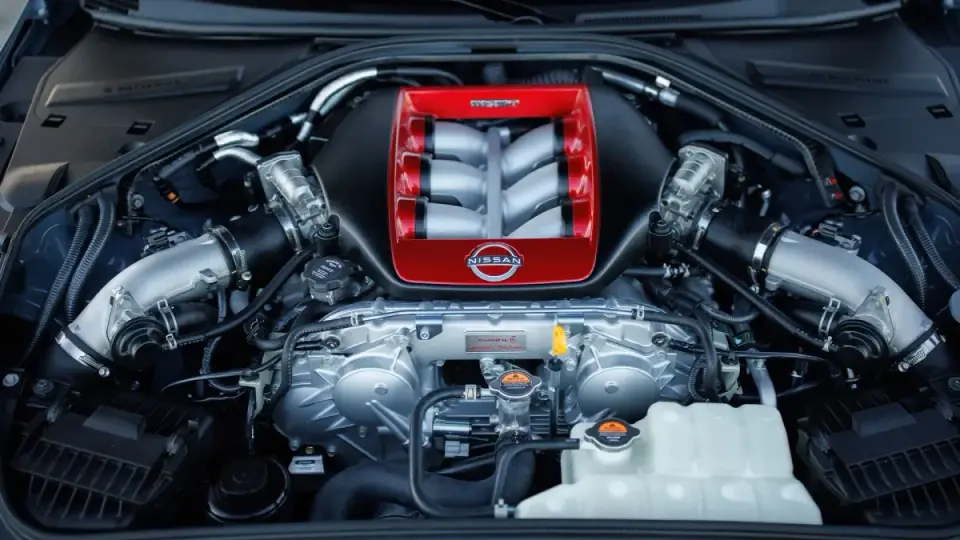
V6 engines are widely disliked despite their historical importance and technical competence, primarily due to early engineering shortcuts that prioritized cost over refinement. General Motors created the first mainstream V6 in 1962 by removing two cylinders from a V8, resulting in an inherently unbalanced design. Although later 60-degree V6 designs improved power density and compactness, the engine remains associated with downsizing and economic necessity rather than performance passion.
Key points
- General Motors introduced the first mass-market V6 in 1962 by cutting two cylinders from a Buick V8 to save engineering costs, creating an unbalanced 90-degree design.
- Lancia’s 1950 Aurelia used a 60-degree V-angle, which became the industry standard for better balance and compactness, allowing V6s to dominate front-wheel-drive layouts.
- The 1980 Chevrolet Citation, powered by a new GM 60-degree V6, failed commercially and reinforced the engine's association with downsizing and lack of interest.
- Modern high-performance V6s, such as the Nissan GT-R’s VR38DETT and Ford GT’s EcoBoost, rely on turbocharging to achieve greatness, while the Maserati Nettuno received indifference despite advanced F1-style ignition.
- In the truck segment, V6s are often the most capable engines but are considered uncool, leading automakers to reintroduce V8s for aesthetic appeal.
Background
V6 engines have been a staple of the automotive industry since the mid-20th century, serving as a middle ground between four-cylinder efficiency and V8 power. While they powered notable performance cars like the Buick GNX and Nissan GT-R, they have never achieved the cultural cachet of V8s or inline-sixes. The engine’s reputation has been shaped by decades of use in economy cars and minivans, creating a perception of compromise rather than passion.
Why it matters
The enduring dislike of V6 engines highlights a disconnect between automotive engineering efficiency and enthusiast culture. While V6s offer superior power density and compactness, their historical association with cost-cutting and downsizing prevents them from gaining the emotional loyalty of other engine types. This dynamic influences current market trends, where automakers may prioritize V8s for brand image despite V6s being technically superior in many applications.
What to watch
Automakers continue to reintroduce V8 engines in trucks and performance vehicles for aesthetic and cultural reasons, even when V6s offer better capability or efficiency. The future of V6 engines may depend on whether manufacturers can decouple the engine from its historical image of compromise and emphasize its technical advantages in electric and hybrid powertrains.
Want the full story? Read the original reporting
Read on The Drive