
CaptiveCrunch: Russian APT29 Hijacks Hotel Wi-Fi to Deploy Surveillance Malware
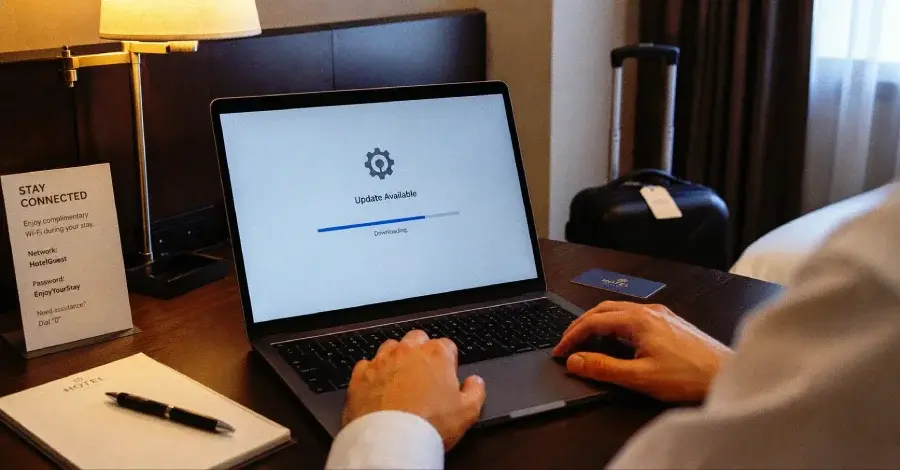
A Russian-linked threat group is hijacking hotel Wi-Fi networks to deliver surveillance malware and steal credentials from corporate travelers. The operation, tracked as CaptiveCrunch, exploits compromised captive portal gateways to redirect users to fake update pages and phishing sites. Microsoft attributes the campaign to Storm-2945, a sub-cluster of Midnight Blizzard (APT29), while ReliaQuest notes similarities to APT28 tradecraft. The attacks use malware like CornFlake and ChocoShell to capture keystrokes, steal browser cookies, and bypass multi-factor authentication via device-code flows. The campaign has been active since early 2026 across multiple countries, targeting employees in finance, healthcare, and other sectors. Defenders are advised to use full-tunnel VPNs and disable device-code authentication where possible.
Key points
- Microsoft attributes the CaptiveCrunch campaign to Storm-2945, an operational sub-cluster of Midnight Blizzard (APT29), which is linked to Russia's Foreign Intelligence Service (SVR).
- The attack involves hijacking captive portal gateways at hotels and conference centers to control DNS resolution and redirect users to fake browser or OS update pages.
- The primary malware, CornFlake, is a Go-based remote access trojan that captures webcam images, microphone audio, keystrokes, and browser credentials, including those protected by Chrome App-Bound Encryption.
- A secondary tool, ChocoShell, is an in-memory PowerShell stealer that harvests Microsoft 365 and Azure Active Directory tokens from the Token Broker cache to enable session replay.
- Since July 16, 2026, some landing pages have redirected victims to Microsoft's device-code authentication flow, allowing attackers to gain MFA-satisfied access without stealing passwords.
- ReliaQuest identified compromised gateways in the U.S., India, and Saudi Arabia, affecting employees in financial services, healthcare, legal, energy, and retail sectors.
Background
This campaign follows a pattern of AI-augmented and malvertising-based attacks seen in 2026, such as the Bing malvertising campaign that delivered SectopRAT malware and the X-sponsored malvertising that promoted fake Mac apps. These incidents highlight the growing risk of trust-based attacks where users are lured into executing malicious code or approving unauthorized sessions. The CaptiveCrunch operation specifically targets the trust users place in captive portal networks and automated update mechanisms, exploiting the lack of encryption in DNS queries and the convenience of device-code authentication.
How outlets are covering it
Microsoft and ReliaQuest agree on the technical details of the CaptiveCrunch campaign but differ on attribution. Microsoft attributes the campaign to Storm-2945, a sub-cluster of Midnight Blizzard (APT29), based on technical and operational overlaps. ReliaQuest, however, notes that the tradecraft resembles APT28 (Fancy Bear/Forest Blizzard) but stops short of attribution due to a lack of direct technical linkage. Both organizations agree that the campaign targets corporate travelers and uses similar techniques to previous Russian-linked operations, such as FrostArmada. Microsoft emphasizes the use of AI to support the operations, while ReliaQuest focuses on the DNS hijacking and credential theft aspects. BleepingComputer and SecurityAffairs provide similar overviews, highlighting the impact on various sectors and the importance of VPN and DNS encryption as mitigations.
Why it matters
The CaptiveCrunch campaign poses a significant risk to corporate travelers and organizations that rely on public Wi-Fi networks. The ability to bypass multi-factor authentication and steal credentials from multiple sources, including browser cookies and cloud tokens, can lead to widespread data breaches and unauthorized access to sensitive information. The campaign's use of AI to rapidly iterate on malware and its targeting of multiple hospitality managed service providers suggest a sophisticated and persistent threat. Organizations must prioritize securing their networks and educating employees about the risks of public Wi-Fi to mitigate these threats.
What to watch
Microsoft and ReliaQuest are expected to continue monitoring the CaptiveCrunch campaign and provide updated indicators of compromise and hunting guidance. The initial compromise vector for the captive portal networks is still under investigation, and further details may emerge as the investigation progresses. Organizations should implement the recommended mitigations, such as full-tunnel VPNs and disabling device-code authentication, to protect against similar attacks. Additionally, the hospitality industry may need to review the security of their captive portal equipment and management systems to prevent future compromises.
- Hijacked Hotel Wi-Fi Pushes Fake Updates to Deliver Surveillance Malware The Hacker News
- CaptiveCrunch: Midnight Blizzard targets travelers worldwide for malware delivery and credential theft microsoft.com
- Hackers hijack hotel Wi-Fi DNS to steal Microsoft 365 accounts BleepingComputer
- Hackers Hijack Hotel Wi-Fi to Steal Microsoft 365 Credentials securityaffairs.com
- TSA warns you about fake airport Wi-Fi Komando.com
Want the full story? Read the original reporting
Read on The Hacker News