
Velo's Squamish Trials and Van Rysel's Dual-Wheel Strategy Signal Gravel's Convergence with Road
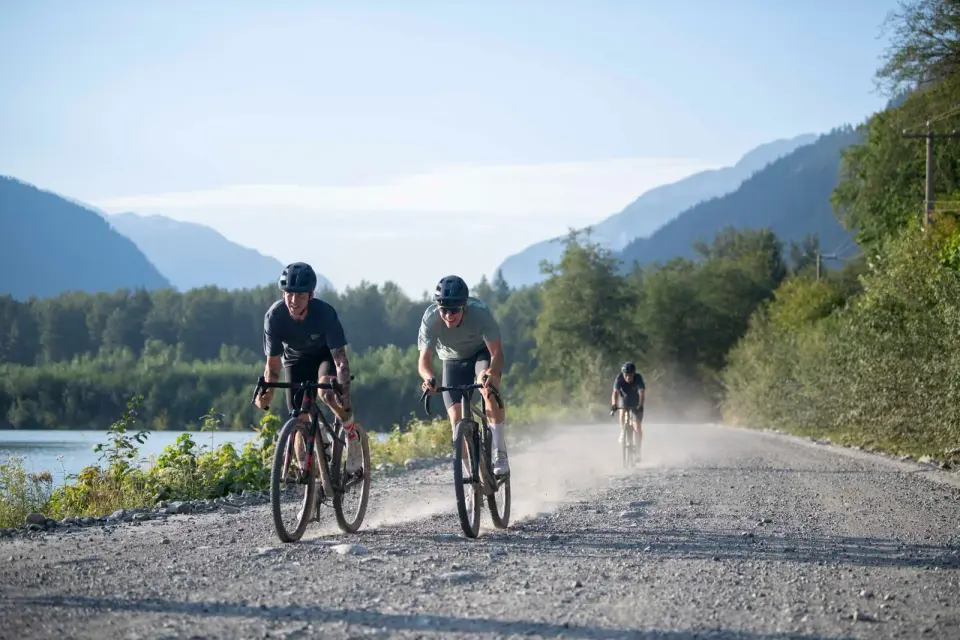
Velo has launched a multi-part field test in Squamish, British Columbia, pitting six distinct gravel bike designs against each other to determine the category's future. Simultaneously, the market is shifting toward 'do-it-all' gravel race bikes that can replace road bikes via wheel swaps, a trend exemplified by Van Rysel's new dual-wheelset model.
Key points
- Velo's 2027 Gravel Bike Field Test features six bikes, including the Giant Revolt Advanced SL, Factor Sarana, and Pivot Les SL Drop Bar, tested for climbing, descending, and efficiency.
- The test uses standardized 50mm Schwalbe G-One RX tires and Easton EC90 ALX wheels to isolate frame performance across varied terrain in Squamish.
- Modern gravel race bikes are approaching road bike performance, with weights nearing 7kg and aerodynamic profiles, prompting riders to consider single-bike solutions for both modalities.
- Van Rysel has commercialized this trend with the RCR-G THE ACE, a limited edition sold with both gravel and road wheelsets for 6,600 euros.
- Wind tunnel data suggests advanced gravel bikes lag behind road bikes by 18 to 45 watts, but swapping to road tires can mitigate much of this deficit.
Background
This development follows recent industry shifts where brands like Scott and Factor have diverged in their design strategies, with some prioritizing ultra-lightweight compliance and others chasing aerodynamics. Earlier coverage noted the emergence of 32-inch wheel platforms and Chinese brands undercutting prices, reflecting a broader market fragmentation. The current focus on dual-use gravel bikes represents a consolidation of these trends, aiming to resolve the historical compromise between speed and versatility.
How outlets are covering it
Velo emphasizes the diversity of current gravel designs, ranging from aero race bikes to drop-bar mountain bikes, and uses head-to-head challenges to objectively measure performance limits. In contrast, Brújula Bike focuses on the practical convergence of gravel and road cycling, highlighting how manufacturers like Van Rysel are now explicitly marketing single bikes for dual use. While Velo questions whether any single bike can define the 'future' of gravel, Brújula Bike argues that the gap between the categories is narrowing enough that a single high-performance gravel bike with two wheelsets can effectively replace a dedicated road bike for many riders.
Why it matters
The blurring lines between gravel and road cycling are reshaping consumer purchasing decisions and manufacturer strategies. As performance gaps narrow, the value proposition of owning two specialized bikes is being challenged by versatile, high-end gravel models. This trend could reduce the overall number of bikes sold per household while increasing the price point and technical complexity of individual purchases, influencing how brands design and market their next generation of frames.
What to watch
Velo is set to release episode 3 of its field test, featuring a long-distance ride in Squamish to further evaluate the six test bikes. In the broader market, expect more manufacturers to follow Van Rysel's lead by offering dual-wheelset configurations or designing frames with wider tire clearance and double-chainring compatibility to appeal to riders seeking a single-bike solution for both asphalt and off-road riding.
- Stress Testing 6 Completely Different Gravel Bikes to Find the Future of Gravel Outside Magazine
- Can a gravel race bike and two wheelsets replace a road bike? More and more riders are making the switch Brujulabike.com
- Gravel bikes 2027: 4 carbon models for touring and adventure www.tour-magazin.de
- Race gravel bikes 2027: A comparison of nine carbon models www.tour-magazin.de
Want the full story? Read the original reporting
Read on Outside Magazine