
Anduril Demonstrates Infrared Satellite Sensor to Track Spacecraft in Earth's Shadow
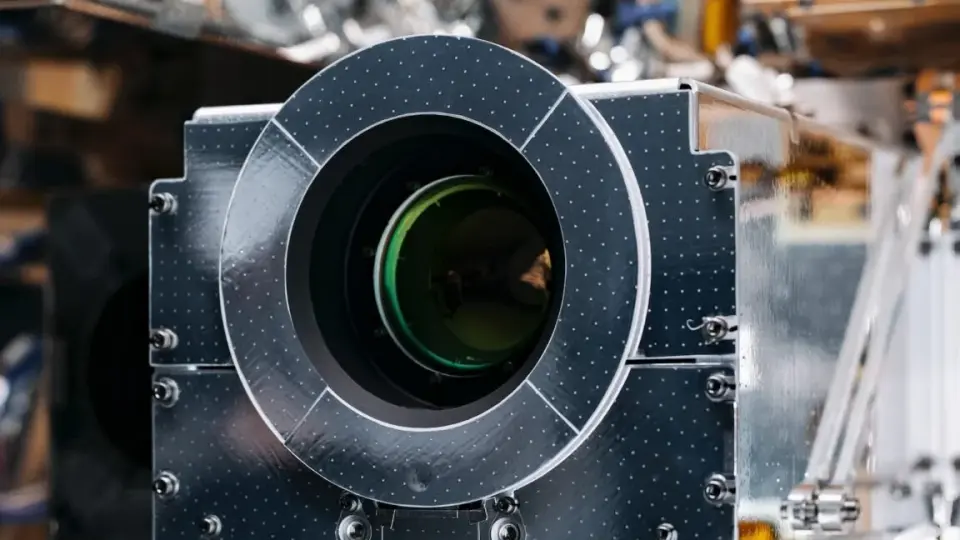
Anduril Industries has successfully demonstrated a long-wave infrared (LWIR) sensor on its Anduril-216 satellite, which launched in July 2026. The sensor allows the company to detect and track spacecraft maneuvers during 'orbital night'—periods when satellites pass through Earth's shadow and become invisible to standard optical sensors. By detecting heat signatures, the system aims to close a critical gap in space domain awareness for the US military and commercial operators. Anduril plans to sell data from this technology rather than the hardware itself, positioning itself as a mission systems integrator.
Key points
- The Anduril-216 satellite, launched on a SpaceX rideshare in July 2026, orbits at approximately 590 km altitude and spends roughly one-third of its orbit in darkness.
- The LWIR sensor detects thermal emissions, allowing it to track objects even when they are not illuminated by the sun, a capability standard optical sensors lack.
- Anduril acquired ExoAnalytic Solutions earlier this year to bolster its space tracking capabilities and now employs over 350 personnel in its space division.
- The satellite includes an edge-compute module that fuses data from multiple sensors to generate tracking solutions autonomously, without ground intervention.
- Anduril is currently focused on selling space domain awareness data to the US military rather than acting as a merchant supplier for the hardware itself.
Background
Recent incidents, such as the close approach of a Russian satellite to a US-owned asset in October 2026, have heightened concerns regarding the security of space assets. Additionally, studies warning of the potential for nuclear detonations to disable 99% of low-Earth orbit satellites within 15 days underscore the vulnerability of current orbital infrastructure. These developments increase the demand for robust surveillance systems that can monitor threats regardless of lighting conditions.
How outlets are covering it
Ars Technica and Mezha.net focus on the technical capability of the sensor to see in 'full dark' and the strategic gap it fills for the Space Force. Aviation Week provides a broader business context, noting that Anduril is positioning itself as a systems integrator and has won contracts for programs like the Golden Dome interceptor effort. While all sources agree on the success of the demonstration, Aviation Week highlights that Anduril is also offering standalone compute and power modules, whereas Ars Technica emphasizes the company's current focus on data sales over hardware sales. SpaceNews confirms the unveiling of three payload systems but offers limited detail due to paywall restrictions.
Why it matters
The ability to track satellites in Earth's shadow is critical for maintaining situational awareness in an increasingly crowded and contested orbital environment. As the US Space Force seeks to modernize its surveillance networks, Anduril's technology offers a potential solution to blind spots that could lead to collisions or undetected hostile maneuvers. This development also signals a shift in the defense industry toward integrated, autonomous space systems that can operate independently of ground-based command structures.
What to watch
Anduril plans to optimize its sensor for low-Earth orbit initially, with future applications potentially extending to cislunar space near the Moon. The company is also preparing a third demonstration mission using an Impulse Space vehicle to test rendezvous and proximity operations in geostationary orbit. Additionally, Anduril is expanding its space team and has secured initial design contracts for several new US Space Force programs, including the Andromeda reconnaissance satellite program.
- Anduril says its first satellite can see adversaries maneuver in orbital night Ars Technica
- Anduril unveils satellite technology for space surveillance SpaceNews
- First Anduril Satellite On Orbit is for Space Domain Awareness Via Satellite
- Anduril demonstrates infrared sensor for tracking satellites in orbital darkness Mezha.net
- Anduril Lifts Curtain On Space-Proven Domain Awareness Demo Aviation Week
Want the full story? Read the original reporting
Read on Ars Technica