
Pokémon Bank Shutdown on Feb 25, 2027, Severs Link Between Classic and Modern Games
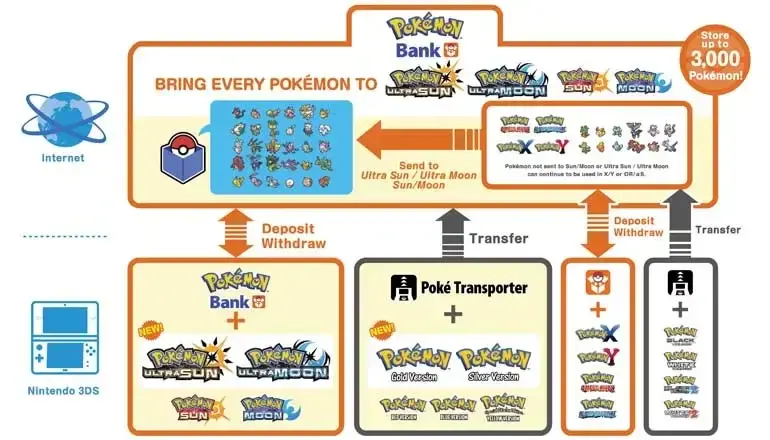
Nintendo has confirmed that Pokémon Bank will cease operations on February 25, 2027. This shutdown eliminates the only official method for transferring Pokémon from 3DS-era titles and earlier generations to the modern Pokémon HOME service. Players must migrate their collections before the deadline, as the service will no longer function afterward. While Pokémon HOME remains active, the loss of Bank breaks the chain of connectivity for games released prior to 2013, potentially isolating older Pokémon from newer titles unless alternative ports are released.
Key points
- Nintendo announced the permanent shutdown of Pokémon Bank on February 25, 2027, following the earlier closure of 3DS online services in 2023.
- Pokémon Bank is the sole official bridge for transferring Pokémon from 3DS games (such as X, Y, Sun, and Moon) and earlier generations to Pokémon HOME.
- Transferring Pokémon from older games requires a complex, multi-step process involving intermediate titles like Black/White and the Poké Transporter app, which is no longer downloadable for new users.
- Pokémon HOME requires a paid Premium Plan ($2.99/month or $15.99/year) to store more than 30 Pokémon, whereas Pokémon Bank was free for existing users during its final months.
- The shutdown affects over 70% of the series' history, cutting off connectivity for games from Ruby/Sapphire through Ultra Sun/Ultra Moon unless they are re-released on newer hardware.
Background
This development follows the 2023 discontinuation of the 3DS eShop and online services, which had already limited the ability to download new applications. Previous coverage noted that the shutdown would also impact specific features like the Ribbon system and Alola Photo Club backgrounds, which rely on cross-generation data. The broader trend of legacy game preservation concerns has intensified as online dependencies for older titles are removed, forcing players to rely on unofficial homebrew tools or emulators for long-term access.
How outlets are covering it
Hackaday emphasizes the technical and preservation implications, noting that certain Pokémon can only be obtained from 3DS games, creating a permanent gap in the Pokedex without alternative transfer mechanisms. VICE highlights the logistical difficulty, listing the specific titles affected and noting that the shutdown cuts off the majority of the series from modern transfers. Kotaku provides a detailed guide on the cumbersome process required to move Pokémon, stressing the need for a paid Pokémon HOME subscription and multiple physical consoles. Shacknews focuses on the emotional and narrative continuity, arguing that Bank allowed players to maintain unique, personalized Pokémon across generations, and its loss represents an end to an era of shared digital history.
Why it matters
The shutdown of Pokémon Bank marks a significant shift in how legacy video game content is preserved and accessed. It highlights the fragility of digital ecosystems where online services are required for core gameplay features, such as trading and collection. For players, it necessitates immediate action to migrate data before it becomes inaccessible, while for the industry, it raises questions about the long-term viability of cloud-dependent game features and the potential loss of cultural artifacts in gaming history.
What to watch
Players must transfer their Pokémon from Pokémon Bank to Pokémon HOME before February 25, 2027. This requires a valid Pokémon HOME Premium subscription and, for older games, a complex chain of transfers through intermediate titles. Nintendo and The Pokémon Company have not announced a replacement service or a new official transfer method for pre-3DS games. The future availability of classic titles on Switch 2 may offer a partial solution, but no such releases have been confirmed for all affected games.
- Large-Scale Pokémon Eviction Looms With Pokémon Bank Server Shutdown Hackaday
- Pokémon Bank Shutdown Date Confirmed – Classic Pokémon Transfers Are Ending VICE
- Pokémon FireRed and LeafGreen Update Coming This October, as Ruby and Sapphire Speculation Swirls IGN
- How To Empty Your Pokémon Bank Before It Shuts Down Kotaku
- The Pokemon Bank shutdown will be the end of an era Shacknews
Want the full story? Read the original reporting
Read on Hackaday