
Steam Personal Calendar Graduates from Beta to Core Feature
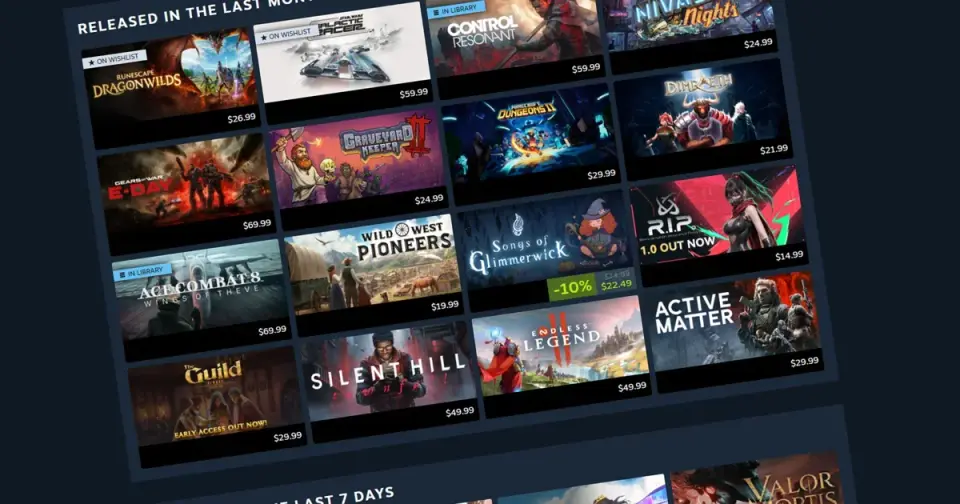
Valve has officially launched the Personal Calendar feature on Steam, moving it out of the experimental Steam Labs program. The tool provides users with a personalized eight-week view of upcoming and recently released games, including Early Access titles and DLC, based on their play history and wishlist activity. While the feature has been in testing for nearly a year, it is now considered a full component of the Steam Store. Valve reports that users click on over 2,000 different games via the calendar daily. This release is part of a broader strategy to improve game discoverability and reduce reliance on manual curation, addressing concerns that the current system favors blockbuster titles over niche games.
Key points
- Valve announced the full launch of the Personal Calendar feature on October 23, 2026, ending its time in Steam Labs.
- The feature displays a personalized eight-week horizon of games, including full releases, Early Access titles, and DLC, based on user playtime and wishlist data.
- Valve states that the algorithm identifies users with similar playtime profiles and analyzes their activities to generate recommendations.
- The calendar refreshes daily to incorporate new data, though significant changes are expected to occur over the eight-week window or as release dates are confirmed.
- Valve reports that users interact with over 2,000 different game pages through the Personal Calendar in a 24-hour period.
- The feature is part of a broader effort to address discoverability issues, where 1% of games currently generate 85% of Steam's revenue.
Background
This development follows Valve's recent restructuring of the Steam storefront, which introduced new search menus and categories earlier in 2026. It also aligns with broader industry discussions about algorithmic transparency and revenue distribution, as highlighted by recent coverage of Valve's plans for an algorithm-driven sales model. Previous incidents, such as the misclassification of the game Nighthawks, have underscored the complexities of Valve's automated moderation and discovery systems.
How outlets are covering it
Rock Paper Shotgun highlights the surprise that the feature was still in testing, noting that many users, including the author, had been using it without realizing its experimental status. Engadget emphasizes the feature's role in bridging the gap between trending games and niche interests, noting that brief play sessions do not significantly alter the algorithm. Geeky Gadgets focuses on the broader economic implications, arguing that the algorithmic shift aims to address the imbalance where 1% of games generate 85% of revenue, potentially benefiting smaller developers. GameGPU confirms the technical details, stating that the calendar updates every eight hours and includes Early Access and DLC titles, while noting that developers cannot purchase spots in the recommendations.
Why it matters
The official launch of the Personal Calendar marks a significant shift in how Valve handles game discoverability, moving away from manual curation toward a personalized, algorithmic approach. This change could impact revenue distribution by providing sustained visibility to mid-tier and niche games, rather than concentrating exposure on blockbuster titles. For players, it offers a more tailored shopping experience, while for developers, it may reduce the reliance on initial launch success for long-term viability.
What to watch
Valve is expected to continue refining the algorithm as it gathers more data from user interactions. The broader implementation of algorithm-driven sales models, potentially including personalized discounts, is anticipated in the coming year, though Valve has clarified that personalized discounts are not currently part of the plans. The industry will monitor the effectiveness of these changes in addressing discoverability issues and ensuring fair revenue distribution.
- I've got egg on my face because Steam's Personal Calendar feature has apparently been a test this whole time and is only now actually a fully fledged component Rock Paper Shotgun
- Steam :: Steamworks Development :: Steam's Personal Calendar Full Release Steam Community
- Steam Rolls Out Personal Calendar Feature That Constantly Updates Recommended Games Engadget
- Valve Rebuilding Steam Deals and Sales Systems for 2027 Launch Geeky Gadgets
- Steam has officially launched a personalized game recommendation calendar. GameGPU
Want the full story? Read the original reporting
Read on Rock Paper Shotgun