
Zelda Remake Closes Cucco Minigame Exploit, Retains Butterfly Fairy Trick
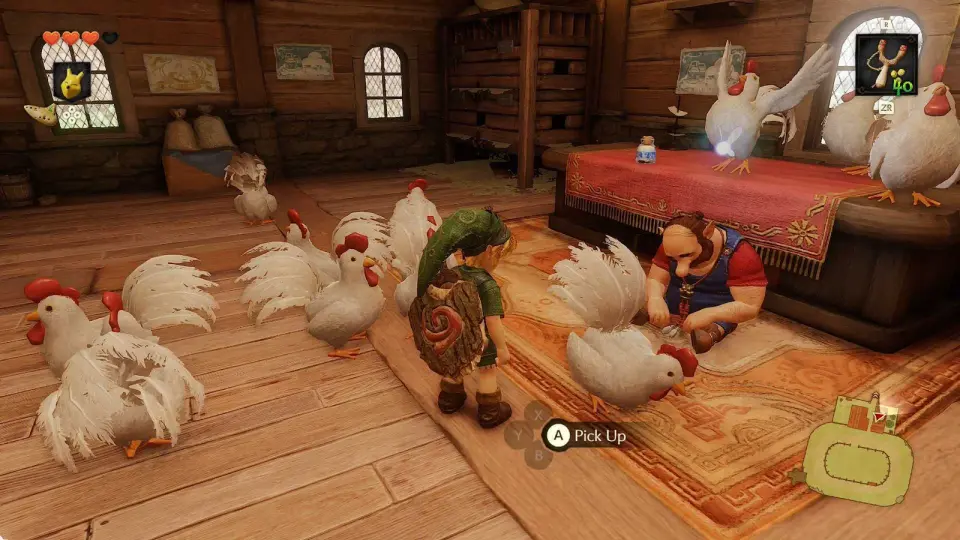
The Legend of Zelda: Ocarina of Time remake for the Nintendo Switch 2 has eliminated the long-standing exploit that allowed players to cheat the Cucco minigame at Lon Lon Ranch. While the game retains the ability to turn butterflies into fairies using a Deku stick, it has patched other minor exploits, such as climbing drawbridge chains, to ensure a more standardized experience for new and returning players.
Key points
- The Cucco minigame at Lon Lon Ranch, which rewards players with a bottle of Lon Lon Milk, no longer allows the classic cheat of hiding chickens in a corner behind Talon.
- In the remake, Talon actively shuffles the Cuccos across the room floor when the game starts, preventing players from isolating the three special birds.
- Attempts to trap Cuccos by throwing them up the stairs also fail, as they slide back down, closing another potential exploit vector.
- The game retains the ability to hit butterflies with a Deku stick to transform them into fairies, a feature some players had forgotten existed in the original 1998 version.
- Other minor exploits have been patched, including the ability to climb chains on the Hyrule Castle drawbridge to collect rupees, which now results in the player falling through them.
Background
The Legend of Zelda: Ocarina of Time remake launched on November 5, 2026, exclusively for the Nintendo Switch 2. This release is part of Nintendo's strategy to boost hardware sales during the holiday season, competing with titles like Grand Theft Auto VI. The remake modernizes the 1998 classic with updated graphics, voiced cutscenes, and new controls, including a manual jump button that has confused some veteran players. Previous coverage noted that Nintendo removed cross-franchise Easter eggs to maintain immersion and introduced a new 'Bearded Guy' mechanic in Castle Town to guide players to side quests involving Talon at Lon Lon Ranch.
How outlets are covering it
Kotaku emphasizes the removal of specific exploits, highlighting how the Cucco minigame cheat is no longer viable due to Talon shuffling the birds and the inability to trap them in corners or on stairs. The outlet notes that while some exploits are gone, others, like turning butterflies into fairies, remain, and the smoother Switch 2 controls make winning the minigame legitimately easier. OpenCritic focuses on the experience of new fans, noting that the remake retains core mechanics like Cuccos attacking players if hit, which serves as a lesson for those unfamiliar with the original game's quirks. While Kotaku details specific bug fixes, OpenCritic frames these changes as part of a broader effort to modernize the game for a new audience without losing essential elements of the original design.
Why it matters
The removal of exploits in the Ocarina of Time remake reflects Nintendo's intent to provide a polished, standardized experience for new players while maintaining core gameplay elements. By closing cheats like the Cucco minigame exploit, the game ensures that progression relies on skill and patience rather than shortcuts, aligning with modern expectations for game design. Retaining features like the butterfly-to-fairy trick preserves nostalgic elements for veterans, balancing innovation with tradition. This approach supports the broader strategy of using the remake to drive Switch 2 sales by appealing to both new and returning fans.
What to watch
Players can expect to encounter similar patches for other minor exploits in the remake, as Nintendo continues to refine the game's mechanics for a modern audience. The retention of certain quirks, like the butterfly-to-fairy trick, suggests that Nintendo is selectively preserving elements that enhance gameplay without breaking the intended difficulty curve. Future updates or patches may address additional exploits, ensuring a consistent experience across all players. The success of the remake in driving Switch 2 sales will likely depend on how well these changes balance nostalgia with modern expectations.
Want the full story? Read the original reporting
Read on Kotaku