
Drone medical delivery expands in U.S. and Europe despite regulatory hurdles
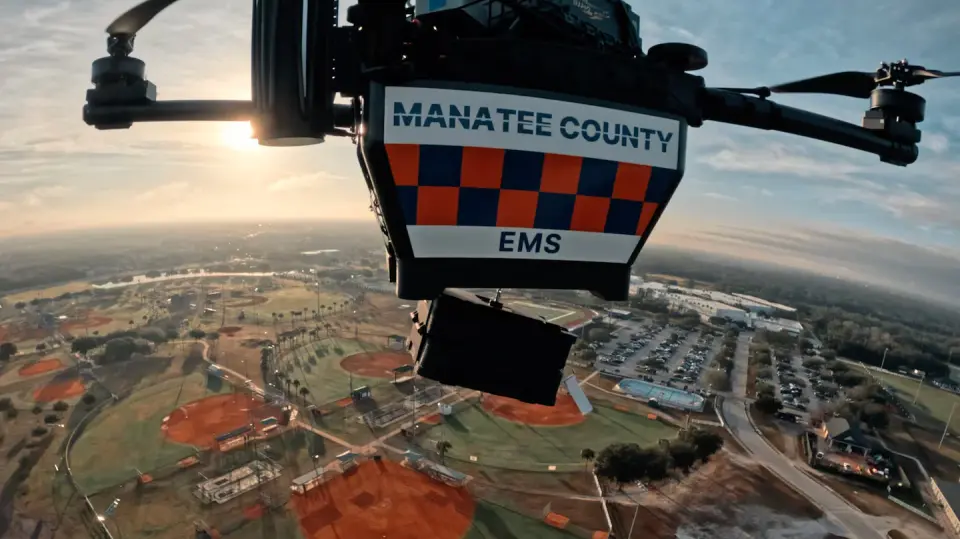
Medical drone delivery is expanding in the U.S. and Europe, with new programs for defibrillators and blood products. While pilots in Sweden and Florida show promise, U.S. adoption remains limited by aviation rules and infrastructure challenges. Researchers in Scotland are modeling drone networks to improve emergency response times for cardiac arrests.
Key points
- Archer First Response Systems has completed 15 emergency drone deployments in Florida since May 2024, delivering AEDs and other medical supplies.
- A new pilot in Hillsborough County, Florida, will deliver temperature-controlled blood via drone within 3.5 minutes, covering 70 square miles.
- Sweden has integrated AED-carrying drones into its emergency response system, covering 15% of the region’s population with 300 successful deployments.
- University of Strathclyde research models show drone networks could deliver AEDs within six minutes for 86% of cardiac arrests in Greater Glasgow and Clyde.
- U.S. adoption is hindered by FAA regulations requiring visual line-of-sight and infrastructure limitations, though NASA and the University of Michigan are testing organ delivery.
Background
Medical drone delivery has gained traction in regions with challenging terrain, such as sub-Saharan Africa, where companies like Zipline deliver blood and vaccines. In the U.S., early pilots for organ transport, such as a 2019 kidney delivery in Baltimore, faced regulatory hurdles. Recent efforts focus on integrating drones into existing emergency systems for faster delivery of critical supplies.
How outlets are covering it
The Washington Post highlights real-world U.S. deployments and regulatory barriers, while Stuff South Africa and the University of Strathclyde emphasize modeling and potential impact in Scotland. The Post notes limited U.S. adoption, whereas Strathclyde research suggests drones could significantly improve AED delivery times. Both sources agree that infrastructure and regulations are key challenges, but Strathclyde focuses on optimizing drone networks for specific regions.
Why it matters
Faster delivery of medical supplies via drones could save lives in cardiac arrests and trauma cases, where every minute counts. Expanding drone networks could improve emergency response in rural and underserved areas, potentially reducing mortality rates. However, regulatory and infrastructure barriers must be addressed for widespread adoption.
What to watch
Archer First Response Systems expects its blood delivery pilot in Hillsborough County to launch in a few weeks. The FAA is working on measures to allow beyond-visual-line-of-sight drone operations, though timing is unclear. Researchers are conducting studies to assess the impact of drone flight conditions on organ viability and patient outcomes.
- Emergency medical services could be delivered by drones The Washington Post
- Researchers envision a future where defibrillator drones help people experiencing cardiac arrest Stuff South Africa
- Defibrillator drones could arrive ahead of ambulances in hundreds of cardiac arrest cases, study finds University of Strathclyde
Want the full story? Read the original reporting
Read on The Washington Post